
CRCAMD: Modernizing Agricultural Mechanization via the WeChat Ecosystem
Design and Implementation of WeChat Public Service Platform for the China Research Center for Agricultural Mechanization Development, CAU
This paper details the design and implementation of a WeChat-based public service platform for the China Research Center for Agricultural Mechanization Development (CRCAMD) at CAU. It leverages the 4I model of wireless marketing to transition from traditional one-way communication to an interactive, ecological information diffusion model.
TL;DR
The China Research Center for Agricultural Mechanization Development (CRCAMD) at CAU has developed a WeChat-based service platform to bridge the gap between high-level research and practical agricultural application. By moving away from rigid SMS-based broadcasting and embracing the 4I Model of Wireless Marketing, this platform provides farmers and researchers with instant access to laws, machinery subsidies, and expert systems through an interactive "ecological" communication model.
Context: The End of One-Way Communication
For decades, agricultural information diffusion in China relied on traditional media or simple one-way SMS pushes. While effective for basic alerts, these methods failed to address complex user queries. As the authors point out, the industry suffered from "Information Asymmetry." The rise of mobile-cellular subscriptions in developing regions (reaching billions by 2014) provided the perfect infrastructure to replace these blunt tools with a more nuanced, participatory system.
Methodology: Beyond the Basic Chatbot
The researchers didn't just create a chat account; they built a sophisticated service architecture.
1. The Ecological Model
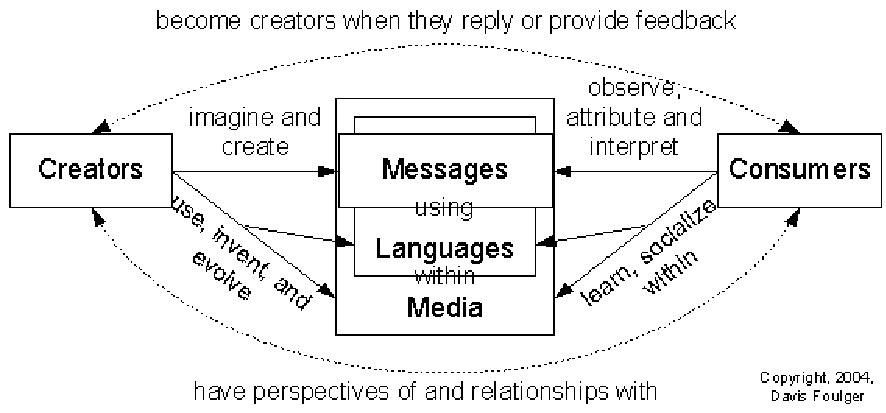
Moving beyond the Shannon-Weaver linear model, the authors adopted Foulger's Ecological Model. This treats communication as a relationship between creators, consumers, and media, where feedback loops are essential.
2. Implementation & API Integration
While "Subscription Accounts" are common, CRCAMD opted for a Service Account. This choice was strategic:
- Custom Menus: Allowing for organized access to complex databases.
- LBS & User Profiling: Leveraging Location-Based Services to provide geographically relevant agricultural advice.
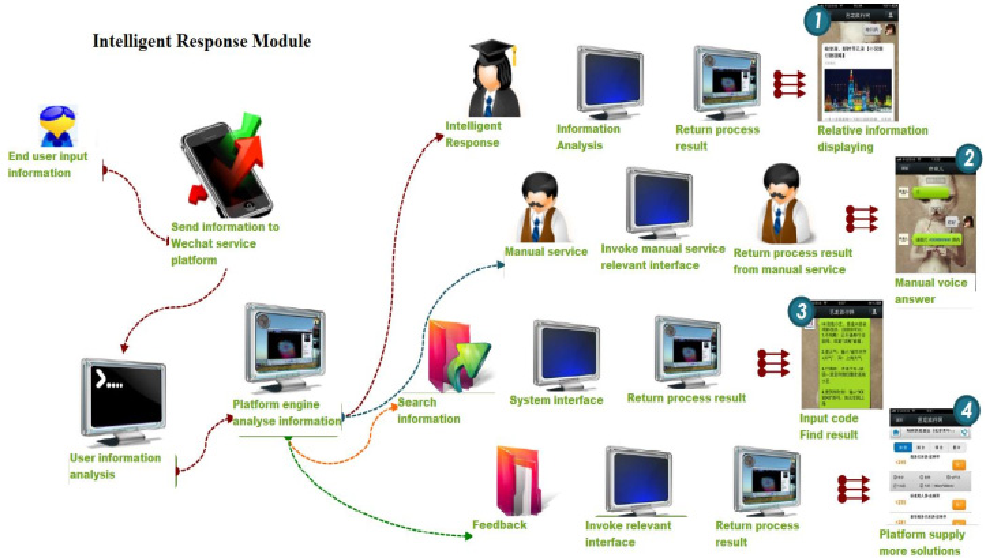
- API Connectivity: Using JSON data packets to push rich graphical content, such as conference proceedings or machinery specifications.
The 4I Marketing Strategy
The core "Why" behind this platform's success lies in the 4I Model, which replaces the traditional 4P (Product, Price, Place, Promotion) marketing mix:
- Individual Identification: Subdividing users by interest (e.g., specific crop production modes).
- Instant Message: Real-time response to urgent agricultural queries (weather warnings, machinery repairs).
- Interactive Communication: Deepening user loyalty through micro-communities and feedback.
- I (Personality): Tailoring the "brand voice" of the CAU research center to be a helpful partner rather than a distant government entity.
Experimental Structure & Results
The platform's structure (shown below) organizes massive amounts of "soft science" and "hard technology" data into a thumb-friendly interface.
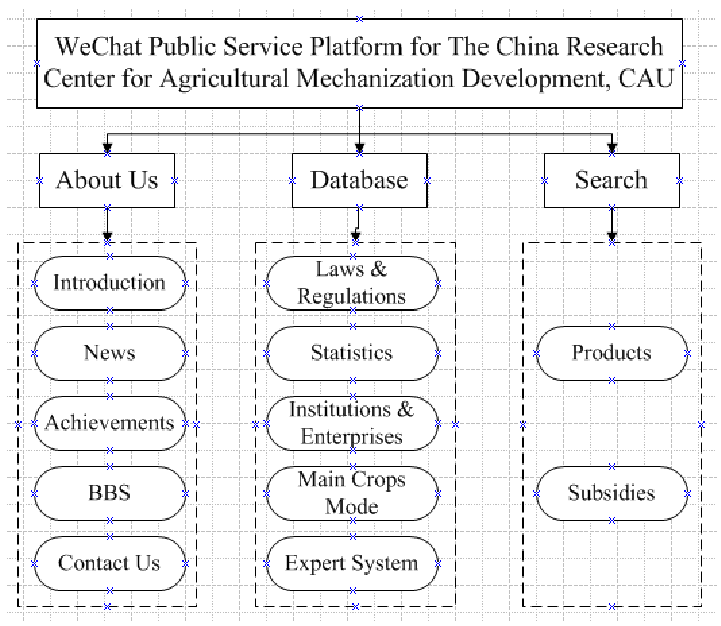
By integrating databases for agricultural machinery subsidies and expert systems, the platform transformed from a simple news feed into a functional decision-support tool. Practical results indicated lower information transfer costs and a significant increase in the "market competitiveness" of the information itself—it was no longer just noise; it was actionable data.
Critical Insight & Future Outlook
The beauty of the CRCAMD platform is its use of HTML5 within the WeChat wrapper. This allows the center to maintain the "lightweight" feel of a social media account while offering the "heavyweight" functionality of a standalone App (including local storage and complex navigation).
Limitations: The paper reflects a 2014-2016 timeframe. Today, the challenge would be competing with short-video platforms (like Douyin) for the attention of agricultural workers. However, as a professional research-to-user pipeline, the structured database approach remains the "Gold Standard" for technical accuracy.
Takeaway: Successful tech-transfer in agriculture isn't about broadcasting louder; it's about building a responsive ecosystem where the farmer is a participant, not just a receiver.