
Empowering the Gatekeepers: How Design Thinking Transforms Immigrant Youth into Community Tech Leaders
Using design thinking to empower ethnic minority immigrant youth in their roles as technology and information mediaries
This paper introduces a multi-disciplinary framework using Design Thinking to empower ethnic minority immigrant youth in their roles as Information and Technology Mediaries (Info-Mediaries). By implementing "Teen Design Days," the study bridges information science and participatory design to support youth who bridge the digital divide for their communities.
TL;DR
In many immigrant households, children are the "Information Mediaries" (Info-Mediaries)—the primary bridge between their families and modern digital services. This paper presents a framework using Design Thinking and Teen Design Days to study and support these youth. By moving beyond viewing them as just "users" and instead seeing them as "designers" and "social bridges," the researchers aim to create more inclusive public library services and community technologies.
The Invisible Bridge: Problem & Motivation
While digital inclusion efforts often focus on late-adopters or the elderly, they frequently ignore the crucial role of the young "translators" who facilitate these interactions.
- The Literacy Gap: Immigrants face a complex "wall" of linguistic, cultural, and financial barriers.
- The Hidden Workforce: Data shows that two-thirds of library users are searching for information on behalf of someone else.
- The Opportunity: If we can support these 14-18-year-old "Info-Mediaries," we can effectively reach an entire community of non-library users and non-native English speakers.
The authors realized that existing systems weren't designed for "proxy use." They wanted to know: How can we design tools specifically for the person helping someone else?
Methodology: The Teen Design Day Framework
The researchers didn't just interview youth; they engaged them in a multi-week participatory design process inspired by IDEO’s Design Thinking model.
1. Teen Design Days
Located in "Information Grounds" like community centers, the study held six-week workshops focusing on:
- Surfacing Needs: Identifying what information their elders actually lack.
- Ideation & Prototyping: Creating paper prototypes and digital sketches of tools that could help them share and remix information for their social networks.
2. Multi-Disciplinary Toolset
The methodology blended several high-level academic approaches:
- Cultural Probes: Giving participants tools to document their daily lives.
- Social Network Analysis: Mapping who asks the youth for help and how information flows through the community.
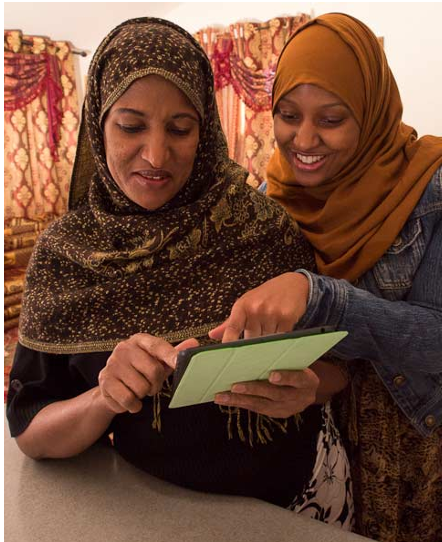 Figure 1: The barriers faced by immigrants and the "Teen Design Day" approach to overcoming them through mediary empowerment.
Experimental Phase: Focusing on East African Youth
The first phase focused on 20 young women (ages 14-18) from East Africa in South Seattle.
- Why Young Women? Prior research suggested that Info-Mediary work, especially regarding health and social support, is predominately conducted by women within these cultures.
- The "Mess Hall": The process ended in a community showcase where prototypes were presented to city staff and parents, turning research into a "civic engagement" event.
Critical Analysis & Conclusion
The true value of this work lies in its shift of perspective. Instead of seeing immigrant youth as a "vulnerable population" in need of help, it treats them as specialized agents of change.
Key Takeaways:
- Proxy Design is Critical: Technology design should account for the "helper" in the loop, not just the end beneficiary.
- Informal Information Flows: Information literacy isn't just a personal skill; it's a social currency that flows across relationships.
- HCI as Empowerment: Using "Design Thinking" in a community context bridges the gap between high-level engineering and grassroots social work.
Limitations & Future Work
While the study provides a deep qualitative dive into the lives of East African girls, the authors note that and future phases must engage male youth and broader demographics to see if "Info-Mediary" behaviors vary significantly across genders and cultures. This work sets the stage for a new paradigm in "Community Informatics" where the library becomes a lab for social innovation.
Note: This research was supported by Microsoft Research and the Institute of Museum and Library Services.