
Navigating the Invisible: How Professional Developers Actually Design
Navigating constraints: the design work of professional soware developers
This paper presents an ethnographic and interaction-analytic study of professional software developers in their authentic workplace. Using video analysis and distributed cognition frameworks, it identifies "navigating constraints" as the primary activity of developers, specifically through rapid "Hypothesis-Probe-Interpret" (HPI) cycles.
TL;DR
Software engineering isn't just about writing new code; it's about navigating a dense, often invisible web of existing constraints. This study moves beyond laboratory "design briefs" to observe developers in the wild. It finds that professional design is characterized by Hypothesis-Probe-Interpret (HPI) cycles—a rapid-fire experimental approach to understanding legacy systems that differ fundamentally from the "blank slate" design typically taught in schools.
The Gap Between Lab and Life
In academic settings, software design is often studied as "early conceptual design." Researchers give participants a two-page brief and watch them sketch diagrams on a whiteboard. However, the authors argue that this is a poor proxy for professional work.
In a real company, developers aren't just thinking about "what could be." They are constrained by:
- The Weight of History: 750,000 lines of existing code (LOC).
- The Social Fabric: Contractual limits, data ownership, and 8 years of organizational decisions.
- The User Reality: Millions of existing users who cannot have their data corrupted.
Methodology: Probing the "Black Box"
By using interaction analysis and videoing developers at an 8-year-old SaaS company, the researchers identified a core pattern: Navigating Constraints.
Unlike lab participants who face a handful of explicit constraints, professional developers "bump into" hidden constraints constantly. When they encounter an ambiguity (e.g., "Where is this data file stored?" or "How large can this image be?"), they don't consult a manual; they run experiments.
 Figure 1: The open floor plan studied—designed for Extreme Programming (XP) and pairing, which makes cognitive processes visible to researchers.
The Core Mechanism: The HPI Cycle
The paper's most significant contribution is the formalization of the Hypothesis-Probe-Interpret (HPI) cycle. In professional contexts, "designing" looks less like drawing and more like science:
- Hypothesis: "I bet the variable
image_sizeis stored in the config header." - Probe: Running a quick script or checking the log to see where it pulls from.
- Interpret: "Okay, it's not there; it's being pulled from the database dynamically."
The speed of these cycles is breathtaking. In one 2-minute sample, developers cycled through 18 hypotheses and 6 probes.
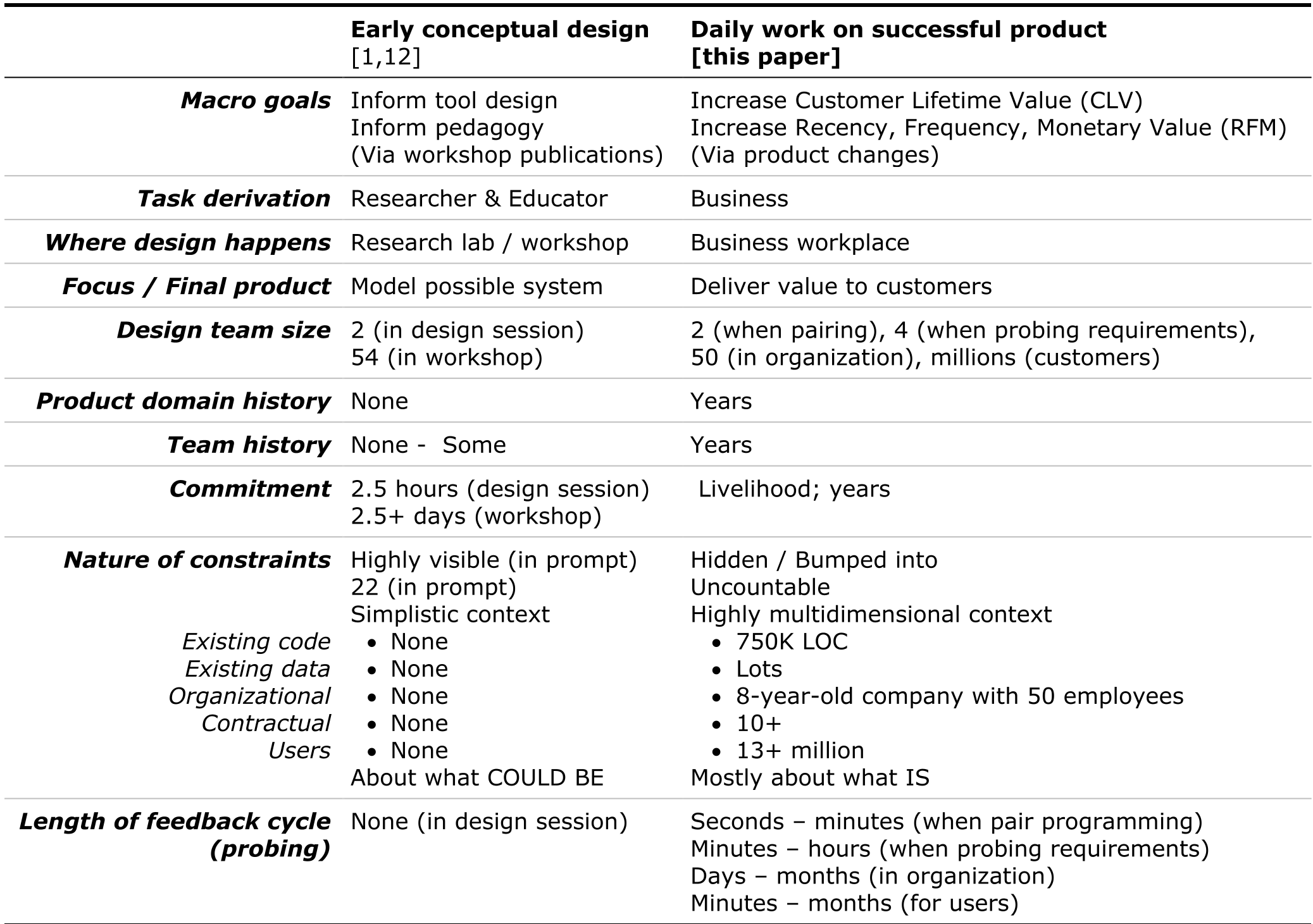 Table 1: The stark contrast between lab-based design and real-world engineering. Note the leap from "None" to "750K LOC" and "Millions of users."
Comparison: Theoretical vs. Physical Design
Figures 2 and 3 in the paper highlight the difference in posture and focus. While lab designers focus on the whiteboard (conceptualizing ), professional developers focus on the screen (probing ).
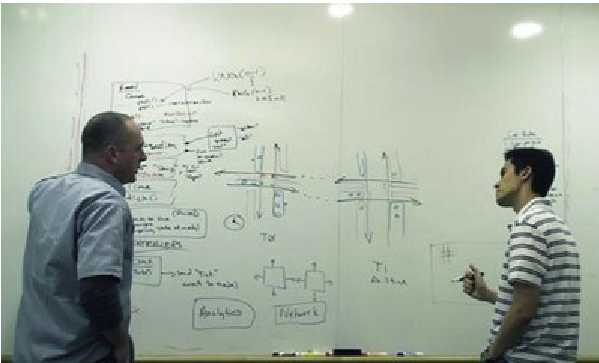 Figure 2: Traditional lab study layout—low constraint, high abstraction.
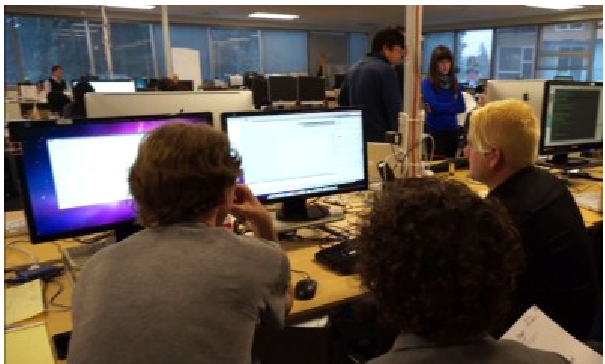 Figure 3: Professional workplace—navigating a multidimensional context of code, data, and users.
Critical Analysis & Takeaways
This paper challenges the CHI and Software Engineering communities to stop over-indexing on "early design."
The Key Insight: Professional design is an iterative investigation of an existing system's state.
- Limitation: As a preliminary study of one company, the findings are "initial results." Different domains (e.g., safety-critical embedded systems vs. SaaS) might show different HPI densities.
- Future Work: This research suggests that our IDEs and diagnostic tools should be better optimized for HPI cycles. If developers are forming 9 hypotheses a minute, the toolchain must provide near-instant feedback to keep the "flow."
Conclusion: To build better tools for developers, we must recognize that they are not just "builders" but "navigators" in a complex, invisible landscape.