
Designing for Collective Intelligence: Beyond Web 2.0
18632_Designing for collective intelligence.
The paper introduces a design framework for specialized Collective Intelligence (CI) applications, moving beyond general "Web 2.0" platforms to address niche, data-intensive domains. It validates this framework through "DDtrac," a custom Web-based system designed to coordinate therapy and education for children with special needs.
TL;DR
This paper shifts the focus of software design from individual productivity to Collective Intelligence (CI). By applying Web 2.0 principles—like crowd-sourced data and perpetual betas—to the highly specialized field of special education, the author demonstrates how a system called DDtrac can synchronize fragmented therapy teams and turn isolated observations into actionable, aggregated insights.
The Problem: The "Silo" Trap in Professional Collaboration
In many complex domains, such as healthcare and special education, the "wisdom" of a team is often trapped in individual silos. A child with autism may see a speech therapist, an occupational therapist, and a classroom teacher. Each collects data, yet they rarely communicate details in real-time.
Traditional software (e.g., standard spreadsheets or databases) treats the user as a solo actor. This results in:
- Data Fragmentation: Critical insights are buried in paper notes.
- Conflicting Goals: Team members may unknowingly work at cross-purposes.
- Loss of Qualitative Intuition: Hard-to-quantify observations (like a student's mood) are discarded.
Methodology: The Seven Pillars of CI Design
The author proposes that for an application to harness collective intelligence, it must move beyond being a mere "tool" and become a "platform." The DDtrac system was built on seven core principles:
- Task-Specific Representations: Using custom views (like IEP goals) rather than generic templates.
- Data as the "Intel inside": The application exists to collect and circulate data.
- Users Add Value: Allowing practitioners to comment on and enhance each other's data.
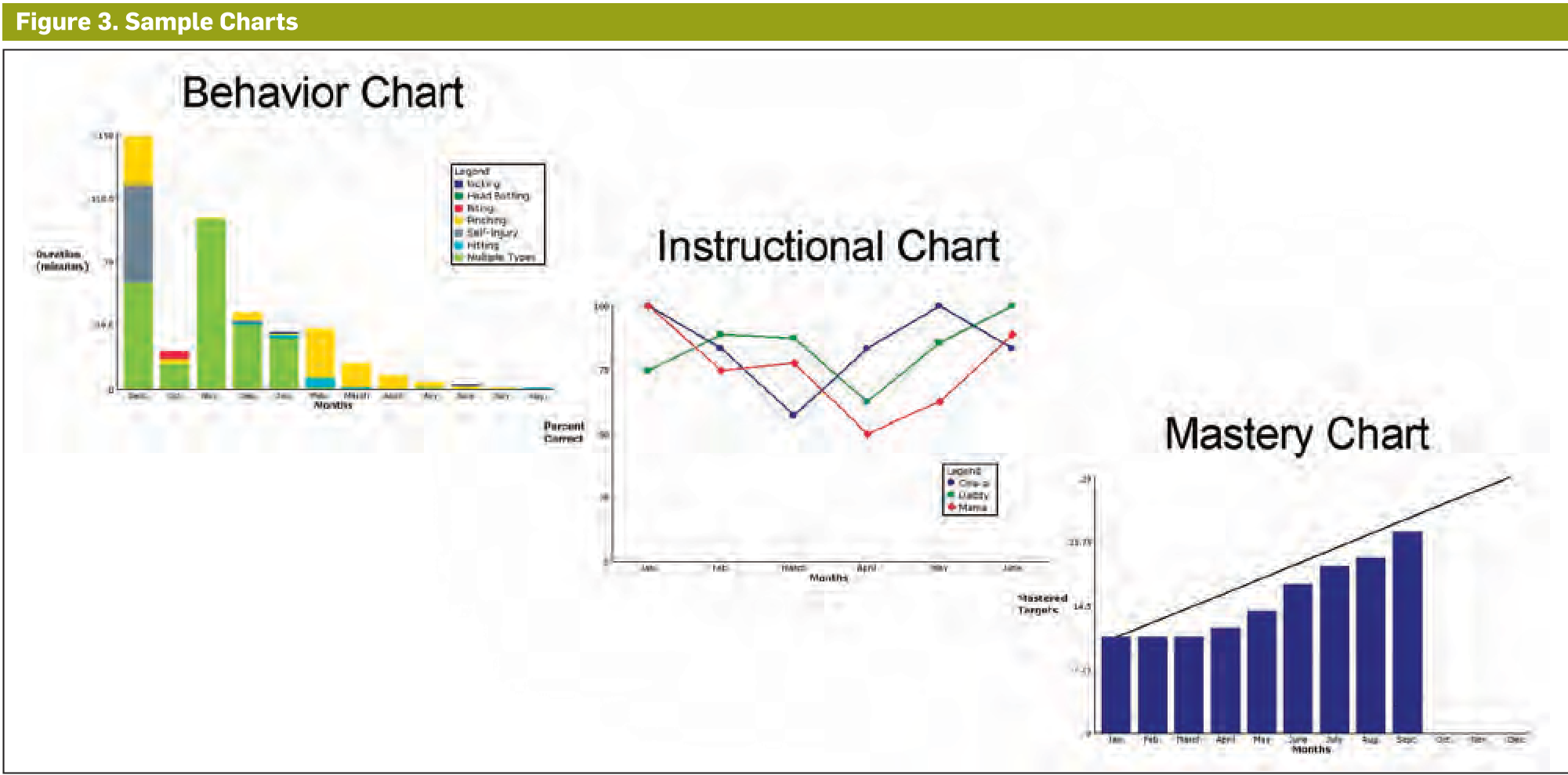
- Natural Aggregation: Charts and reports are generated as a side effect of regular use.
- Data Portability: Supporting XML and CSV exports to prevent data lock-in.
- Device Agnosticism: Accessible via PC, handhelds, or tablets at the point of care.
- Perpetual Beta: Continuous evolution based on user feedback.
System Architecture
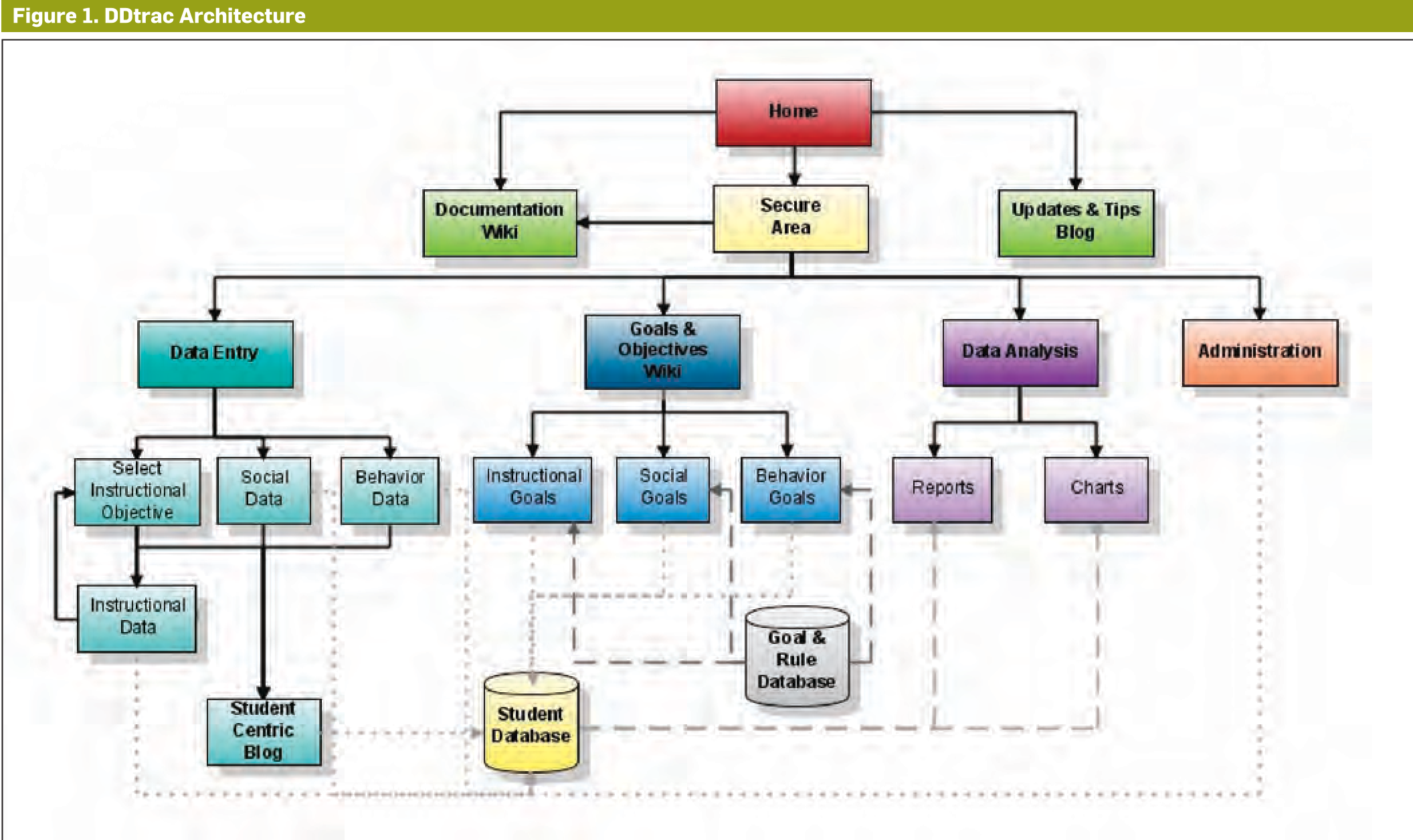
The DDtrac architecture bridges the gap between data entry and high-level analysis.
Implementation: Turning Blogs and Wikis into Clinical Tools
The core innovation of DDtrac is how it repurposes social media patterns for professional use:
- The Goals Wiki: A collaborative space where the entire team defines a student’s Individual Education Program (IEP).
- Student-Centric Blogs: Instead of personal journals, these are chronological feeds of a student’s progress where therapists can "reply" to observations.
- Semantic Tagging: Practitioners tag qualitative notes (e.g., "#hand-flapping"). Over time, this allows the team to filter and find patterns across years of data, a task impossible with paper records.
Results & Insights
During an 18-month trial, DDtrac proved that CI works in specialized domains:
- Scale: Captured over 50,000 data points.
- Speed: Task-specific screens made data entry faster than paper.
- Visibility: The student-centric blog allowed a therapist arriving for a session to instantly see what the teacher had observed hours earlier.
The study proves that the value of CI isn't just in "large" crowds (like Wikipedia) but in "smart" crowds—specialized teams whose collective knowledge is greater than the sum of its parts.
Critical Analysis & Conclusion
Takeaway: The real power of software today is no longer in its features, but in its ability to facilitate "data-driven conversations." DDtrac shows that by making data social and aggregatable, we can solve "systemic" problems that individual experts cannot solve alone.
Limitations: The study relied on a small field trial (one student). Scaling this to entire school districts would require addressing significant data privacy (HIPAA/FERPA) hurdles and ensuring interoperability with legacy enterprise databases using modern Web Services (APIs).
Future Outlook: As we move toward AI-integrated education, CI platforms like DDtrac will provide the high-quality, labeled datasets necessary to train predictive models that can suggest interventions before a student even begins to struggle.