
E-BCP: Harnessing the Wisdom of the Crowd for Organizational Resilience
Designing and Developing a Business Continuity Plan Based on Collective Intelligence
The paper introduces a novel methodological approach for designing Business Continuity Plans (BCP) by leveraging Collective Intelligence (CI) via Web 2.0 technologies. It presents the E-BCP platform, a diagnostic and collaborative tool that enables organizational communities to contribute their shared experience to minimize disaster risks and improve resilience.
TL;DR
Business Continuity Planning (BCP) is often a dry, top-down bureaucratic exercise. This paper proposes a paradigm shift: using Collective Intelligence (CI) and Web 2.0 social tools to transform BCP from a static document into a living, community-driven ecosystem. By launching the E-BCP platform, the authors prove that an organization's best defense against disaster is the aggregated intelligence of its own employees.
The Problem: Planning in a Vacuum
Most organizations treat disaster recovery as a checklist of redundant hardware and data backups. However, the authors argue that the Achilles' heel of any BCP is human factors.
- The Communication Gap: Employees are often unaware of their roles during a crisis.
- Stagnant Intelligence: A plan written by a few managers in a board room quickly becomes obsolete as the organization evolves.
- The False Sense of Security: Fragmented attempts at BCM (Business Continuity Management) lead to catastrophic failure when real-world complexity hits.
The Strategy: Integrating Intelligence (CI) and Standards (BS25999)
The researchers didn't reinvent the wheel; they supercharged an existing one. They mapped Collective Intelligence mechanisms onto the recognized BS25999 BCM Lifecycle.
The E-BCP Platform Architecture
The proposed platform targets two crucial (yet often overlooked) phases: Understanding the Organization and Embedding BCP in Culture.
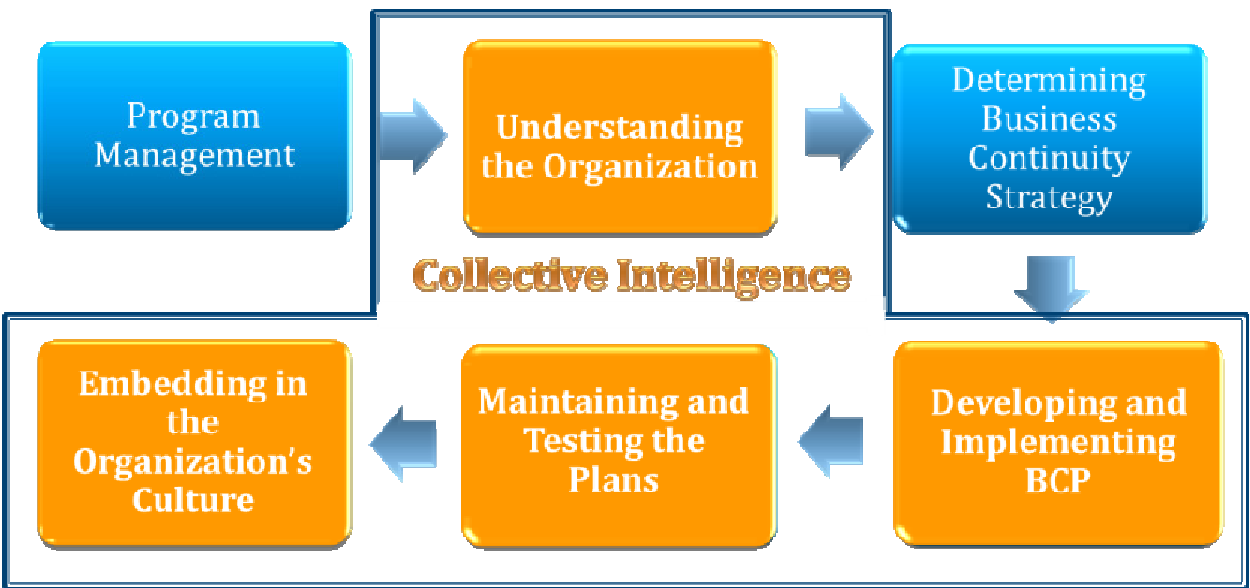
The platform utilizes two specialized modules:
- Collective Intelligence Tool (CIT): Acts as an internal "crowdsourcing" hub where the BCP team raises challenges (e.g., "How can we improve manual recovery in the sales department?"). Solvers receive recognition or rewards, ensuring the plan is vetted by those who actually perform the work.
- Critical Assessment Tool (CAT): Uses questionnaires to crowdsource the Business Impact Analysis (BIA). Instead of management guessing system criticality, the community identifies which applications are truly "Extremely Critical" based on daily usage.
Critical Insight: Why Crowdsourcing Works for BCP
The paper draws on the "Wisdom of the Crowds" theory, identifying that diverse groups are often smarter than individual experts. In a BCP context, this provides:
- Diverse Perspectives: A security expert might miss a logistical bottleneck that a warehouse worker sees immediately.
- Psychological Buy-in: When employees help build the plan, they are more likely to execute it correctly during a disaster (the "Social" and "Duty" motivational factors).
Determining Criticality
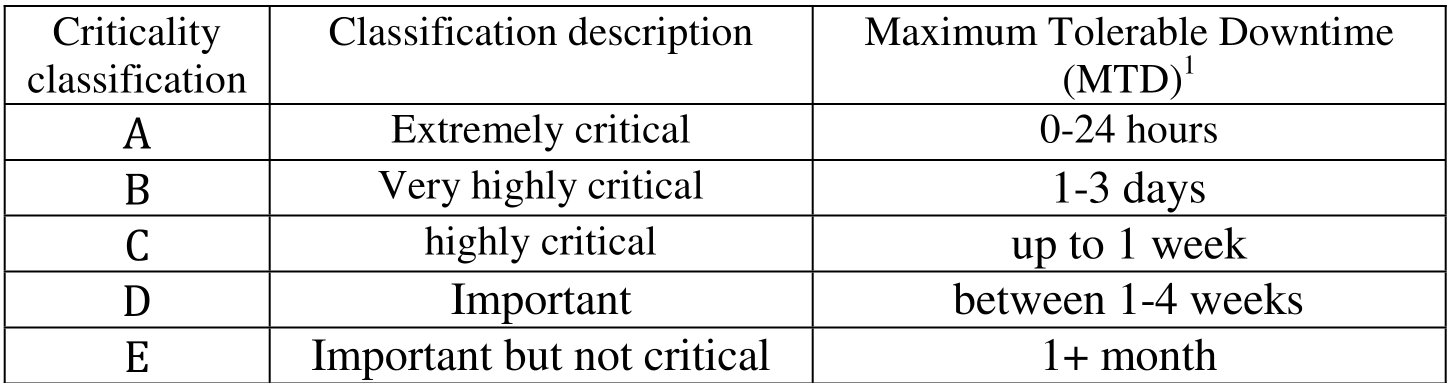
The CAT module uses the CIA Triad (Confidentiality, Integrity, Availability) and Maximum Tolerable Downtime (MTD). By aggregating scores from across the organization, the model generates a more accurate "Criticality League."
Real-World Evidence
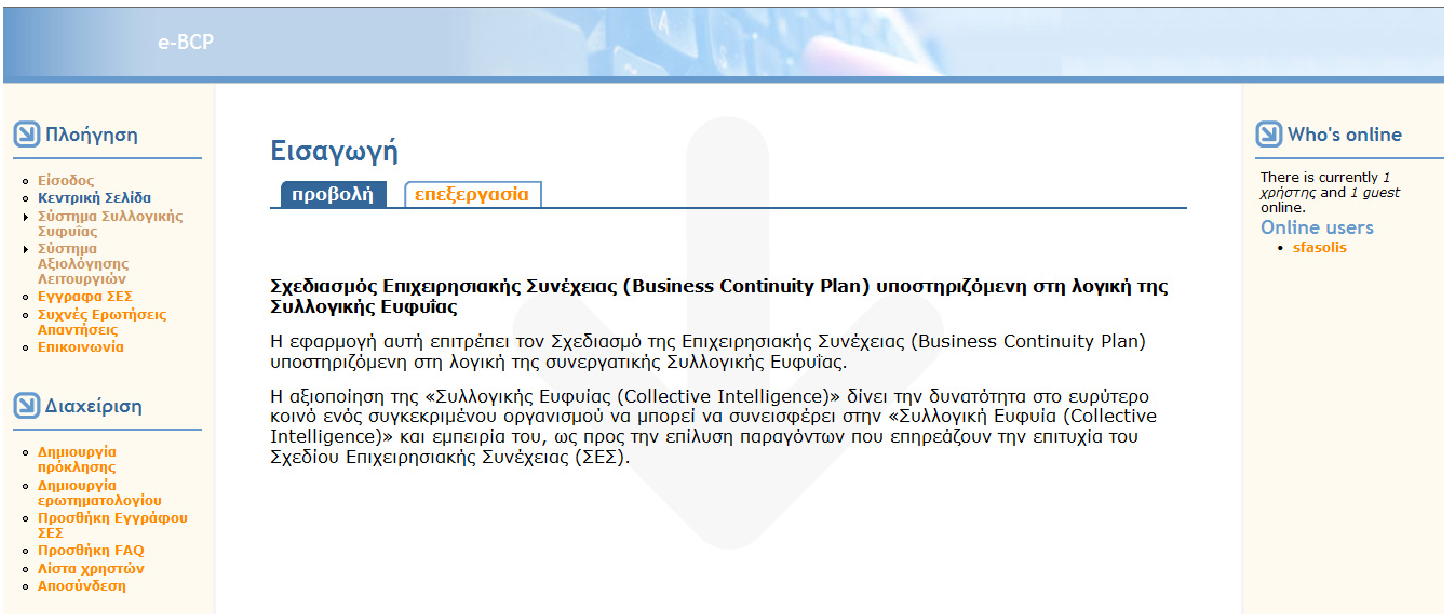
The Hellenic proof-of-concept (e-bcp.eu) demonstrated that employees felt more comfortable sharing thoughts through a platform than through traditional channels. This enabled professionals to filter "signal" from "noise"—harnessing valuable ground-level insights while discarding irrelevant data.
Conclusion and Future Outlook
This work marks a transition from "Business Continuity as a Task" to "Business Continuity as a Culture." While the field is in its early stages, the integration of CI promises more robust, adaptive, and cost-effective disaster management.
Future Research Directions:
- Inter-organizational Alliances: Can multiple companies use CI to help each other survive regional disasters?
- Cloud Computing Integration: Leveraging the scalability of the cloud to host these collaborative tools.
- Management Risks: Exploring the potential for misinformation within CI systems and how to mitigate "mismanagement" of the crowd's input.