
Beyond the Screen: Why mHealth is Failing Vulnerable Populations
Designing and Evaluating mHealth Interventions for Vulnerable Populations: A Systematic Review
This paper presents a systematic review of 83 studies investigating mHealth interventions designed for vulnerable populations, specifically low-socioeconomic status (low-SES) and racial/ethnic minority groups in the U.S. While mHealth shows potential for broad reach, the review reveals a critical lack of diversity in studied populations and a persistent focus on individual behavior change rather than socioecological factors.
Executive Summary
TL;DR: This systematic review of 83 papers uncovers a sobering reality: despite the ubiquity of mobile phones, mHealth interventions are not yet closing the health equity gap for low-SES and minority populations. While weight loss programs show some success, the field suffers from a lack of population diversity, shallow formative design, and a stubborn refusal to look beyond the individual to the broader community environment.
Academic Positioning: This is a critical "stock-taking" work that bridges HCI (Human-Computer Interaction) and public health. It identifies a "methodological superficiality" in how we design for vulnerability, moving the conversation from "can they use the app?" to "does the app fit their life context?"
The "Equity Gap" Motivation
The promise of mHealth was simple: put healthcare in everyone's pocket. However, this paper argues that we are building tools for a "generic" user that doesn't exist in vulnerable communities. The authors found that existing research has a massive Inductive Bias toward urban, female, and English-speaking participants.
If a tool is designed in a single-session "usability test" in a lab, it will likely fail in a neighborhood where data costs, immigration fears, and social stigma are the primary drivers of behavior.
Methodology: A Multi-Disciplinary Deep Dive
The research team analyzed 83 peer-reviewed papers through a rigorous four-step filter (Search, Screening, Quality Assessment, and Thematic Analysis).
The Research Pipeline
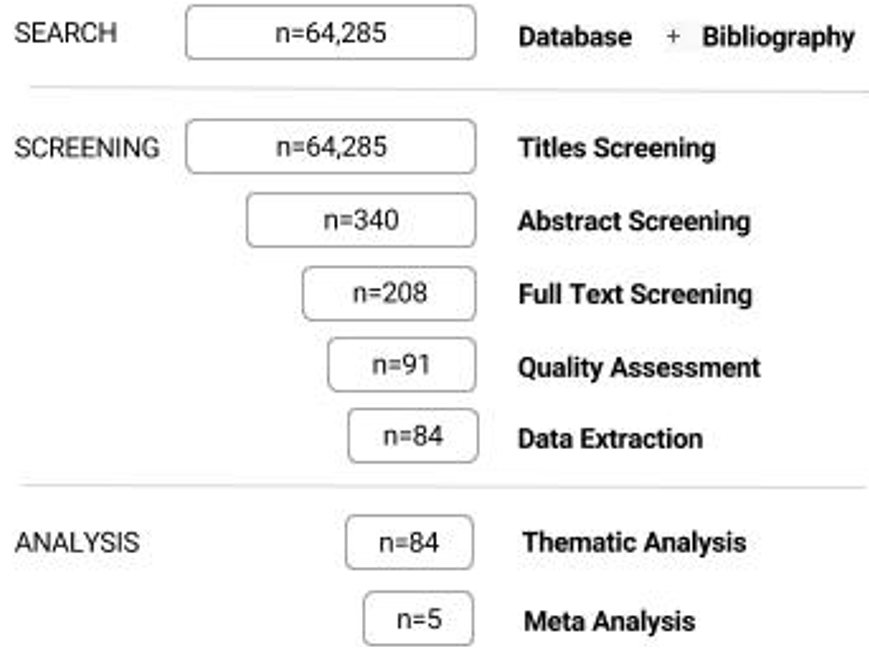
The authors didn't just look at what was built, but how it was built. They categorized barriers and facilitators into:
- Data Grounded (DG): Proven by study data.
- Hypothesized (H): Educated guesses by researchers.
- Data Grounded Hypothesis (DGH): Participant-suggested but untested.
Key Insights: Successes and Structural Failures
1. The SMS Paradox
Text messaging (SMS) is the "king" of mHealth for vulnerable groups due to low technical barriers. However, the review found that SMS-only RCTs had a coin-flip success rate (57%). In contrast, interventions that leveraged video and voice—despite higher technical requirements—showed a 100% success rate in RCTs.
2. The Theoretical Ceiling
Over 55% of studies had no theoretical basis. Those that did were trapped in "Intrapersonal" frameworks (like the Health Belief Model).
- The Physics of the Problem: Health isn't just a choice; it's an environment. By ignoring "Ecological" theories, designers are trying to fix the fisherman (individual behavior) while ignoring the fact that the pond (the community) is polluted.
3. Barriers vs. Facilitators
- Facilitator: Using familiar apps (like Instagram or Photobucket) rather than proprietary research apps.
- Barrier: The "Hidden Cost" of technology. Many participants refused to join studies not because of the app, but because of the cost of data minutes or the fear of providing personal info before immigration papers were processed.
Critical Evidence: The Meta-Analysis
The meta-analysis of 14 RCTs showed that while we are seeing "weight change" success, we are failing on more complex biometric markers like BMI and HbA1c (blood sugar).
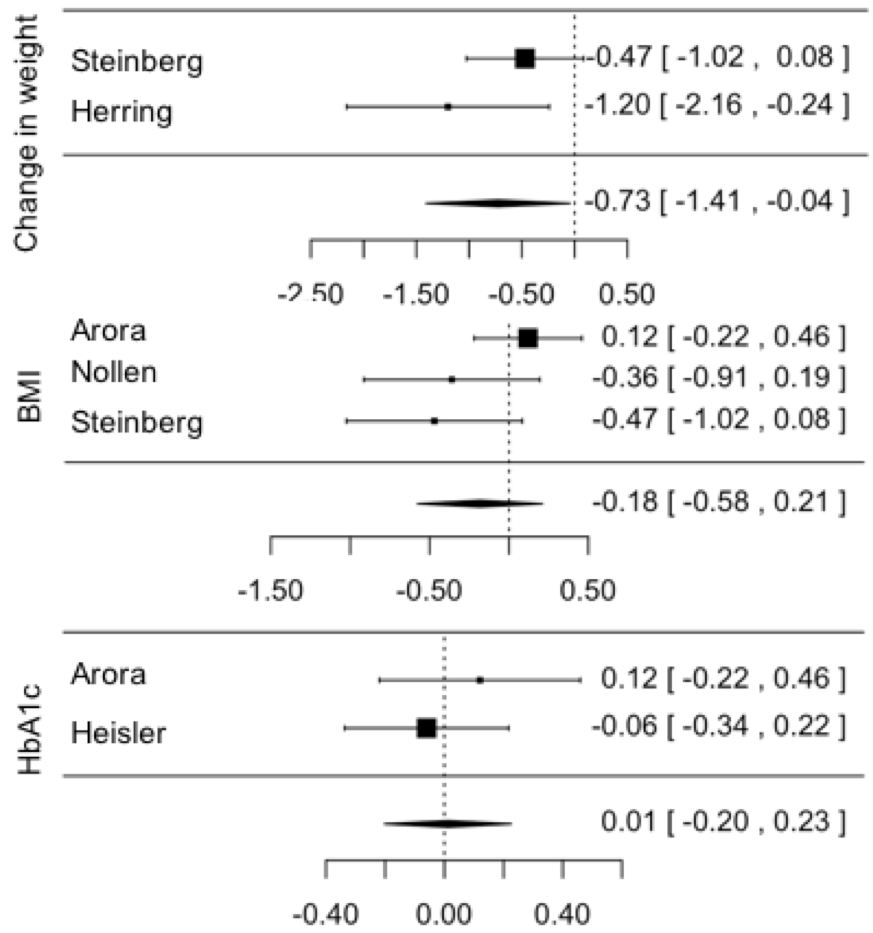 The Forest Plot highlights that the aggregate effect (the diamond at the bottom) for most health markers still hovers around the zero-effect line.
Conclusion: A Call for "Ecological" HCI
The paper concludes with a roadmap for future research:
- Longevity over Speed: Formative studies need to move past "single sessions" to understand life cycles.
- Gamification & Personalization: These are often "hypothesized" but rarely "evaluated." We need more evidence-based play.
- Community as the Client: We must design for families and neighborhoods, not just isolated individuals.
Final takeaway: Digital health for the vulnerable is not a technology problem; it is a context problem. Until our models account for the sociology of the user, our apps will remain high-tech solutions for low-priority needs.