
Beyond the Paycheck: Rethinking Incentive Design in Mobile Crowdsourcing
Designing Incentives for Community-Based Mobile Crowdsourcing Service Architecture
This paper presents a "community-based mobile crowdsourcing service architecture" evaluated through three case studies: MoboQ (contextual Q&A), MCfund (micro-crowdfunding for sustainability), and BianYi (crime mapping). It extracts six strategic insights focusing on the trade-offs between social, economic, and psychological incentives to sustain voluntary participation.
TL;DR
Building a successful crowdsourcing platform is less about the technology and more about the "Human API." This research explores three unique case studies—MoboQ, MCfund, and BianYi—to demonstrate how community-based services can thrive by balancing mobility, social psychology, and intrinsic motivation rather than just providing monetary rewards.
Background Positioning: The Shift to Community-Based Crowdsourcing
Traditional crowdsourcing platforms like Amazon Mechanical Turk have long treated human labor as a commodity, often resulting in low-quality output and high management overhead. The authors of this paper argue for a paradigm shift toward Community-Based Mobile Crowdsourcing. The goal is not just to get tasks done, but to embed these tasks into the "spare time" of urban life, making contribution as easy as sending a tweet.
Problem & Motivation: Why Gamification Often Fails
Many designers believe that adding a leaderboard or a few digital badges (Gamification) is enough to drive engagement. However, the authors identify a critical "Motivation Gap":
- Monetary Risks: Payments can actually decrease intrinsic motivation and encourage system cheating.
- Cognitive Load: Traditional tasks are too heavy for mobile users "on the go."
- The Rarity Paradox: Digital rewards only work if the community is large enough for those rewards to feel scarce. In small, local communities, these mechanics often fall flat.
Methodology: The Three Pillars of Experience
The research is anchored in three distinct architectural implementations:
- MoboQ (Social Sensing): Uses people as "local sensors" to answer real-time questions (e.g., "How long is the line at this bank?"). It leverages social facilitation by publicly thanking responders.
- MCfund (Micro-Level Crowdfunding): Focused on community sustainability. It introduces "Aging Money"—virtual currency that loses value over time—to encourage immediate investment in local social projects.
- BianYi (Crime Mapping): Extracts crime data from microblogs like Sina Weibo, utilizing trust-building through verified accounts to ensure data reliability.
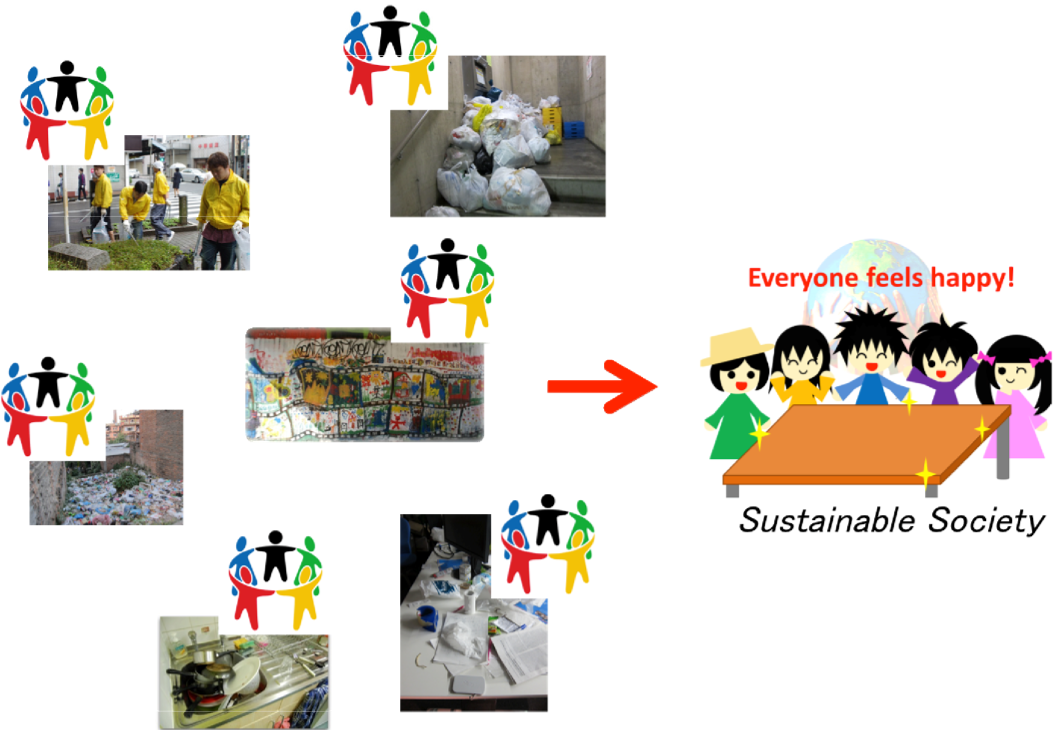 Figure 1: Concept of Community-Based Mobile Crowdsourcing Service Architecture.
The Six Strategic Insights
The paper’s core contribution lies in six insights derived from operating these services:
- Mobility vs. Curiosity: Tasks must be small enough to fit into the "gaps" of daily life (waiting for a train). Curiosity is the hook, but brevity is the retainer.
- The Gamification Trade-off: Self-respect (badges) requires scale. For smaller communities, Reciprocity (helping because you were helped) is a far more robust engine.
- Psychological Goals: Real-world progress isn't linear. The authors suggest using fictional stories or "mythologies" to make mundane tasks feel like meaningful sub-goals in a larger drama.
- Intrinsic Value of Money: Surprisingly, money isn't just an economic incentive. In MCfund, the act of "investing" funds acts as a reminder of the task's importance, boosting awareness rather than just purchasing labor.
- Cultural Nuance: Incentives are not one-size-fits-all. In collectivist cultures, avoiding social loafing (feeling like your contribution doesn't matter) is critical.
- Integrating Incentives: Different people value different things. A successful service must offer a "Value Map" that appeals to curiosity, social status, and altruism simultaneously.
Experimental Validation
The survival of MoboQ in the wild provides strong evidence for this approach. With a 74.6% average response rate, the system proved that strangers are remarkably willing to help when the request is contextual, timely, and socially validated.
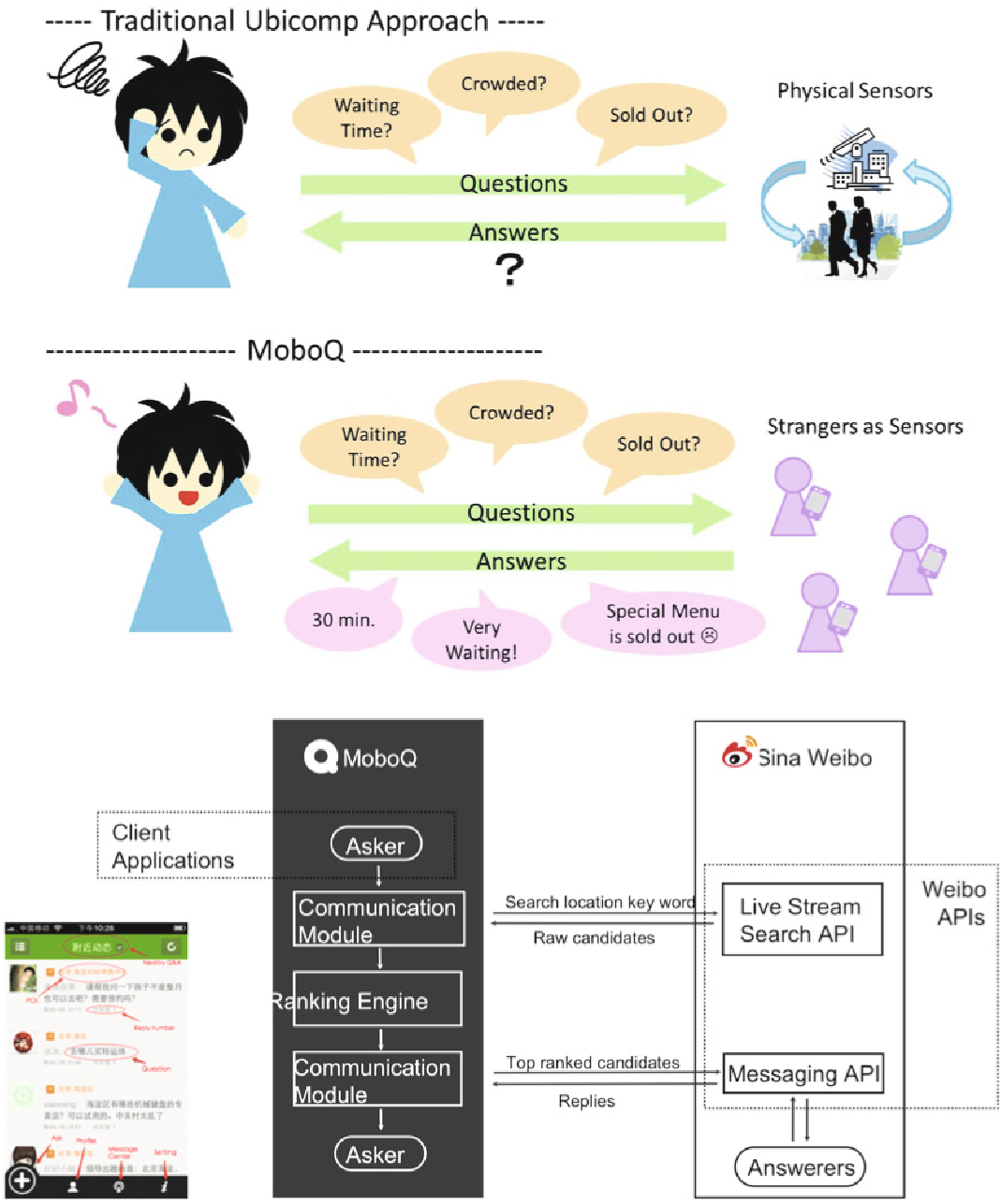 Figure 2: MoboQ Service Design, highlighting the trust-building message format.
Critical Analysis & Conclusion
Takeaway: The "Community-Based" approach succeeds because it respects the user's environment. It doesn't treat the user as a worker, but as a "sensor" and "citizen."
Limitations: The reliance on external APIs (like Sina Weibo) makes these systems vulnerable to platform policy changes. Furthermore, while "fictional storytelling" is a fascinating incentive, implementing it at scale without becoming "cringe" or distracting from the task remains a challenge.
Future Outlook: We are moving toward a world of "Hyper-Local" services. The next generation of crowdsourcing will likely see a deeper integration of Transmedia Storytelling, where our daily chores are gamified through immersive, narrative-driven layers that make urban participation feel like an epic quest.