
Designing Incentives: Beyond Money in Community-Based Mobile Crowdsourcing
Designing Incentives for Community-Based Mobile Crowdsourcing Service Architecture
The paper presents a community-based mobile crowdsourcing service architecture, shifting from traditional ad-hoc designs to a strategy-driven approach. Through three case studies—MoboQ (context sensing), MCfund (micro-crowdfunding), and BianYi (crime mapping)—it explores how to integrate multiple incentive types to motivate voluntary participation in trivial but valuable social tasks.
TL;DR
This research moves beyond the simplistic "pay-per-task" model of traditional crowdsourcing. By analyzing three unique mobile platforms—ranging from real-time Q&A to crime mapping—the authors identify six core insights into how social facilitation, reciprocity, and even fictional storytelling can be engineered to build sustainable, community-driven digital ecosystems.
Background: The Limits of Intuitive Design
Most social media and crowdsourcing platforms are designed "ad-hoc," relying on the intuition of creators rather than a systematic understanding of human motivation. While platforms like Amazon Mechanical Turk use money as a primary lever, research shows that monetary rewards can actually decrease work quality and encourage cheating. The authors argue for a Community-Based Mobile Crowdsourcing architecture that targets trivial tasks with low cognitive load, performed during "micro-moments" of daily life.
Problem & Motivation: The Incentive Tradeoff
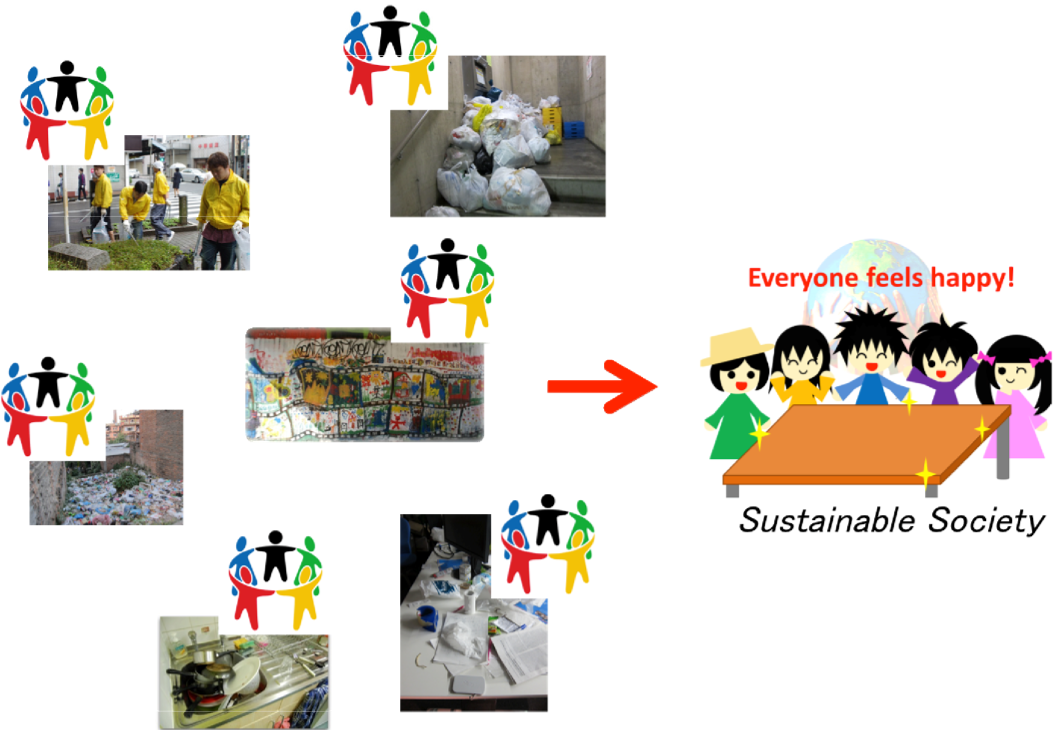
The fundamental problem is "Social Loafing"—the tendency for individuals to do less when they are part of a group. Why should a user on Sina Weibo answer a stranger's question about how long the line is at a local cinema? Why should someone clean a public sink? The authors' insight is that motivation is situational. A single incentive (like a digital badge) doesn't work for everyone; it depends on cultural background, personality, and the current level of curiosity.
Methodology: Three Case Studies in Action
The researchers developed and operated three distinct services to test their incentive theories:
- MoboQ (Sensing Context): Uses strangers as "human sensors" on microblogging platforms to answer geo-sensitive questions.
- MCfund (Sustainability): Uses "micro-crowdfunding" and "aging money" (currency that loses value over time) to encourage users to fund and perform small community maintenance tasks.
- BianYi (Crime Mapping): Automatically generates crime maps by mining social media data, relying on trust and the collective desire for safety.
Six Insights for Content Culture & Social Media
The heart of the paper lies in the lessons learned from these deployments:
1. The Curiosity-Time Tradeoff
Mobility allows users to contribute during "spare time" (e.g., waiting for a train). Curiosity is a powerful initial hook, but if a task takes longer than the user's focus window, they will abandon it.
2. Social Facilitation vs. Self-Respect
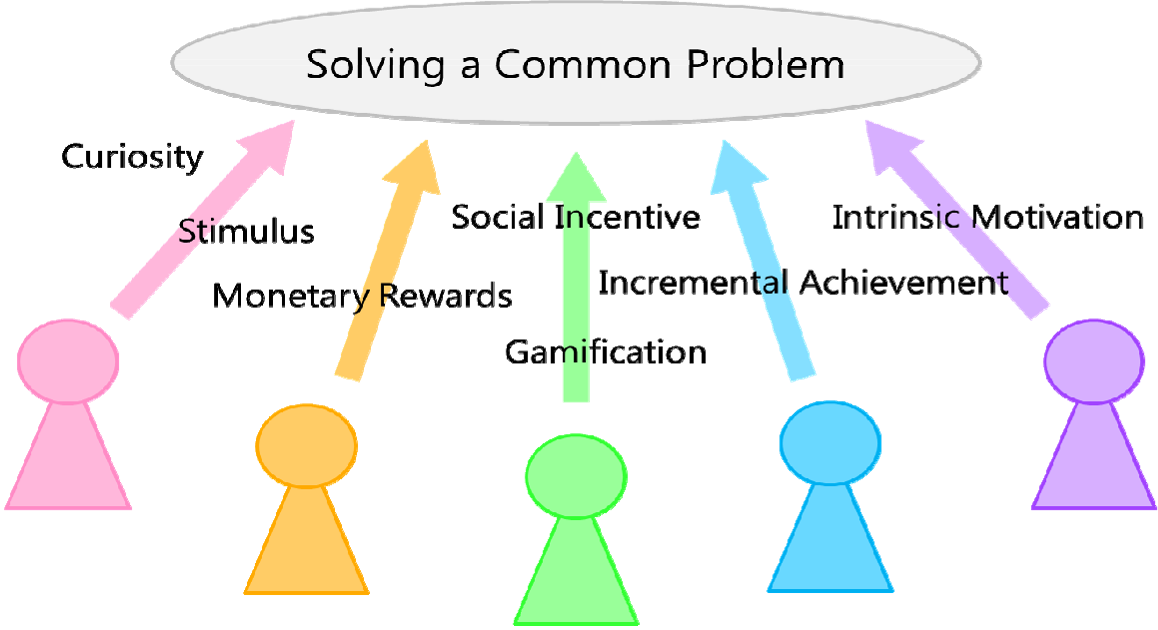
While badges and leaderboards (Gamification) are popular, the authors found they often fail in small communities because "virtual rarity" only works at scale. Instead, reciprocity (helping someone because you've been helped) and social facilitation (knowing others are watching) are more effective in community settings.
3. Fictional Stories as Engines
To solve complex problems like sustainability, the authors suggest "Transmedia Storytelling." By embedding real-world tasks into a fictional narrative or "virtual festival," users find it easier to achieve sub-goals that feel meaningful.
4. The Dual Power of Money
Money isn't just an economic incentive; it is a communication tool. In MCfund, the act of "investing" even small amounts of non-monetary currency increased the user's awareness and intrinsic value of the task.
5. Cultural Sensitivity
Personalities matter. For instance, in collectivist cultures, social facilitation (modeling behavior after the group) is much more effective than in individualistic ones.
6. Value-Based Integration
The ultimate goal is to offer "multiple values" in one service so that users with different personalities (some driven by achievement, others by altruism) can all work toward the same community goal.
Experiments & Results: Real-World Feasibility
The MoboQ results are particularly striking:
- Response Rate: 74.6% of questions received at least one answer.
- Latency: Over 50% of answers arrived within 20 minutes. This proves that "strangers as sensors" is a viable model when the query is framed to build trust (e.g., explaining why the user was selected).
Critical Analysis & Conclusion
Takeaway
The paper shifts the focus of crowdsourcing from technology to psychology. The most successful future platforms won't just have the best algorithms; they will have the best "Incentive Architectures" that adapt to the user's context.
Limitations
A major challenge remains in Quality Control and Data Accuracy, especially in sensitive areas like crime mapping (BianYi), where natural language processing often struggles to extract precise locations from casual social media text.
Future Outlook
The authors envision a more systematic framework for incentive design, potentially integrating blockchain-based "aging currencies" or more sophisticated AI-driven storytelling to keep communities engaged in solving the world's most "trivial" yet essential problems.