
Designing Leaderboards: Why Your Rank and Domain Matter More Than You Think
Designing Leaderboards for Gamification: Perceived Differences Based on User Ranking, Application Domain, and Personality Traits
This paper investigates how user preferences for gamification leaderboards are influenced by ranking position (top, middle, bottom), application domain (social, fitness, productivity), and Big-Five personality traits. Through a survey of 286 participants using dynamic interface mockups, the study identifies that domain context and rank are primary drivers of leaderboard effectiveness.
Executive Summary
TL;DR: Leaderboards are not a "one-size-fits-all" solution for engagement. This study reveals that a user's perception of a leaderboard is drastically altered by where they are ranked and the context of the app. While we love seeing ourselves at the top of a fitness list, being at the bottom of a productivity tracker feels like public shaming.
Context: Published at CHI '17, this paper is a foundational study in "Individualized Gamification." It moves beyond asking "Do leaderboards work?" to "For whom and in what context do they work?"
The Problem: The Double-Edged Sword of Competition
Most designers assume that adding a leaderboard automatically boosts motivation. However, the "disincentive" effect is real. Prior work suggests that for many, a leaderboard is a source of stress rather than playfulness. The authors identified a gap: we didn't know how ranking positions (top vs. bottom) interact with specific domains like social media or the workplace.
Methodology: Personalizing the Experiment
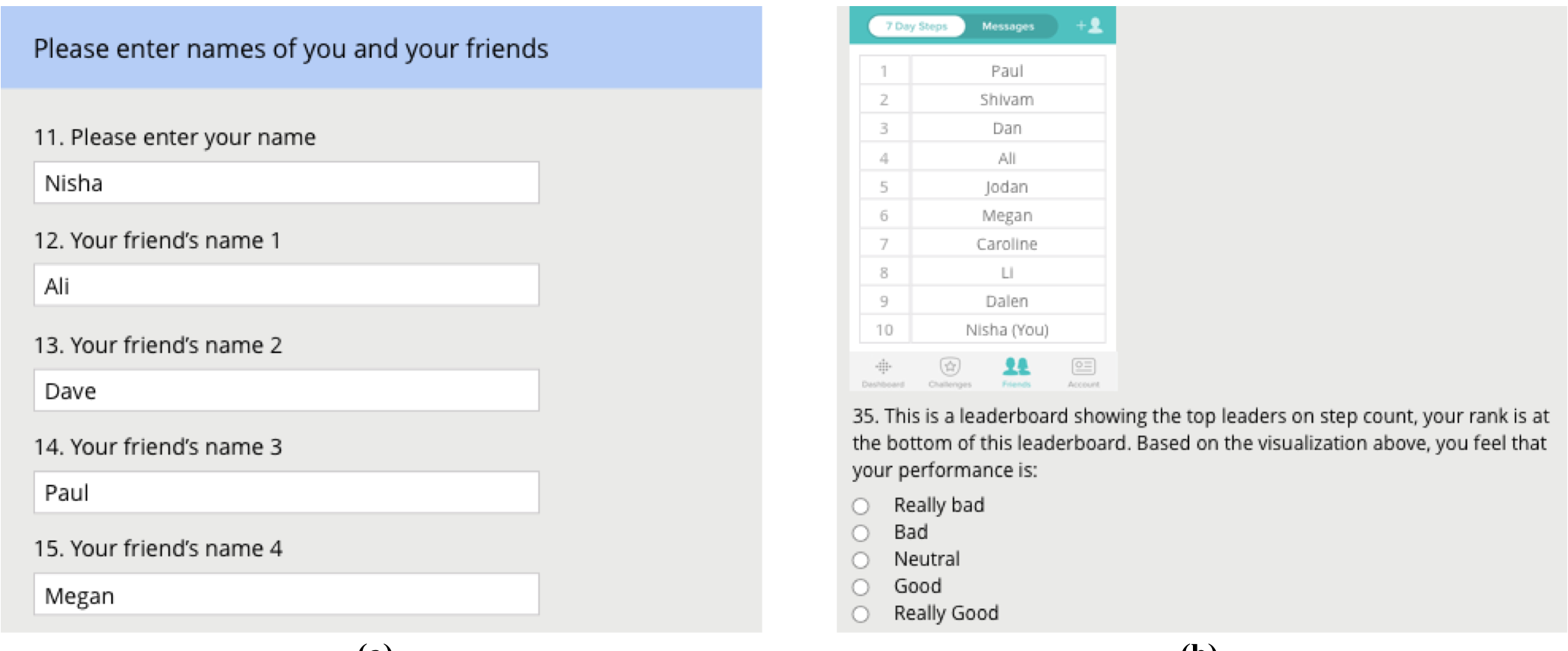
To get authentic emotional responses, the researchers used a "Piping" technique. Participants didn't look at generic lists; they entered their own names and 10 friends' names. These were injected into mockups for:
- Social Networking: Ranking profile views or activity.
- Fitness: Comparing step counts.
- Productivity: Measuring work output/quality.
Core Insights: One Size Does Not Fit All
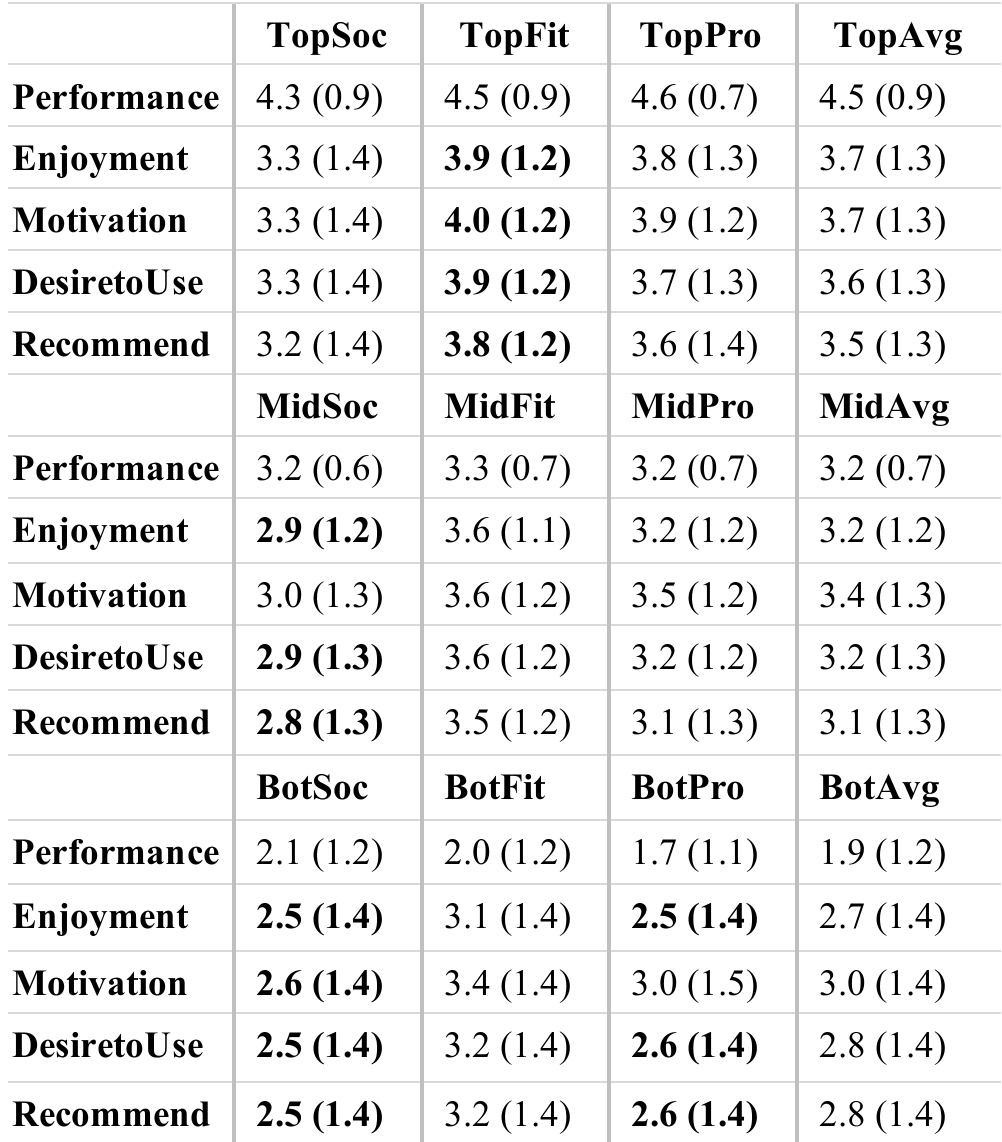
1. The "Fitness" Exception
Fitness was the only domain where users stayed positive even when they were at the bottom of the list. Why?
- Moral High Ground: Fitness is viewed as a "self-improvement" journey.
- Social Support: Users preferred competing with family/friends, turning the leaderboard into a tool for mutual accountability rather than cutthroat competition.
2. The Workplace "Name-and-Shame"
In the Productivity domain, being at the bottom was perceived as a threat. Participants felt their work couldn't be purely quantified and feared that low rankings would damage their professional reputation.
- Takeaway: In the office, leaderboards should likely only show the "Top 3" or be restricted to repetitive, objective tasks (like hand-washing in hospitals) rather than creative output.
3. Social Media's Misplaced Competition
Social networking websites received the lowest scores. Users felt that "ranking friends" was counter-intuitive to the goal of "connecting with friends."
The Personality Factor
The study found that Extraversion is a major predictor of leaderboard preference. Extraverts enjoy the dynamic, "ever-changing social landscape" of a leaderboard. Interestingly, even when extraverts were at the bottom, they remained more motivated than introverts, viewing the rank as a challenge rather than a defeat.
Critical Analysis & Design Implications
The authors provide a framework for future gameful design:
- Fairness First: If the metric (like "social influence") feels arbitrary, the leaderboard fails.
- Scoping Matters: We prefer competing against "Friends" (strong ties) over "Strangers" (weak ties), especially in personal domains like health.
- Dynamic Feedback: Leaderboards should emphasize change and progress, not just static status.
Limitations: As a survey-based study, it measures perceived preference rather than long-term behavioral change. Future work should look at "after-use" fatigue—does the leaderboard still motivate after six months of being in 8th place?
Conclusion
Leaderboards should be treated as a communication medium, not just a score display. To succeed, designers must ask: Is this task fair to measure? Does the user want their friends to see them failing? If the answer is no, a leaderboard might do more harm than good.