
CrowdButton: Reimagining Situated Crowdsourcing through Tangible Micro-Volunteering
Designing a Micro-Volunteering Platform for Situated Crowdsourcing
This paper introduces "CrowdButton," a situated crowdsourcing platform designed for micro-volunteering in physical spaces. By embedding low-barrier, tangible interfaces (physical buttons) in public environments, the research demonstrates a sustainable model for unpaid, location-based task completion.
TL;DR
Can we build a sustainable "human-sensor" network without paying a single cent? This research introduces CrowdButton, a physical interface that turns passersby into micro-volunteers. By reducing complex tasks to a simple button press and using psychological feedback loops, the system achieves sustainable, high-quality data collection in physical environments—proving that simplicity and "situatedness" are the keys to unpaid crowdsourcing.
Background & Motivation: The Context Gap
While platforms like Amazon Mechanical Turk dominate the digital task economy, they fail when a task requires contextual presence—knowing if a specific room is currently noisy or if a local transit stop is crowded.
Early attempts at "situated crowdsourcing" used complex touchscreens or modified vending machines. However, the author argues these fail because:
- Learning Friction: Users don't want to learn a new UI for a 5-second task.
- Incentive Gap: Without pay, sustainable contributions are hard to maintain.
- Quality Control: Standard methods (like "Golden Tasks") don't work for real-time sensing where the "correct" answer changes every minute.
Methodology: The "Open, Natural, Simple" Architecture
The core of this work is the CrowdButton—a Wi-Fi-enabled tangible device. Instead of a screen, it uses arcade buttons with built-in LEDs.
1. Hardware Design
The device is designed for extreme "affordance." Passersby don't need instructions; the presence of a button suggests an action. The system consists of the physical devices and a central CrowdServer that aggregates inputs to predict the current state of a space.
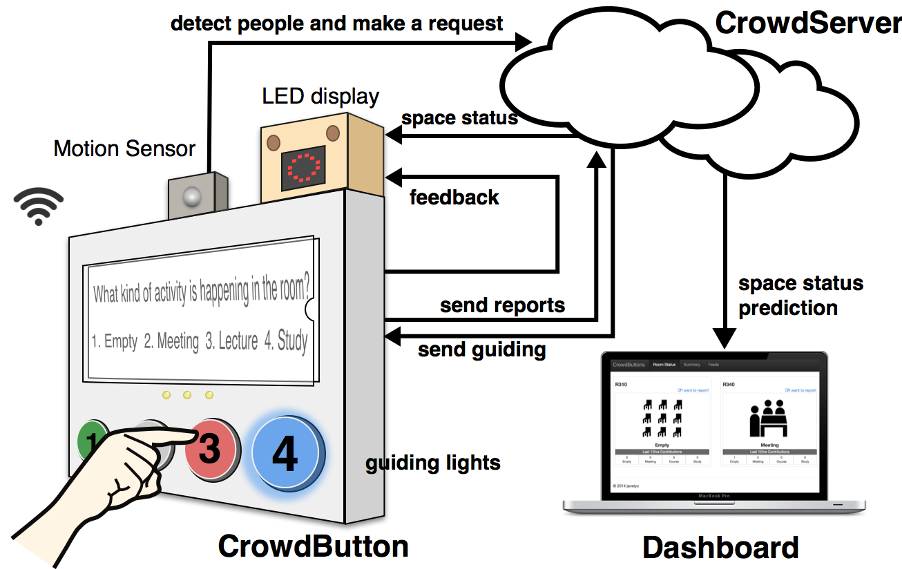 Figure 1: The interaction loop between the motion-based CrowdButton and the CrowdServer.
2. The Quality Loop: CrowdFeedback
To solve the quality issue, the author utilizes CrowdFeedback. Based on cognitive dissonance theory, if a user sees the system is making a "wrong" prediction (via an LED indicator or display), they feel a psychological nudge to correct it. This turns the user from a mere data reporter into a system moderator.
Experiments: Sustainability and Accuracy
The author deployed the device in a university building for six months to track room status (e.g., "Lecture," "Study," "Empty").
- Sustainability: Even without pay, the system collected an average of 15 contributions per day for half a year—a remarkable feat for a volunteer-based system.
- Accuracy Improvement: By adding feedback (Status displays and lighting cues), the prediction accuracy improved significantly compared to the "blind" baseline.
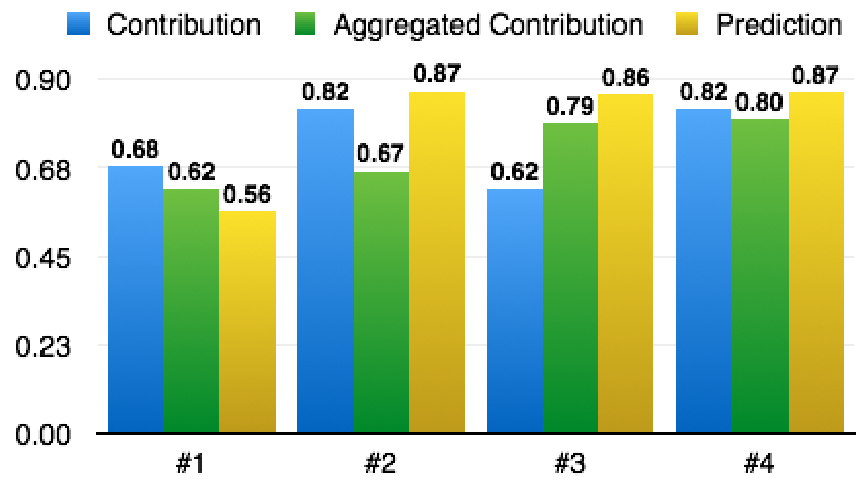 Figure 2: Performance comparison across different feedback settings.
Critical Insight & Future Outlook
The genius of this work lies in reducing the "cost of participation" to zero. By making the physical movement (clicking a button while walking) almost subconscious, the author taps into a "latent labor" pool of people who want to help but have no time.
Limitations: While the system is robust against casual errors, it remains vulnerable to malicious "button-spamming." Future work would need to address sybil attacks or intentional noise in the data through more sophisticated hardware-level rate limiting or spatial verification.
Conclusion: The CrowdButton project shifts the focus of crowdsourcing from the "online marketplace" to the "physical corridor." It proves that with the right psychological nudges and a "simple-first" design philosophy, communities can voluntarily maintain real-time maps of their own environments.