
Designing Fun: The Hidden Mechanics of Reward Diversity in Crowdsourcing
A Study about Designing Reward for Gamified Crowdsourcing System
This study investigates gamification in crowdsourcing by introducing "perceived reward diversity" and "explication of anticipated rewards" as key drivers of participant engagement. By analyzing a 2x2 factorial experiment, the authors demonstrate that these mechanisms significantly enhance both work quality (creativity) and quantity (effort) while inducing a "fun experience."
TL;DR
Why do people spend hours on games for free but struggle with simple paid crowdsourcing tasks? This paper explores the "fun" gap. By introducing Perceived Reward Diversity and requiring users to Explicate (state) their expected rewards, researchers found a significant boost in both the creativity of ideas and the effort invested by participants.
The Problem: The Quality Gap in the "Crowd"
While crowdsourcing is a powerful tool for innovation, it has a notorious weakness: Quality Assurance. Because participation is voluntary and often anonymous, maintaining stable, high-quality outcomes is difficult. Traditional gamification attempted to fix this with points and badges, but these often feel like "pointsification"—superficial layers that lack a deep psychological connection to the user's motivation.
The authors argue that the missing link is a theoretical understanding of "Fun." Most studies look at Stimulus (the game feature) and Response (participation), but ignore the Organism—the internal psychological state that actually transforms a task into an engaging experience.
Methodology: Engineering Tension and Commitment
The researchers proposed two innovative system-level interventions:
- Perceived Reward Diversity: Instead of a flat fee, rewards are tied to achievement levels. This creates "tension" and curiosity about the potential outcome, which the authors link to the experience of fun.
- Explication of Anticipated Rewards: Before starting, users are asked to state what reward they expect. Based on Cognitive Dissonance Theory, once a user commits to a certain reward level, they feel psychologically compelled to produce work high enough in quality to justify that reward.
Experimental Design
The study used a 2x2 factorial design with 70 participants on a prototype site called "Imagine Tech."
- Independent Variables: Explication (Yes/No) × Reward Type (Fixed/Diverse).
- Dependent Variables: Answer Quality (Creativity), Answer Quantity (Word count), and subjective Fun Experience.
Key Insights from the Results
The data suggests that "fun" is not just about entertainment; it is about meaningful challenge.
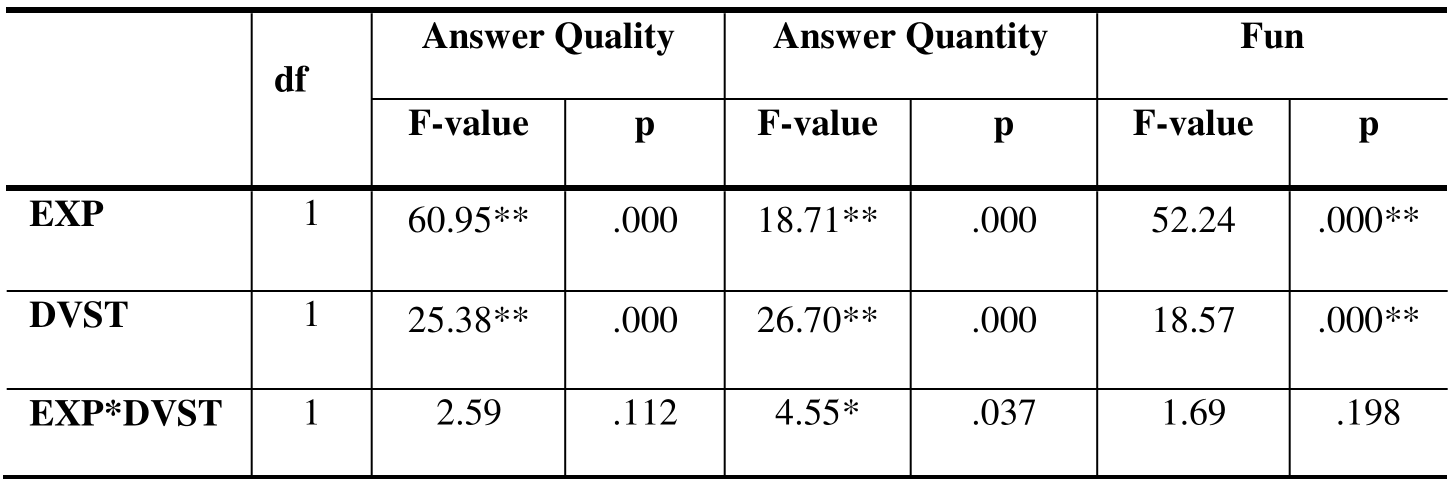
- The Power of Explication: Users who had to state their expected reward produced significantly better quality (Score: 4.51 vs 2.86). This validates the idea that "pre-commitment" acts as a powerful psychological anchor.
- Diversity Drives Fun: Perceiving a range of potential rewards led to higher "fun" ratings (4.60 vs 3.34). The uncertainty of the reward, when tied to performance, mimics the "risk-reward" loop found in successful video games.
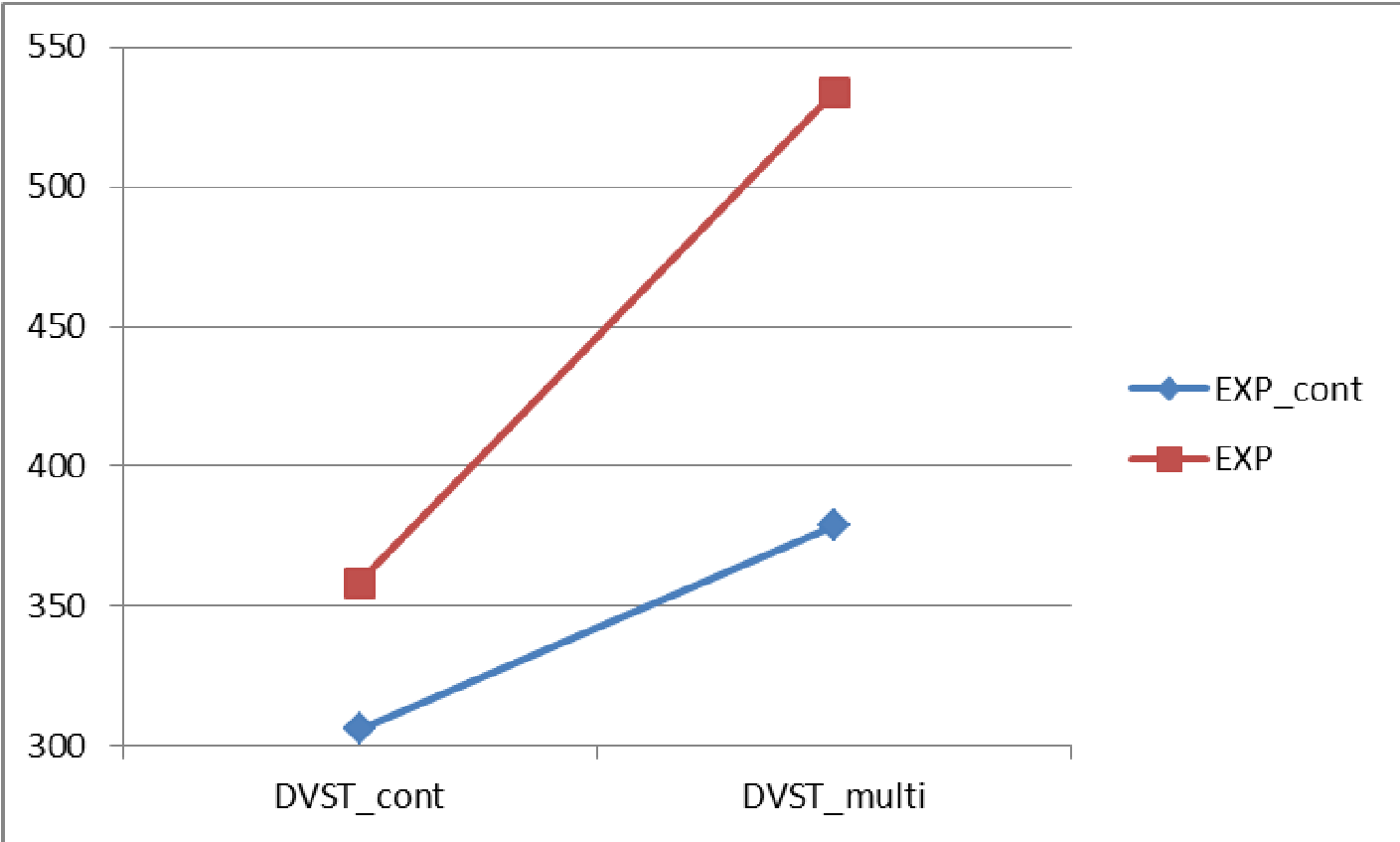
- The Interaction Effect: As seen in the figure below, the combination of explication and diverse rewards has a synergistic effect on the quantity of work. When users commit to a goal in an environment where they can actually achieve more, their output peaks.
Critical Analysis & Future Directions
Why it works
The genius of this approach lies in its simplicity. You don't need complex 3D graphics to "gamify" a system. By simply changing the reward structure and adding a pre-task prompt, you change the user's mental model from "laborer" to "player."
Limitations
- The "Newness" Effect: Long-term engagement wasn't tested. Would users find this tedious after 100 tasks?
- The Nature of Fun: The link between "tension" and "fun" is theoretically sound but requires more physiological evidence (e.g., heart rate tracking) to be fully proven.
Conclusion
This research moves gamification from "vague aesthetics" to "psychological engineering." For product managers and researchers in the crowdsourcing space, the takeaway is clear: if you want high-quality contributions, don't just pay more—make the pay variable and ask your users to tell you what they are worth.