
Designing with Traces: Beyond the Pristine Digital Interface
Designing with traces
The paper introduces "Material Traces" as an analytic and pedagogical category in HCI, drawing on New Materialist theory to explore how physical/digital forms embody histories of skill, use, and time. It presents a framework based on three lenses—Attributes, Entanglements, and Trajectories—validated through design projects like conductive textiles and interactive ceramics.
TL;DR
In a world phase-locked into the "shiny and new," this paper argues for the beauty of the "worn and broken." By introducing the concept of Material Traces, Rosner et al. provide a framework for HCI designers to treat physical wear, temporal decay, and craft-based skill as first-class design materials. Through lenses of Attributes, Entanglements, and Trajectories, they demonstrate how objects like sound-emitting fabrics and shattered ceramics can foster deeper reflection than traditional, sterilized digital tools.
The Problem: The Sterile Digital Present
Current HCI often views "traces" as mere data—logs of clicks, "undo" histories, or social media feeds. This perspective ignores the physicality of time. In the analog world, the scuff on a leather bag or the notes in the margin of a book tell a story of provenance. Digital interfaces, by contrast, are designed to be "ever-new," erasing the history of their own making and use. This "immateriality" leads to a loss of emotional resonance and a lack of critical engagement with the objects we inhabit.
Methodology: The Three Lenses of Traces
The authors propose that designers should navigate their materials by looking at what they leave behind. They break this down into three core analytic lenses:
1. Attributes: The "Inscriptions" of Form
Attributes aren't just static properties like "red" or "heavy." They are dynamic inscriptions.
- The Mousetrack: Uses pressure-sensitive and thermochromic inks to visualize rodent scurrying patterns without a computer.
- The Handprint: A remote presence device where a child's hand warmth creates a "trace" on a distant wall, bridging the gap between digital sensing and physical warmth.
2. Entanglements: Co-constituted Relationships
Materials don't exist in isolation. Through Entanglements, properties emerge from the interaction of different elements.
- The Telephone Project: By sewing conductive coils into fabric, the "sound" isn't just a signal; it is entangled with the texture of the cloth, the proximity of magnets, and the physical gestures of the museum-goer.
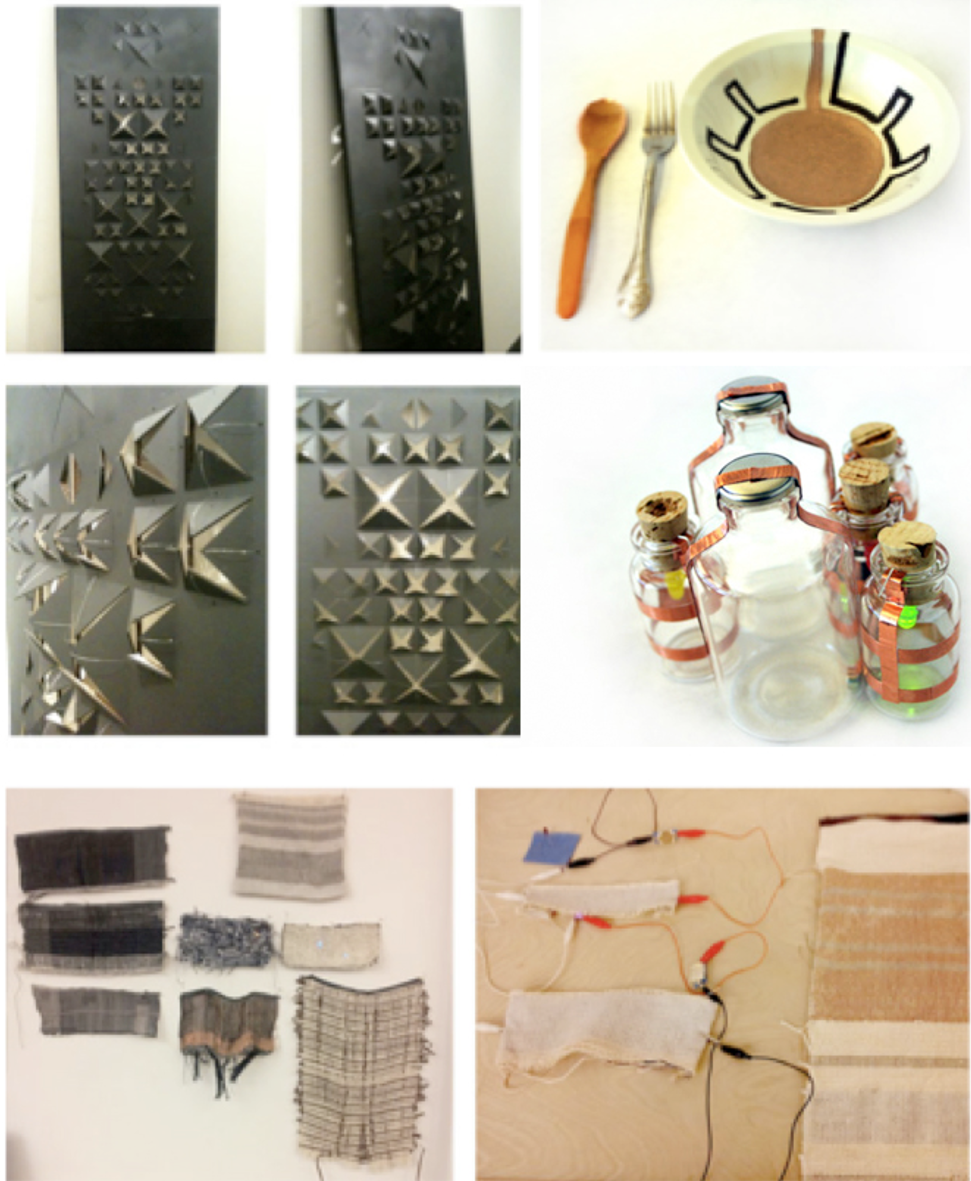 Figure 1: Early studies in woven circuitry and architectural movement exemplify material entanglements.
3. Trajectories: The Beauty of Breakage
The most radical lens is Trajectories, which focuses on the rhythms of wear, decay, and repair.
- Broken Probes: The authors coated generic ceramic plates with liquid rubber so they remain intact even when shattered. These cracks then become "anchors" for digital annotations—turning a damaged object into a family tree or a vessel for personal history.
Performance Analysis & Insights
The experiment conducted in the "(Extra)ordinary Materials" studio revealed that:
- Stability vs. Transience: Participants valued materials that could "hold" a trace (like pressure-sensitive ink) because it provided a sense of permanence to ephemeral moments.
- Tracing Backward vs. Forward: Tracing backward uncovers provenance (where did this come from?), while tracing forward allows designers to program how an object will age gracefully.
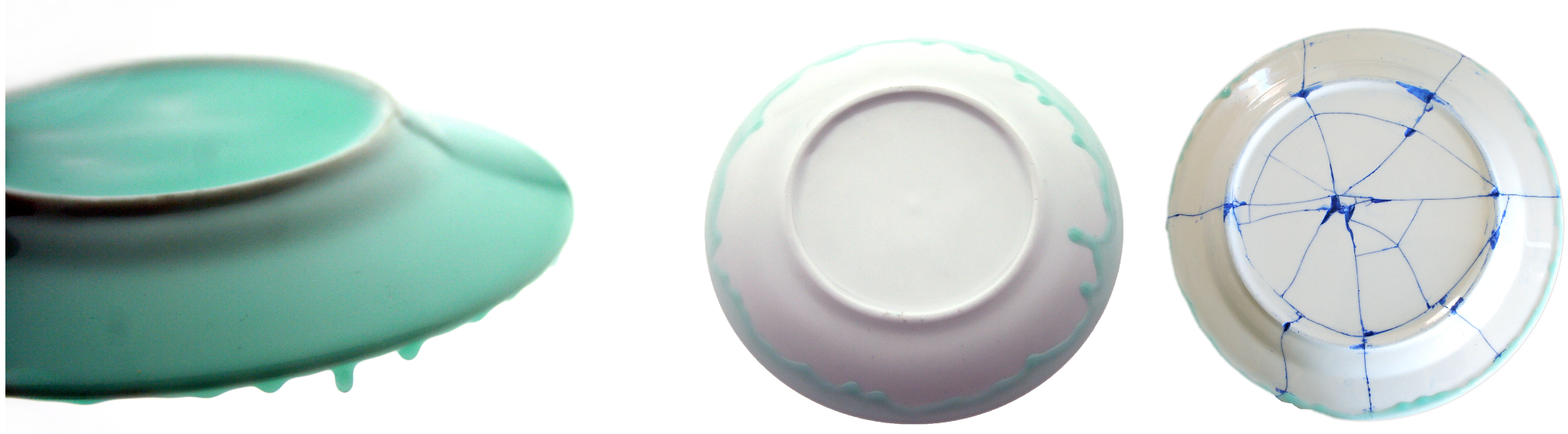 Figure 2: Broken Probes demonstrate how physical cracks function as uniquely identifiable forms for digital indexing.
Critical Insights & Conclusion
This work is a vital contribution to the "Material Turn" in HCI. It challenges the industry's obsession with "seamless" and "frictionless" experiences.
Main Takeaway: Designing with traces means acknowledging that "breakdown" is not a failure, but a site for new meaning. By treating the history of an object's use as a design feature, we can create technologies that—like an old book or a hand-knit shawl—grow more valuable as they age.
Limitations: The paper primarily explores low-fidelity prototypes in a studio setting. Scaling these "traces" to mass-produced consumer electronics remains a significant challenge, especially in an industry driven by planned obsolescence rather than the "aura" of endurance.