
Beyond the Brochure: Decoding Destination Personality through the Lens of TripAdvisor
An analysis of destination brand personality and emotions: a comparison study
This study presents a comparative analysis of destination brand personality (DBP) and emotions by contrastive mining of TripAdvisor reviews and conventional survey data for Vienna, Austria. It utilizes Aaker’s Brand Personality Scale and a categorical emotion framework to reveal how different service settings (hotels, restaurants, sights) trigger distinct psychological associations and sentiments.
TL;DR
Is a city "sincere," "sophisticated," or just plain "rude"? This research challenges the traditional survey-based model of destination branding. By comparing official tourist surveys with thousands of TripAdvisor reviews for Vienna, the study proves that social media captures a far richer—and often darker—spectrum of human emotion and personality traits than any questionnaire ever could.
Background: The Shift from Functional to Emotional Branding
In a world where most European capitals offer similar "functional" attributes (museums, public transport, historical architecture), a destination's only true competitive advantage is its Brand Personality. Much like people, brands can be perceived as "down-to-earth" or "daring." If a tourist’s self-concept matches the destination's personality, loyalty and positive Word-of-Mouth (WOM) follow. However, Destination Management Organizations (DMOs) have historically struggled to measure these intangible traits accurately.
The Core Conflict: Surveys vs. Reality
The researchers identified a major methodological gap. Surveys are "formal" and often lead to biased, overly positive results. In contrast, TripAdvisor is an anonymous "venting" ground.
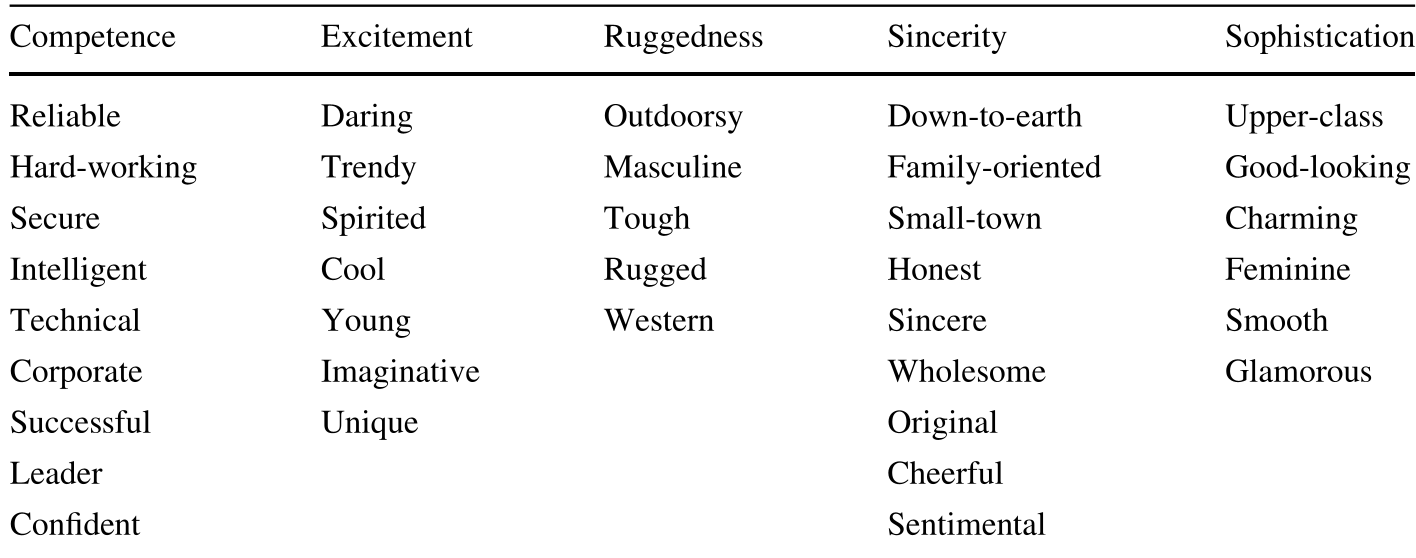
The study utilized WordStat to perform dictionary-based text mining, mapping thousands of words to Aaker’s five-dimensional Brand Personality Scale (BPS) and a six-category emotion framework.
Methodology: The Granular Approach
Unlike prior work that viewed "Vienna" as a single brand, this study broke the experience down into:
- Restaurants
- Sights
- Accommodations
This allows for a "High-Resolution" view of the brand. For instance, a city might be "Sincere," but its hotel sector could be dragging down the brand with "Ruggedness" (rudeness or lack of polish).
Key Insights: What the Data Reveals
The results were striking. While Sincerity remains the dominant trait for Vienna across both platforms, the social media data was significantly more expressive in other areas:
- The "Dark" Side of Travel: Surveys showed 0% Anger and 0% Disgust. TripAdvisor reviews showed that nearly 1 in 10 accommodation reviews contained elements of anger or disgust.
- Excitement & Sophistication: These traits were undervalued in surveys. Tourists on social media were much more likely to describe Vienna's sights as "stunning," "grand," and "cool."
- Sector-Specific Personalities: Sights (museums, palaces) were the primary drivers of Sophistication and Excitement, while Hotels were the bastion of Competence (or lack thereof).

Critical Analysis: Why This Matters for the Industry
The "Strategic Approach" to User-Generated Content (UGC) is no longer optional. The study highlights that:
- Negative Sentiment is a Feature, Not a Bug: The presence of "Ruggedness" (associated with rudeness in this context) in reviews provides a roadmap for service recovery that surveys miss.
- The Dendrogram Insight: The researchers used hierarchical clustering to show how Joy and Surprise often co-occur, suggesting that a "successful" destination experience is one that exceeds expectations, not just meets them.

Conclusion & Future Outlook
This paper serves as a wake-up call for DMOs. To build a resilient brand, marketers must stop relying on the "polite" feedback of surveys and start mining the "brutal honesty" of social media. The future of destination branding lies in immersion strategies—where DMOs don't just monitor reviews but use them to fundamentally redesign the "Competence" and "Sincerity" of their local service providers.
Limitations: The study focuses on English-language reviews for a single city. Future research should explore if these linguistic patterns hold true across different cultures (e.g., Asian vs. European review styles) and within the burgeoning world of short-form video content (TikTok/IG Reels) as a source of brand personality data.