
Decoding the Mind: Emotion Recognition via Low-Cost EEG and Machine Learning
Detecting Emotion from EEG Signals Using the Emotive Epoc Device
The paper presents a machine learning framework for emotion detection using the low-cost Emotiv EPOC EEG headset. It classifies emotional states into high/low arousal and positive/negative valence using Support Vector Machines (SVM) and Linear Discriminant Analysis (LDA) based on auditory stimuli.
TL;DR
This study demonstrates that we don't need expensive medical equipment to "read" basic emotions. By using a consumer-grade Emotiv EPOC headset and analyzing brainwave ratios (Alpha and Beta), researchers successfully classified arousal and valence states with up to 86% accuracy. The key innovation lies in using standardized auditory stimuli rather than unreliable self-reporting.
Problem & Motivation: Beyond the "Poker Face"
Most Affective Computing relies on cameras or microphones. However, humans are experts at masking their feelings—the "behavioral expression" often contradicts the internal "physiological arousal."
True emotion resides in the brain. While Electroencephalography (EEG) offers a window into these states, previous research faced two hurdles:
- Cost: Reliance on expensive, high-density EEG systems.
- Subjectivity: Using the user's own feedback as "truth," which is often inconsistent.
Methodology: The Logic of Brainwaves
The researchers mapped emotions onto the Arousal-Valence 2D model. Instead of asking users how they felt, they played sounds from the International Affective Digitized Sounds (IADS) library, where emotional values are already standardized.
Feature Extraction Physics
The team focused on two specific frequency bands:
- Alpha (8-12Hz): Linked to relaxation and brain "inactivation."
- Beta (12-30Hz): Linked to active concentration and focus.
The Intuition:
- Arousal: Calculated as the
Beta/Alpharatio. Higher beta relative to alpha indicates an excited or alert state. - Valence (Positive/Negative): Based on Hemispheric Asymmetry. Research suggests the left frontal lobe is associated with "approach" (positive) and the right with "withdrawal" (negative). By comparing the activity in electrodes F3 (Left) and F4 (Right), they derived a valence score.
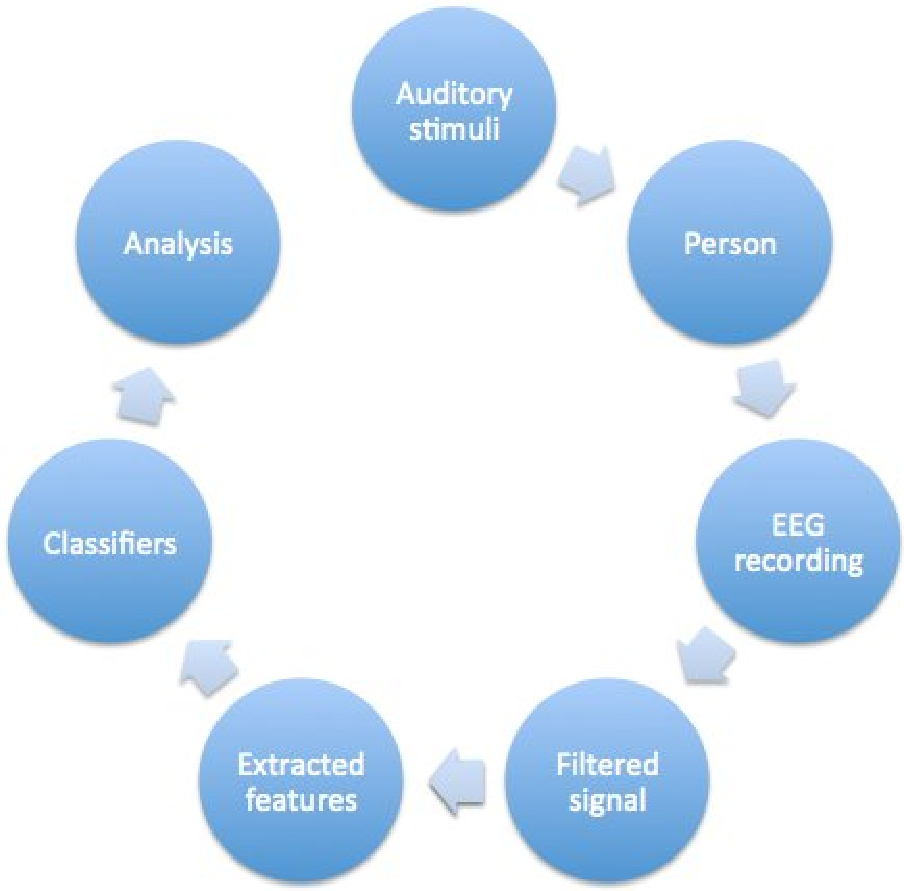 Figure 1: The pipeline from auditory stimuli to classification.
Experiments & Results
The study compared two primary algorithms: Linear Discriminant Analysis (LDA) and Support Vector Machines (SVM) with different kernels.
Key Findings:
- SVM-RBF was the clear winner, handling the non-linear nature of brain signals better than linear models.
- Arousal Accuracy: Mean 77.82% (Max 83.35%).
- Valence Accuracy: Mean 80.11% (Max 86.33%).
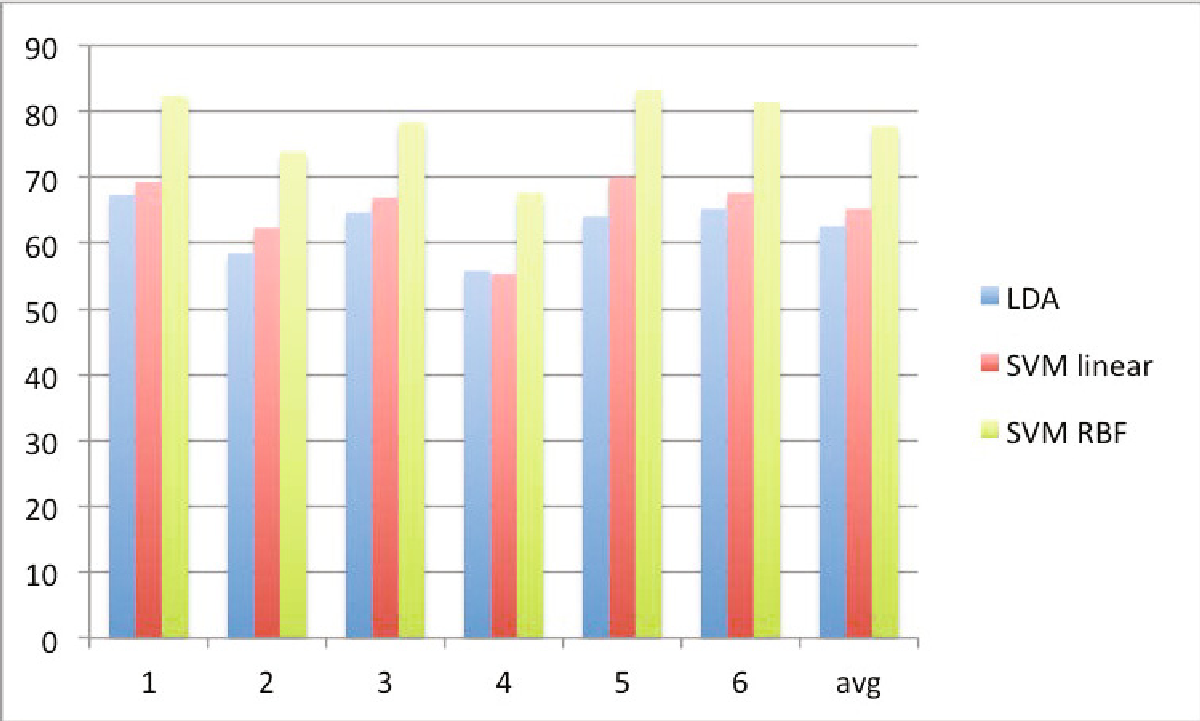 Figure 2: Accuracy comparison across subjects for Arousal classification.
The results confirm that even a 14-channel "low-cost" device provides enough signal-to-noise ratio to distinguish between feeling "happy" (high arousal, positive valence) and "calm" (low arousal, positive valence).
Critical Analysis & Conclusion
Why this works
The success of this approach stems from its physiological grounding. By targeting the prefrontal cortex—the specialized area for emotion regulation—and using the Alpha/Beta ratio, the authors bypassed the noise of general "brain activity" and focused on the "affective signal."
Limitations
- Sample Size: The study only used 6 subjects. EEG patterns vary wildly between individuals, so "subject-dependent" training is still a requirement.
- Stimuli Type: Results are limited to auditory triggers. Visual or social stimuli might produce different neural markers.
Final Takeaway
This paper is a milestone for Ubiquitous Affective Computing. It proves that objective emotion monitoring is moving out of the lab and into the real world, potentially enabling apps that adjust music, difficulty in games, or therapy sessions in real-time based on the user's actual brain state.