
Beyond Voice: Leveraging Lexical Salience and Discourse for Emotion Detection
Toward detecting emotions in spoken dialogs
This paper presents a multi-modal framework for detecting domain-specific emotions (negative vs. non-negative) in spoken dialogs from a call center application. It introduces "emotional salience," an information-theoretic lexical measure, and combines it with acoustic features and discourse information to achieve state-of-the-art emotion recognition performance.
TL;DR
While most early emotion recognition systems focused solely on the "tone" of voice (acoustic features), this paper proves that speech content (lexics) and dialogue context (discourse) are equally vital. By introducing the concept of Emotional Salience—a measure of how much information a specific word carries about an emotional state—the authors achieved a massive ~40% performance boost in detecting frustration within call center interactions.
The Problem: The "Acted Speech" Trap
Historically, emotion recognition research suffered from two major flaws:
- Artificial Data: Most models were trained on actors "pretending" to be angry or sad, which differs significantly from a frustrated customer in a real-world call center.
- Acoustic Myopia: Researchers over-relied on pitch (F0) and energy, neglecting the fact that certain words (like "No" or swear words) are definitive signals of negativity regardless of how they are spoken.
Methodology: The Three Pillars of Emotion
The authors argue that a robust system must look at three distinct data streams:
1. Acoustic Correlates (The Tone)
They extracted 21 base features including pitch, energy, duration, and formants. Using Principal Component Analysis (PCA) and Forward Selection (FS), they identified the most predictive features, such as the ratio of voiced to unvoiced regions and energy standard deviation.
2. Emotional Salience (The Words)
This is the paper's most innovative contribution. Using an information-theoretic approach, they define salience as the Mutual Information between a word and an emotion.
- High Salience: Words like "Wrong," "Damn," or "No" carry high negative salience.
- Low Salience: Neutral words like "Arrival" or "Phoenix" carry non-negative salience.
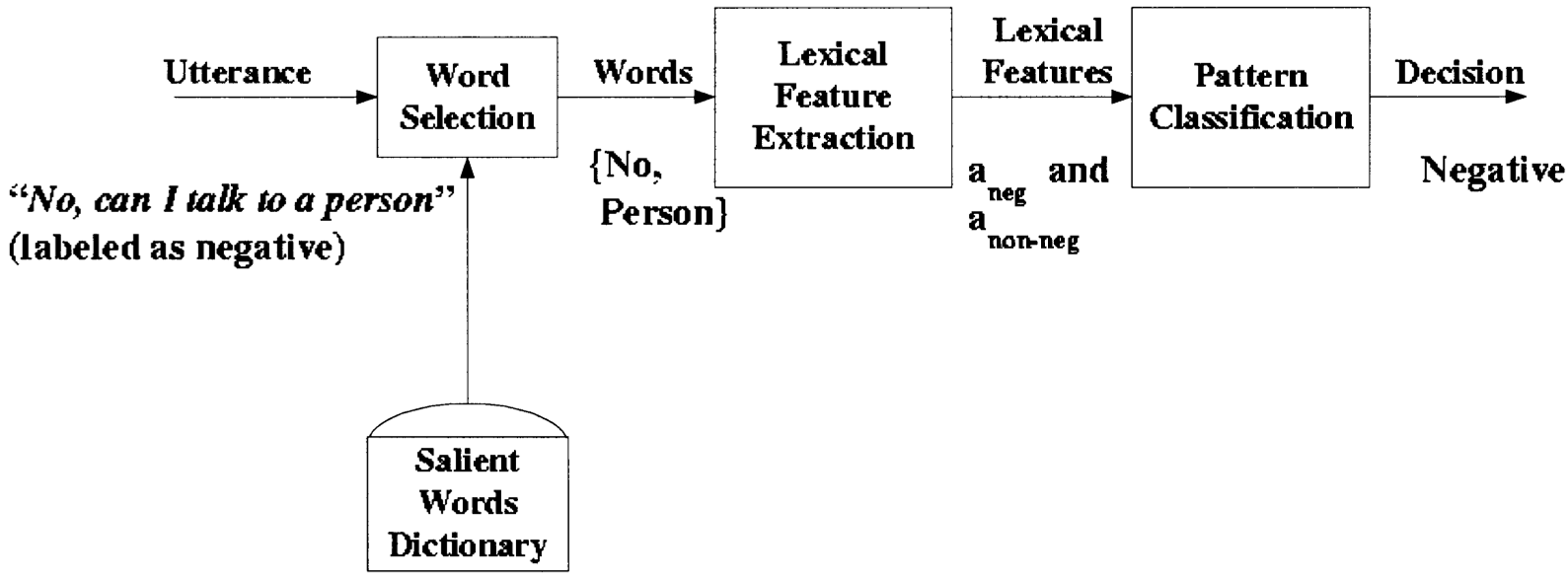 Figure 1: The framework for mapping salient words to emotional activations.
3. Discourse Information (The Context)
The system tracks the "speech acts" of the user. If a user is constantly rejecting what the system says or rephrasing their request, the likelihood of a "Negative" emotional state increases exponentially.
Experimental Results: The Power of Fusion
The researchers tested their approach on real-world call center data (7,200 utterances). They used a Linear Discriminant Classifier (LDC) and k-Nearest Neighbor (k-NN) for the decision-level fusion.
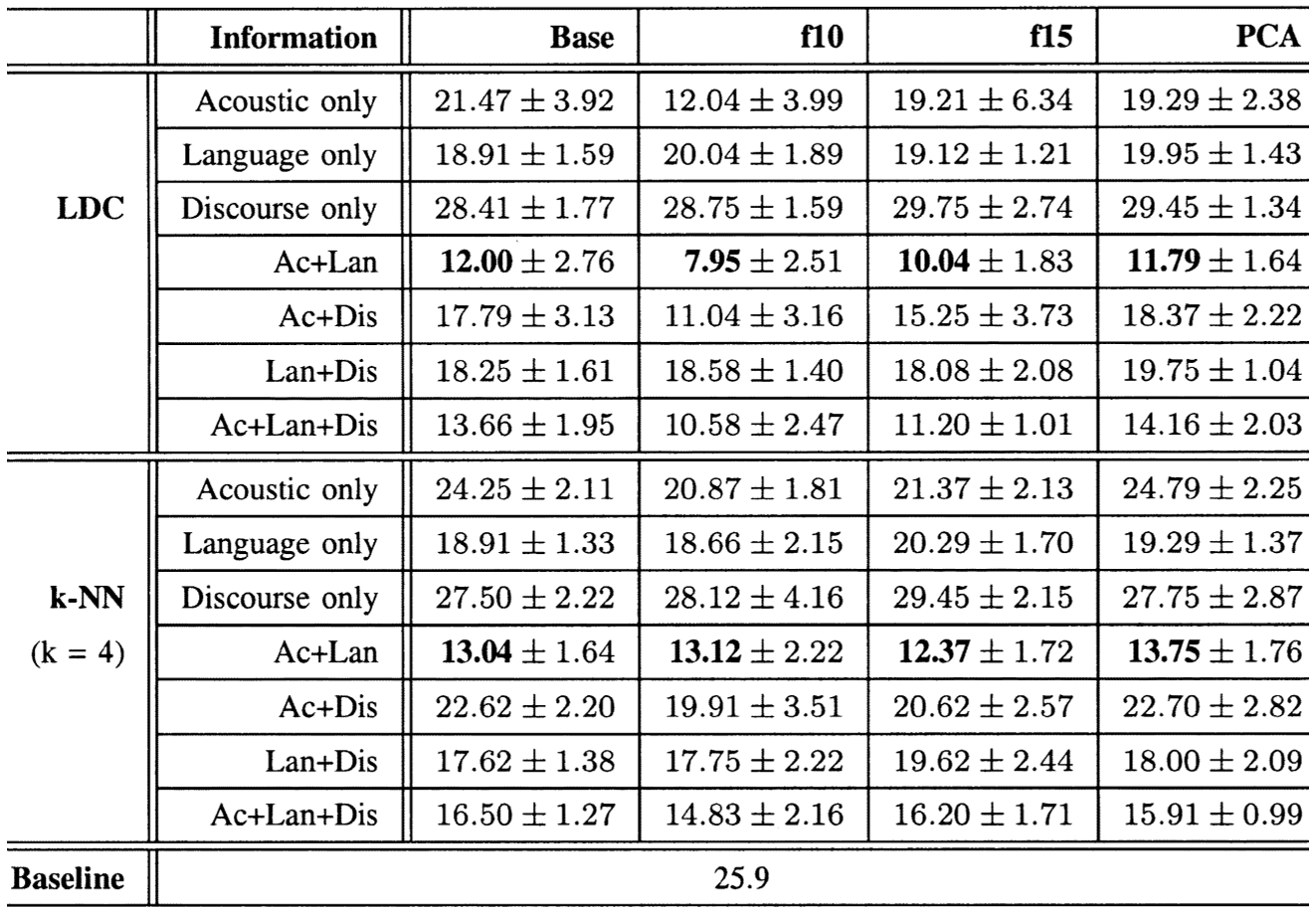 Table 1: Performance metrics showing the superiority of combining Acoustic (Ac) and Language (Lan) data.
Key Findings:
- Gender Differences: Classification patterns varied by gender, necessitating gender-specific models for acoustic features.
- The Synergy of Language: Combining acoustic and language information (Ac+Lan) consistently outperformed all other combinations.
- Redundancy: Interestingly, discourse information provided little benefit when lexical information was already present, as the two are highly correlated (captured by a Q-statistic of ~0.92).
Critical Insight: Why it Works
The success of this method lies in its Inductive Bias. By manually feature-engineering "Salience," the authors provided the model with a "lexical shortcut." In real-world environments where signal-to-noise ratios are low, relying on the hard evidence of a "Negative Keyword" is often more reliable than trying to detect a subtle tremor in a caller's voice.
Conclusion & Future Outlook
This work serves as a foundational bridge between signal processing and natural language understanding. While modern LLMs now handle many of these tasks, the concept of Information-Theoretic Salience remains a powerful tool for explaining why a model classifies a specific interaction as "frustrated."
Limitations: The study primarily focuses on a binary (Negative vs. Non-Negative) classification. Future work should explore more nuanced emotional spectrums (e.g., distinguishing between "mildly annoyed" and "irate") and incorporate real-time ASR confidence scores to handle transcription errors.