
Who is Behind the Screen? Detecting In Situ Identity Fraud via Browsing Behavior
3873_Detecting In Situ Identity Fraud on Social Network Services A Case Study With Facebook.
The paper introduces a continuous authentication scheme to detect "in situ identity fraud" on Social Networking Services (SNSs), where attackers (like acquaintances) use the victim's own device and session. Using Facebook as a case study, the authors employ Smooth Support Vector Machines (SSVM) and feature selection to achieve over 80% detection accuracy within 2 minutes of browsing.
TL;DR
Social media security usually focuses on "hacking," but what if the "attacker" is sitting at your desk? This paper tackles In Situ Identity Fraud—unauthorized use of accounts by acquaintances using the victim's own device. By analyzing "role-driven behavioral diversity," the authors developed a machine learning model that detects intruders with over 80% accuracy in just 2 minutes, even if they have full access to your logged-in session.
The "Invisible" Threat: Why Your Password Isn't Enough
Current SNS security is perimeter-based. Facebook checks if you're logging in from a new IP or a new phone. But if your spouse, roommate, or colleague picks up your unlocked laptop, the perimeter has already been breached.
The authors identify a massive gap: In situ fraud is hard to detect because:
- Trust Bias: Users often save passwords or stay logged in via cookies.
- Credential Parity: Attackers use the same hardware, IP, and session tokens.
- Stealth: Stalkers often just "lurk" (read newsfeeds/messages) without changing passwords, leaving no trail for the owner to find.
The Core Insight: Role-Driven Behavioral Diversity
The researchers posited that your relationship with the data dictates how you interact with the interface. They categorized users into three roles: Owners, Acquaintances, and Strangers.
Through extensive user studies (112 subjects), they found distinct "tells":
- Interaction Frequency: Owners "Like" and comment frequently. Stalkers avoid this to stay stealthy.
- Information Depth: Stalkers spend more time expanding historical "Wall" posts or looking at "Photos," whereas owners focus on the real-time "Newsfeed."
- Social Curiosity: Acquaintances are obsessed with "Friend Lists" (checking mutual connections), while strangers focus on the "Profile" to see who the person is.
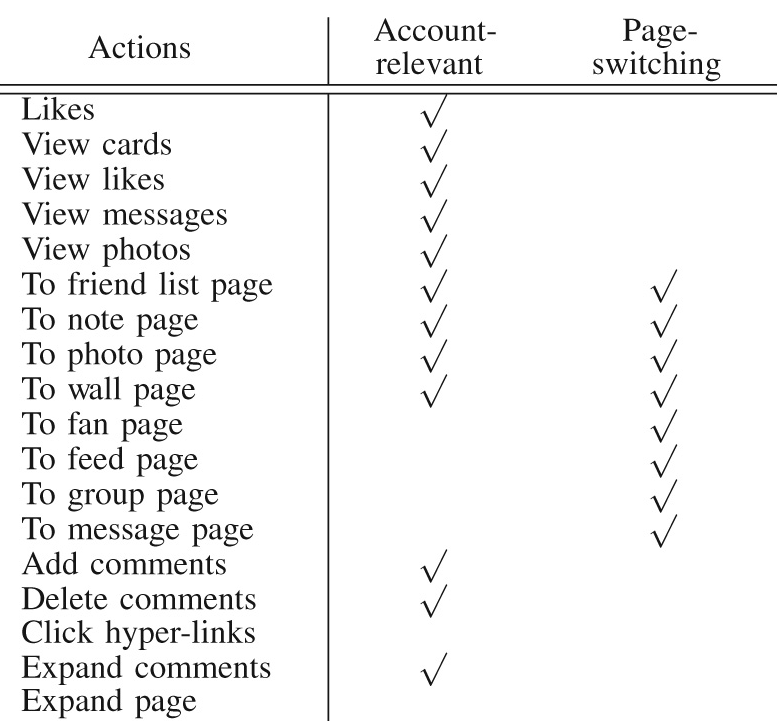 Figure 1: The paper tracks 18 granular actions to build a behavioral profile.
Methodology: Smart Features over Heavy Models
The authors didn't just throw data at a neural network. They used a sophisticated pipeline:
- Feature Engineering: 139 features were derived, including action rates, page-switching frequencies, and time spent on specific page types.
- 1-norm SVM (Lasso): This was used to prune the feature set, stripping away noise and identifying the most "telling" behaviors.
- Smooth SVM (SSVM): A computationally efficient version of SVM was chosen for its ability to scale to millions of users on an SNS server.
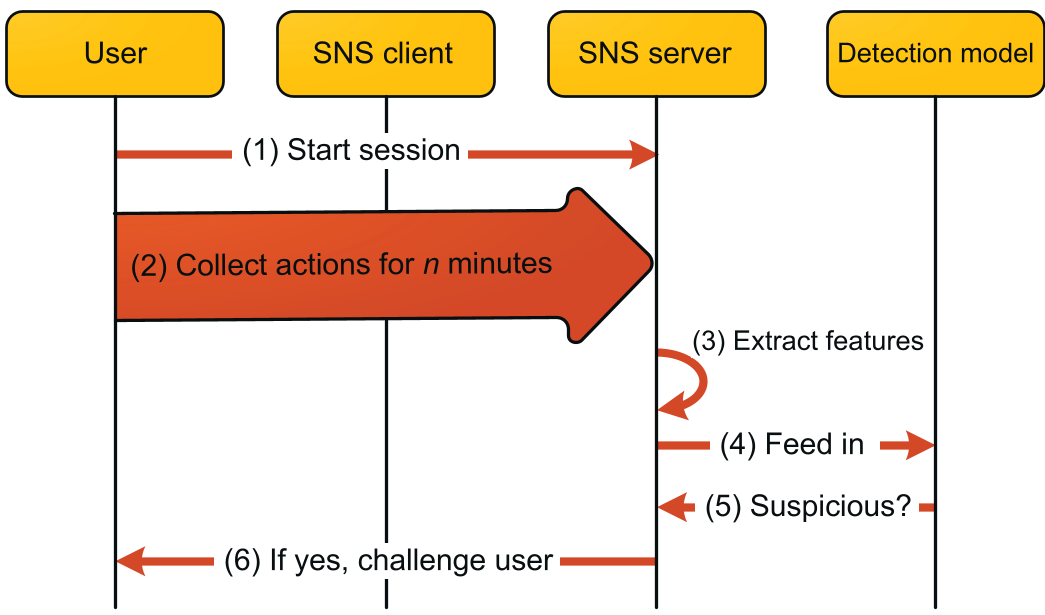 Figure 2: The system acts as a "silent sentry" behind the login, triggering challenges only when suspicion arises.
Experimental Results: Speed vs. Accuracy
A security system is useless if it takes an hour to realize your account was compromised. The authors focused on Early Detection.
- 2-Minute Mark: Accuracy hit 81.9%. This is the perfect window to trigger a "Secret Question" or a mobile push notification.
- 7-Minute Mark: Accuracy climbed to 89.2%.
- Precision: With oversampling to handle imbalanced data, the model achieved a 93.53% overall accuracy with only a 5% False Positive Rate.
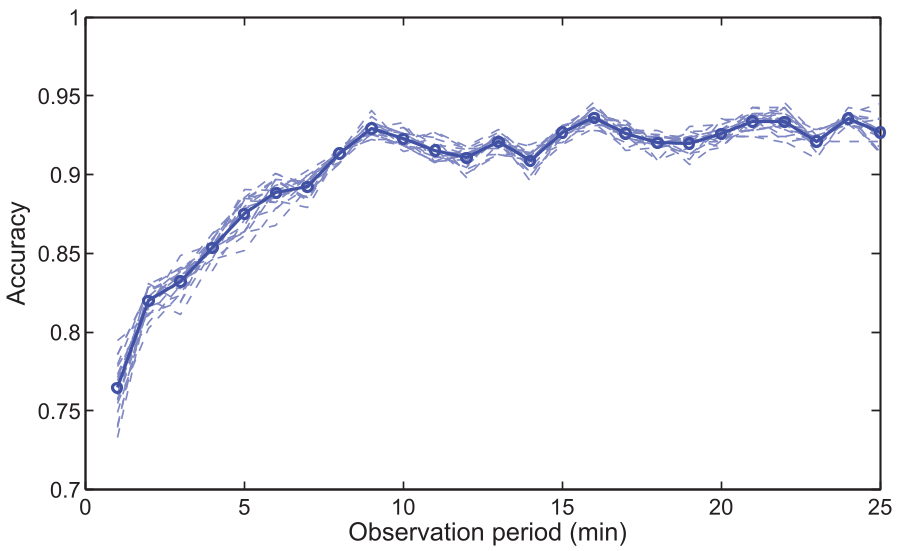 Figure 3: Accuracy consistently improves as more "clues" (actions) are collected.
Critical Insight & Future Outlook
The beauty of this work lies in its universality. Unlike some biometric systems that require training for every specific user, this model learns the general "vibe" of a stalker versus an owner.
Limitations: Smart attackers who know they are being monitored could theoretically "mimic" owner behavior (e.g., clicking 'Like' on random posts). However, the authors argue this significantly slows down the attacker, reducing the harm they can do in a short "physical access" window.
Conclusion: This paper shifts the focus of SNS security from "locking the door" to "monitoring the guest." As we move toward a world of "zero-trust" architecture, implicit continuous authentication will likely become the standard for protecting our most sensitive social data.