
The Ghost in the Machine is White: Unveiling Race and Gender Bias in AI Image Search
Detecting Race and Gender Bias in Visual Representation of AI on Web Search Engines
This study investigates race and gender biases in Artificial Intelligence (AI) visual representations across six major web search engines using a synchronized virtual agent auditing method. The findings reveal a systemic prioritization of "White" anthropomorphic AI imagery in Western engines, while non-Western engines (Baidu, Yandex) offer slightly more racial diversity but exhibit different gender skews.
Executive Summary
TL;DR: A cross-engine audit of the world's six largest search engines reveals that when we search for "Artificial Intelligence," the algorithms overwhelmingly return images of white-skinned humanoid robots or white humans. While gender bias is slowly being mitigated due to public pressure, racial "Whiteness" remains a dominant, unchallenged default in our visual perception of tech innovation.
Academic Context: This work is a critical systematic audit situated at the intersection of Information Retrieval (IR) and Critical Race Theory. It moves beyond simple "Google-centric" studies by comparing Western (Google, Bing, DuckDuckGo) and non-Western (Baidu, Yandex) systems.
Problem & Motivation: The Default to "White"
Why does it matter if a robot is white? The authors argue that search engines do not just find information; they filter and rank reality. When AI—the pinnacle of modern innovation—is consistently portrayed as "White," it performs a symbolic erasure of non-white developers and users.
Existing research has two major gaps:
- The "Google Dance" Problem: Search results are randomized to maximize engagement. Single-snapshot audits might catch a "random" variation rather than a systemic bias.
- Western-Centricity: Most bias research ignores Yandex and Baidu, which operate under different socio-technical ranking signals.
Methodology: Auditing with Virtual Agents
To bypass the "noise" of personalization and randomization, the researchers deployed 200 virtual agents (automated browsing bots) synchronized across 100 virtual machines in a controlled environment.
The Pipeline:
- Query: "Artificial Intelligence"
- Engaging: Scrolling to capture at least 50 images per engine.
- Analysis: Dividing results into tiers (Top 10 vs. Lower results) to see what the "gatekeepers" prioritize.
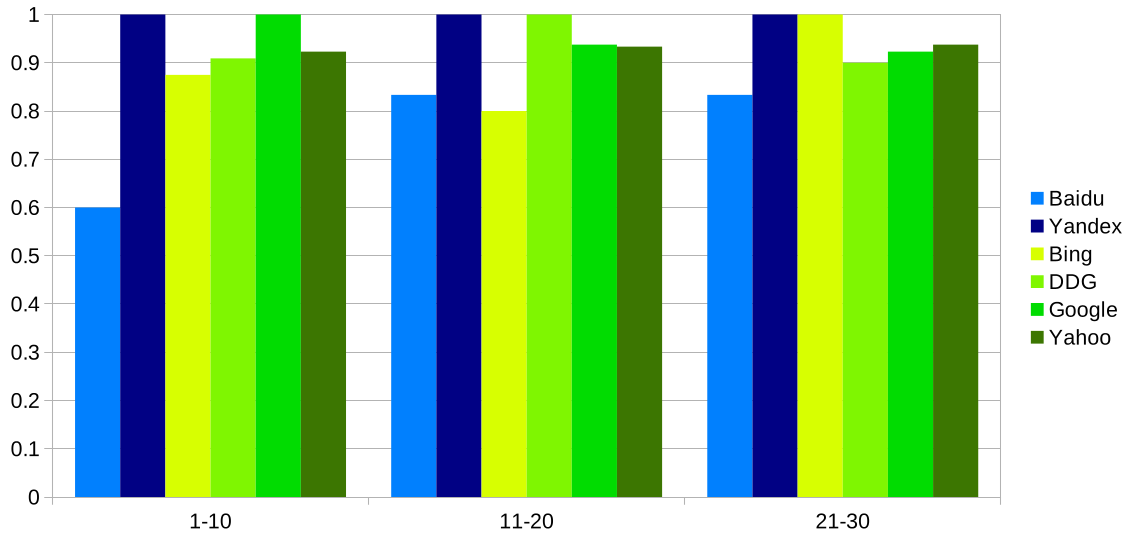 Figure 1: The high rate of anthropomorphization across engines ensures that human social categories (race/gender) are inevitably projected onto AI.
Key Findings: Whiteness as a Global Tech Standard
The analysis yielded three startling insights:
1. The Anthropomorphism Trap
Almost all engines prioritize "human-like" AI. On Google and Yandex, 100% of the top 10 results were anthropomorphized. This forces the AI into a racial category, usually a "shiny humanoid robot" made of white plastic or metal.
2. Systematic Racial Erasure
In Western search engines, non-white AI representations were essentially zero. Non-Western engines like Baidu and Yandex were the only ones to show non-white developers or users, though they still prioritized white-colored robots for the AI itself.
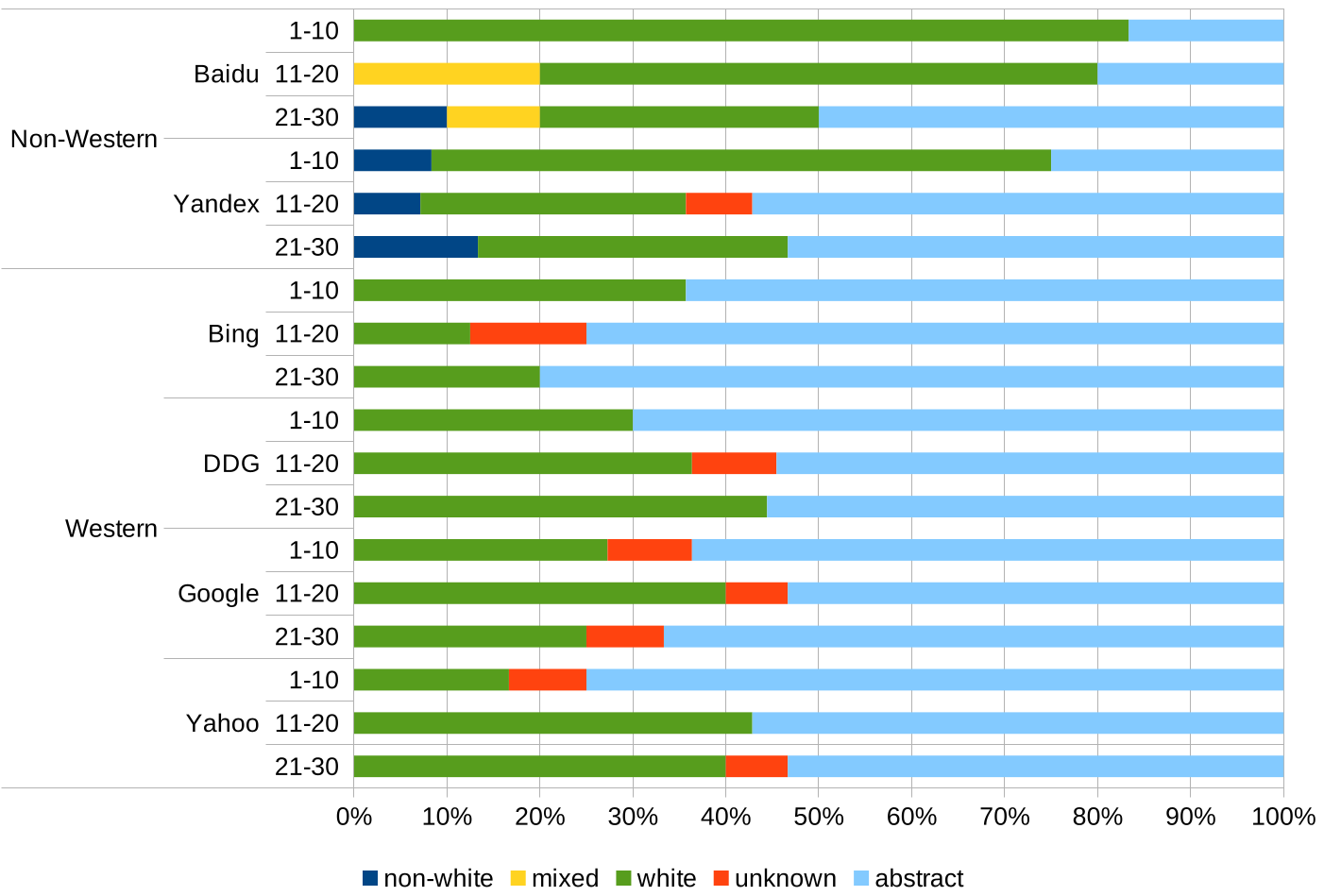 Figure 2: Distinguishing between abstract, white, and non-white portrayals. Note the dominance of "Abstract/White" in the top rankings.
3. The Gender Paradox
Interestingly, gender bias was less skewed than race. While popular culture often sexualizes female AI (e.g., Ex Machina), search engines mostly returned gender-neutral or professional portrayals. This suggests that "Anti-sexism" efforts in Big Tech are starting to work, while "Anti-racism" in visual IR lags behind.
Critical Insight: Why is this happening?
The authors posit that image search is still largely a textual ghost. Engines rank images based on surrounding text and backlinks. Because "authoritative" Western media and academic sites still use white-centric stock photos for AI, the algorithm simply reinforces this status quo—a "vicious cycle" of Whiteness.
Conclusion & Future Look
Takeaway: This paper proves that racial bias in IR is not just a "Google problem" but a systemic issue of how technological innovation is indexed globally.
Limitations: The study uses a binary (White/Non-white) classification, which misses the nuance of different ethnic identities. Future research must look into Generative AI (DALL-E, Midjourney) to see if these models are merely "hallucinating" the same white-centric biases they were trained on from these very search results.