
Guardian AI: Empowering Children with Special Needs through Automated Threat Detection
Detecting Sentences that May be Harmful to Children with Special Needs
This paper introduces an autonomous agent framework designed to protect children and adults with special needs by detecting harmful verbal interactions. Using a newly curated dataset of 13,490 sentences, the authors evaluate multiple machine learning models, ultimately achieving SOTA-level performance for this niche task using an ensemble of CNN-based classifiers.
Executive Summary
TL;DR: This research tackles the urgent need for tools that assist children and adults with special needs in navigating social interactions. By developing a specialized dataset and an ensemble CNN-based detection system, the authors achieved a 72.2% accuracy in identifying insulting or dangerous speech, paving the way for real-time digital companions.
Background Positioning: While "Hate Speech Detection" is a crowded field, this paper carves out a vital niche: Social Assistance AI. It shifts the focus from general toxicity to the specific vulnerabilities of the neurodivergent community, moving from broad sentiment analysis to actionable risk detection.
Problem & Motivation: The Gap in Social Awareness
For many individuals with special needs, the subtle cues of an insult or the underlying threat in a stranger's request can be dangerously opaque. Current SOTA models for toxic speech are often trained on "Internet Slang" or political discourse, which does not reflect the domestic and educational environments where these individuals spend their time.
The authors identify a critical gap: spoken social context. A sentence might not be "toxic" by standard benchmarks but could be "risky" (e.g., a stranger asking a child to follow them) or "insulting" in a way that triggers social withdrawal. The motivation here is to create a "social interpreter" that acts as a buffer between the user and potential harm.
Methodology: Specialized Data and Ensemble Intelligence
1. The Dataset Challenge
The core contribution is a dataset of 13,490 sentences. Recognizing that standard datasets were insufficient, the authors combined:
- Interviews with parents of children with ASD (Autism Spectrum Disorder).
- MTurk crowdsourced scenarios of "risky" behavior.
- Expert talks on child safety.
2. The Model Architecture
The architecture relies on high-dimensional word representations (Word2Vec) processed through Convolutional Neural Networks (CNNs). CNNs were chosen for their ability to detect n-gram patterns (e.g., "I hate," "come with me") regardless of their position in a sentence.
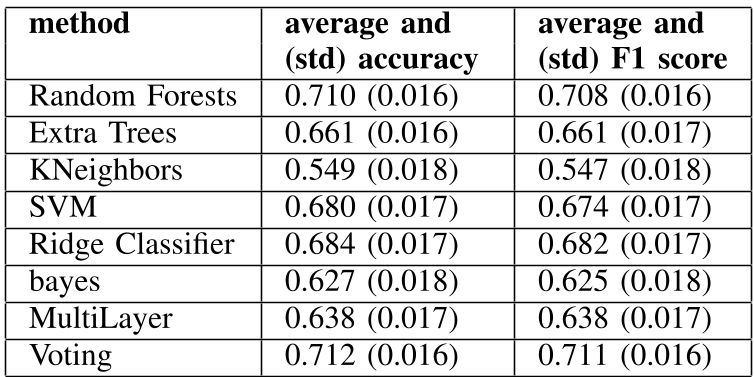 Figure 1: Comparison of classic ML methods vs. Ensembles.
The "Winning" strategy was the CNN Voting Panel:
- Train 10 variations of a CNN (using different layers: 1D Conv, Max Pooling, Dropout).
- Select the top 5 based on validation performance.
- Use a Majority Vote to determine the final classification of a sentence.
Experiments & Results: Robustness through Ensembles
The results (detailed in the table above) show that while Random Forests provide a strong baseline (71% accuracy), they lack the semantic depth of neural networks. The CNN Voting Panel pushed the accuracy to 72.2%.
Key Insights from the Experiment:
- Data Augmentation Matters: By adding phrases from the Movie Review (MR) database to the training set, the authors provided the CNN with enough "weights" to learn general negativity, which was then fine-tuned on the specific child-safety dataset.
- Precision vs. Recall: In the context of child safety, identifying a "Risky" sentence (High Recall) is often more important than accidental false positives.
Critical Analysis & Conclusion
The Takeaway
This research successfully moves the needle from "General NLP" to "Applied Social Good." It demonstrates that an autonomous agent doesn't need 100% accuracy to be useful; a 72% success rate already provides a significant safety net compared to no assistance at all.
Limitations & Future Work
- Context Dependency: As the authors noted, 16.8% of sentences were "context-dependent" (e.g., "That's great!" could be sincere or sarcastic). The current model ignores these, which is a major hurdle for future versions.
- Hardware Integration: The paper focuses on the algorithm. The next challenge is implementing this on wearable devices with real-time audio-to-text latency.
Final Thought: By bridging the gap between deep learning and social care, this work provides a blueprint for how AI can serve as a protective layer for the most vulnerable members of society.