
Harmonizing Social Noise: Detecting EDM Events via SoundCloud Timed Comments
Detecting Socially Significant Music Events Using Temporally Noisy Labels
This paper introduces a machine learning framework for detecting socially significant music events (Drop, Build, and Break) in Electronic Dance Music (EDM) by leveraging "timed comments" from SoundCloud as noisy training labels. It proposes a two-stage learning method (CELFTC) that combines limited expert annotations with filtered social metadata to achieve state-of-the-art event localization.
TL;DR
Music event detection (finding the "Drop" or "Build") usually requires tedious manual labeling. This paper presents a breakthrough by using SoundCloud timed comments as "weak labels." By employing a filtering mechanism that combines a small amount of expert data with noisy social data, the authors achieved performance comparable to a fully human-annotated system, specifically optimized for non-linear music navigation.
The Challenge: Temporal Noise in Social Data
In the world of Electronic Dance Music (EDM), events like the Drop, Build, and Break are socially significant—they are what listeners talk about. While platforms like SoundCloud provide "timed comments," these are notoriously "noisy."
A user might comment "The drop is coming!" 10 seconds before it happens, or "That drop was fire!" 5 seconds after. This temporal noise creates a massive hurdle for standard supervised learning which expects millisecond precision.
Methodology: From Audio to Vision
The researchers didn't just look at the audio; they treated music like an image.
- Segment Extraction: Instead of scanning the whole track, they used Music Structure Segmentation (MSS) to find natural boundaries, hypothesizing that social events occur near structural shifts.
- Visual Features: They converted audio into Spectrograms, Auto-correlation, and Self-similarity matrices, then extracted statistical moments as features.
- The CELFTC Strategy: The "Combined Expert Labels and Filtered Timed Comments" pipeline. A small subset of expert data (m) is used to train a "filter" that decides which social comments are reliable enough to be used as additional training data for the final model.
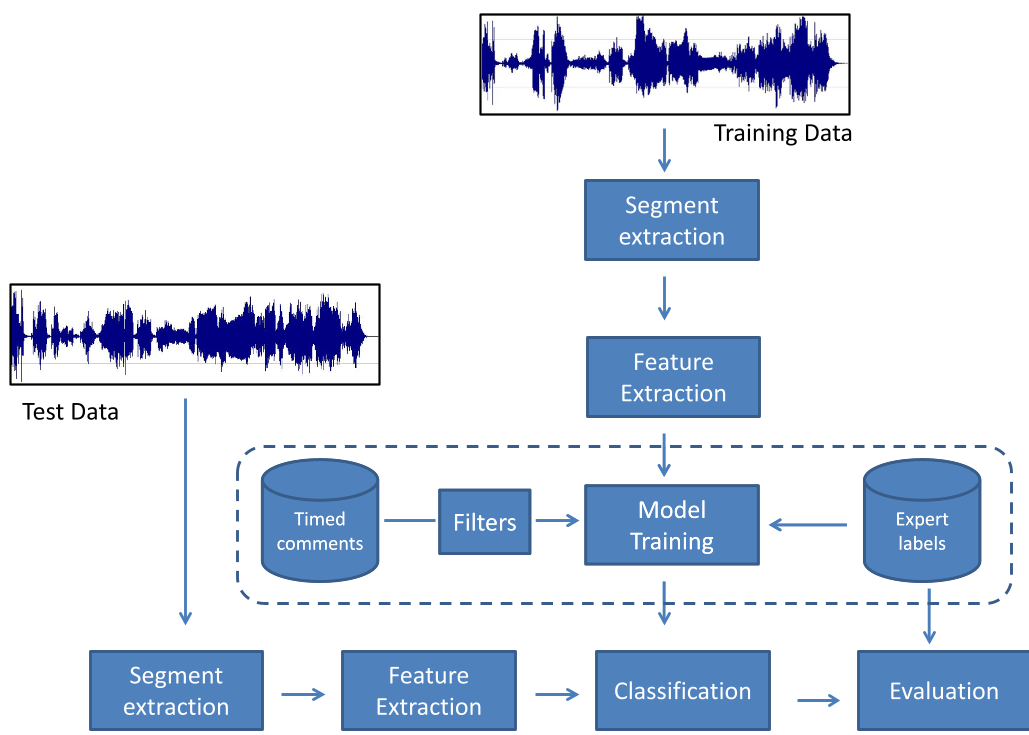 Figure 1: The proposed framework for event detection using both expert and social labels.
Why it Works: The Signal in the Noise
The study found a fascinating pattern: most users react just before or at the start of an event. By focusing on 15-second windows around structural boundaries, the model can effectively ignore most of the temporal jitter.
Experimental results showed that Image Features consistently outperformed traditional Audio Features (like MFCCs). The visual "sweep" of a Build climaxing into a Drop is more distinct in a spectrogram than in pure numerical audio descriptors.
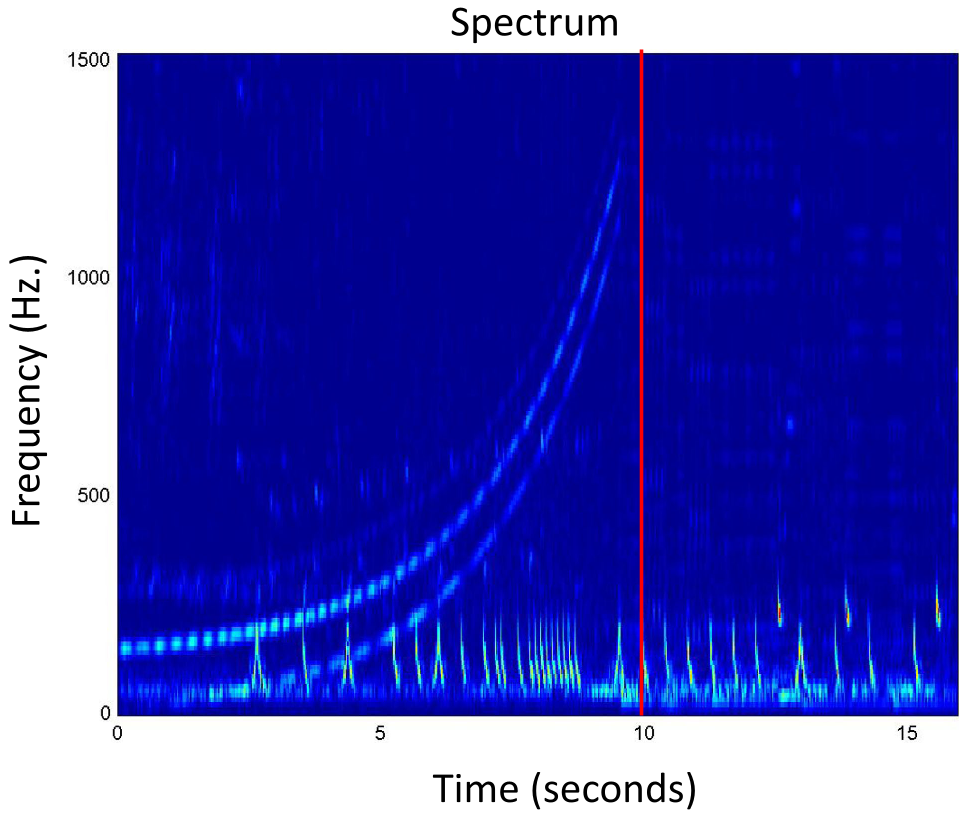 Figure 2: Visual pattern of a 'Drop' in an EDM track spectrogram.
Key Results: Efficiency and Generalization
- The 60% Rule: With just 60% of the training data labeled by experts, the addition of filtered SoundCloud comments boosted performance to levels previously only possible with 100% expert labels.
- Cross-Platform Success: The model trained on SoundCloud worked remarkably well on a completely new dataset from YouTube, proving the learned features are related to the physics of music, not just platform-specific user behavior.
- User Experience (Non-linear Access): Using the Event Anticipation Distance (ea_dist), the authors showed that their detector usually predicts the event slightly early (~2-8 seconds), which is actually better for a "Jump to Drop" button, as it gives the listener a few moments of context.
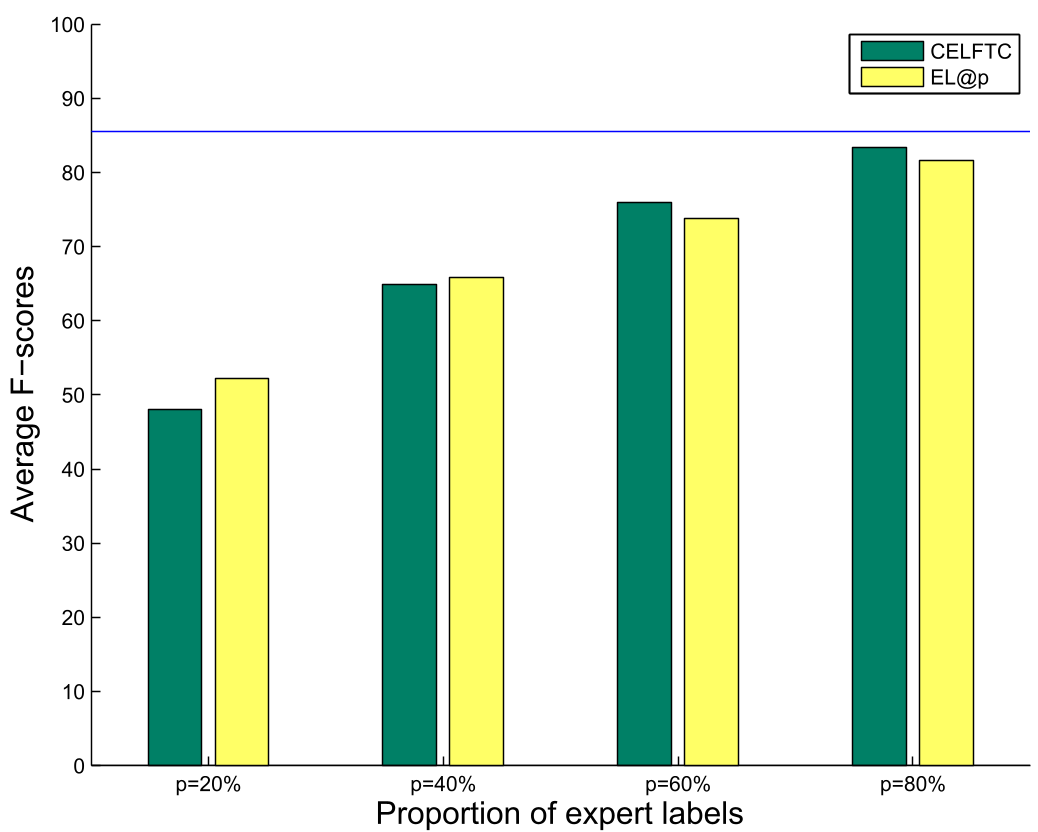 Figure 3: Performance of CELFTC versus the baseline. Note how social data closes the gap as expert labels decrease.
Critical Insight & Conclusion
The genius of this work lies in the Filtered Learning. Instead of fighting the noise in social media comments, the paper uses a small "kernel" of truth (expert labels) to curate the noise into a massive, useful dataset.
Takeaway: If you are building a recommendation or tagging engine for music, stop ignoring user comments as "unreliable." With the right filtering stage, they are a goldmine for training robust, socially-aware AI.
Limitations
The dataset is focused on EDM. While the concept of a "Drop" is universal in dance music, the method might need refinement for genres with less rigid structural boundaries, like Jazz or Classical music.