
Turning SoundCloud Noise into Signal: Detecting EDM Peaks with Social Labels
Detecting Socially Significant Music Events Using Temporally Noisy Labels
The paper introduces a framework for detecting socially significant music events (Drop, Build, Break) in Electronic Dance Music (EDM) by leveraging timed comments from SoundCloud as weak, temporally noisy labels. The authors propose a two-stage learning method—Combining Expert Labels and Filtered Timed Comments (CELFTC)—which achieves performance comparable to expert-only models while significantly reducing human labeling requirements.
TL;DR
Researchers have developed a way to detect "Socially Significant" events in EDM—like the Drop, Build, and Break—using noisy timed comments from SoundCloud. By combining a small number of expert labels with filtered social data, the system achieves state-of-the-art performance while slashing the need for manual annotation by 40%.
Background: The Cost of Precision
In the world of Music Information Retrieval (MIR), pinpointing the exact second a "Drop" occurs is a labor-intensive task. Historically, researchers relied on experts to manually tag thousands of tracks. However, the rise of "social music" platforms like SoundCloud offers a goldmine of data: timed comments. When a user writes "Love the drop!" at 01:28, they provide a label. The catch? These labels are "noisy"—some users comment 10 seconds late, others 5 seconds early in anticipation.
The Core Insight: Temporal Noise as a Feature
The authors distinguish between "What" is interesting and "How" to detect it. They focus on Socially Significant Events (Break, Drop, Build) because these are what the audience reacts to most.
The technical breakthrough lies in the CELFTC (Combining Expert Labels and Filtered Timed Comments) framework. Instead of trusting all social comments, the system uses a small "seed" of expert-labeled data to train a filter. This filter screens the social comments, keeping only those that align with the acoustic patterns typical of that event.
Methodology: Seeing Music as an Image
One of the paper's most impactful findings is that Image Features outperform traditional Audio Features (like MFCCs).
- Segmentation: The track is first segmented using Music Structure Segmentation (MSS). Events almost always happen near structural boundaries.
- Feature Extraction: The system converts 15-second audio windows into Spectrograms and Self-Similarity Matrices, treating them as RGB images.
- Classification: By extracting statistical moments from these "images," the SVM classifier identifies patterns (like the sudden frequency surge of a Drop) more effectively than by looking at audio signals alone.
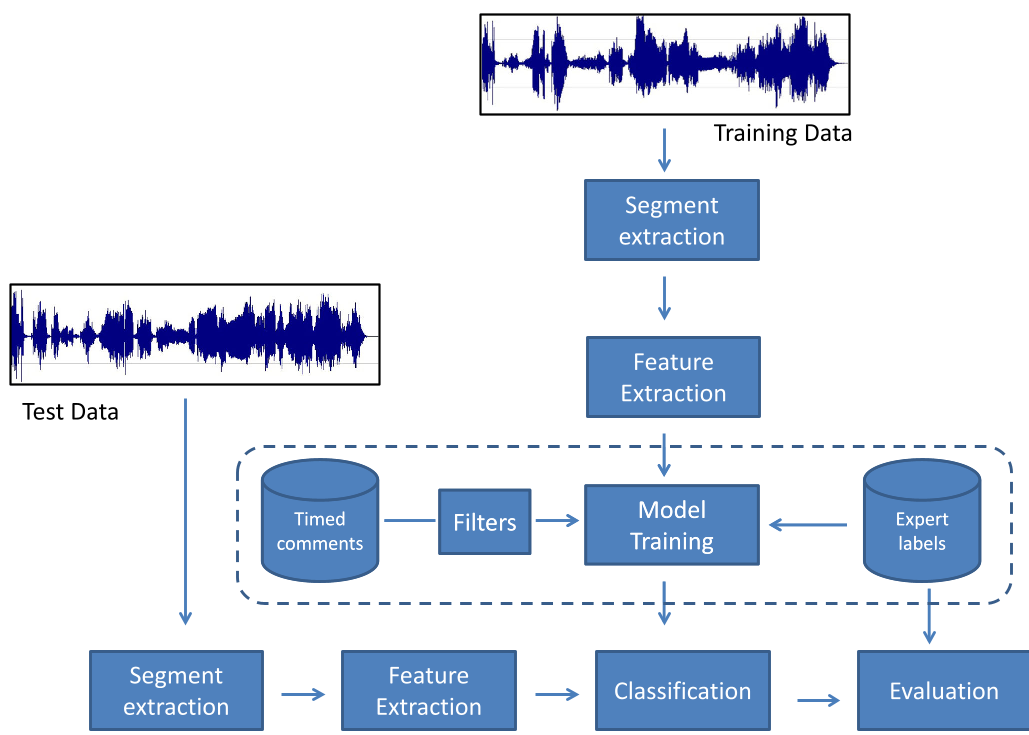 Fig 1: The proposed framework illustrating the filtering and training pipeline.
Experimental Battle: Experts vs. The Crowd
The results confirm a massive efficiency gain. By using just 60% of the usual expert labels and filling the gap with filtered SoundCloud comments, the model reached a performance level (F-score) virtually identical to a model using 100% expert data.
Key Findings:
- The Drop is easiest to find: 80% of Drops coincide exactly with structural boundaries.
- Image Wins: Spectrogram-based image features consistently provided higher F-scores than standard audio rhythm/timbre features.
- Anticipation is a Plus: In a "Non-linear access" test (jumping to markers in a track), the model often predicted events slightly before they occurred. For a DJ or listener, jumping in 15 seconds early is better than jumping in 2 seconds late and missing the buildup.
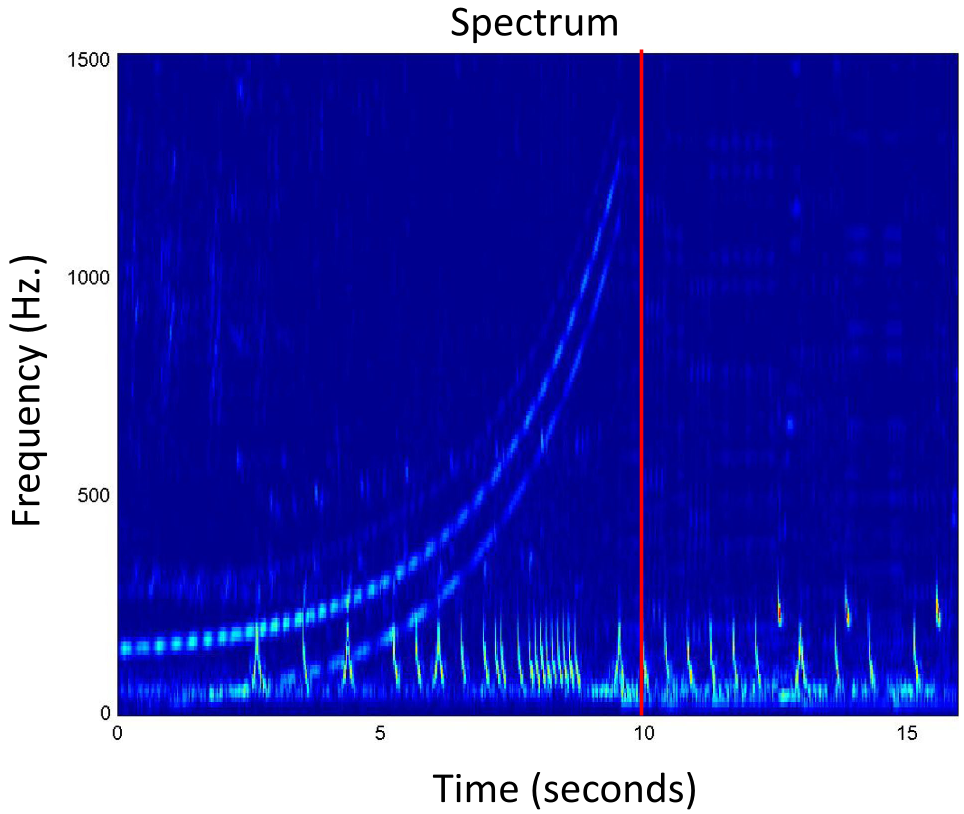 Fig 2: The CELFTC pipeline detail, showing how social data is "cleaned" by the initial expert model.
Deep Insight: Why it Matters
This work shifts the focus from "pure" signal processing to "social-aware" signal processing. It acknowledges that the signal (the music) and the response (the social commentary) are inextricably linked.
Limitations: The dataset is EDM-heavy. While the model generalized well to YouTube tracks, genres with less "formulaic" structures (like Jazz or Ambient) might prove harder to map using structural boundaries.
Conclusion
Yadati et al. have successfully proved that in the age of big social data, we don't need perfect labels; we just need a smart way to filter the noise. This approach paves the way for automated playlist "highlight" generators and more intelligent non-linear music players.
Takeaway for Researchers: When dealing with social metadata, don't just "clean" your data—use a small expert subset to "teach" your model how to filter the crowd's noise.