
Unmasking the "Electronic Flies": Detecting Digital Trolls During the Iraqi Political Crisis
Detecting Suspicious Activities of Digital Trolls During the Political Crisis
This paper presents a robust first-stage automated methodology for detecting "digital trolls" during political crises, specifically analyzing the 2019 Iraq unrest. By leveraging a custom dataset of over 135,000 tweets and utilizing the KNIME data analytics platform, the authors identify suspicious external interference through behavioral feature engineering.
TL;DR
In the heat of political unrest, social media becomes a digital battlefield. This paper investigates the 2019 Iraqi protests to identify digital trolls—external groups orchestrating campaigns to manipulate public opinion. By analyzing 135,922 tweets, the researchers found that engagement metrics like favorite counts and retweet distributions act as "digital fingerprints" that reveal coordinated inauthentic behavior from external sources.
Background: The Social Media Frontline
Since the Arab Spring, social media has been the primary vehicle for political expression in the Middle East. However, this has led to the rise of "digital trolls" or "electronic flies"—coordinated accounts designed to amplify specific agendas, spread misinformation, and drown out organic dissent. This paper positions itself as a forensic tool for researchers and governments to distinguish between a genuine protest movement and external interference.
The Problem: Why Bots are Hard to Catch
Most people assume you can spot a troll by looking at their profile: Is the account new? Does it have zero friends? The authors argue that these are weak signals. State-sponsored or sophisticated troll farms can easily "age" accounts and buy followers to appear legitimate. The real giveaway isn't who the account is, but how it behaves within the network ecosystem.
Methodology: Behavioral Forensics
The researchers utilized the KNIME analytics platform to scrape and process data during a 9-day window of the Iraq protests.
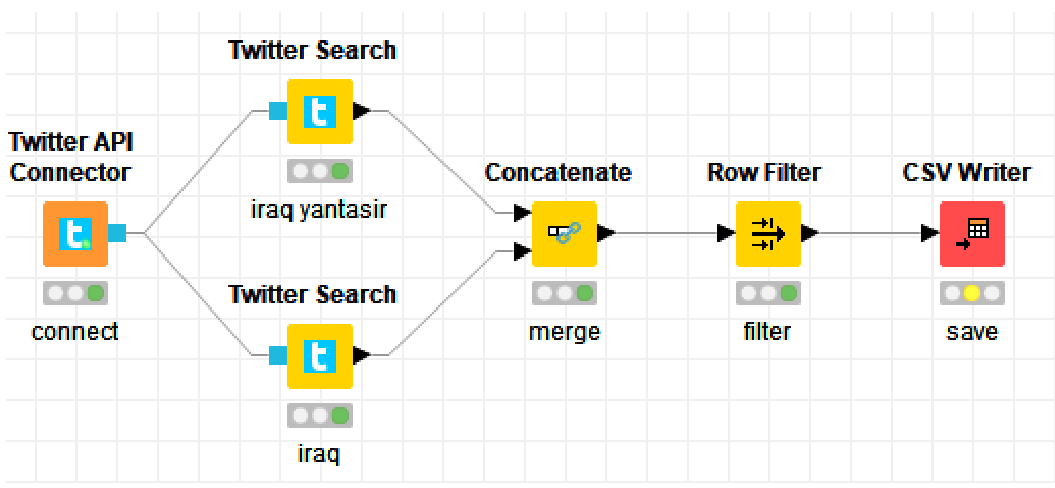 Figure 1: The KNIME workflow used to automate the extraction and transformation of Twitter data.
Key Breakthrough: The Histogram of Influence
The authors went beyond simple counting. They analyzed the Source of Retweets. In a natural environment, people retweet a wide variety of voices. In a troll campaign, thousands of accounts usually retweet a tiny "inner circle" of seed accounts.
The methodology focuses on three pillars:
- Geographical Classification: Using Arabic/English keywords to map users to countries.
- Engagement Ratios: Comparing "Likes" to "Retweets."
- Source Distribution: Mapping the concavity of the retweet histogram to find artificial clusters.
Critical Findings & SOTA Comparison
The results provided a startling contrast between local Iraqi users and external actors (labeled as KSA in the study).
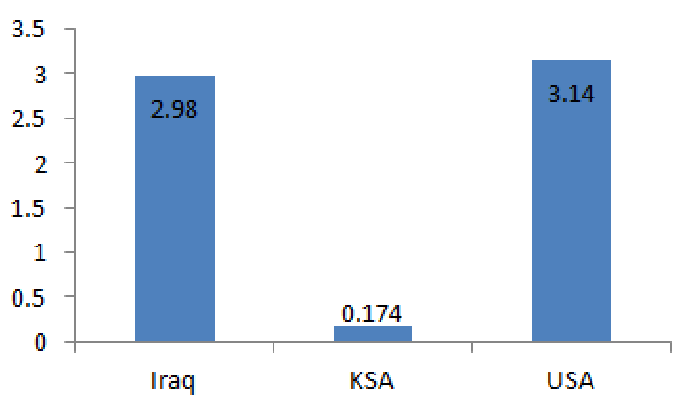 Figure 2: Statistical anomalies in user behavior across different regions.
- The "Lurker" Red Flag: Accounts from the suspicious KSA cluster had an extremely high "Is Retweet" rate (over 90%) but an abysmal "Favorite" rate (0.174). This suggests these accounts are programmed to amplify content via retweets, but they lack genuine human interaction or "liking" of the content they push.
- The Sharp Concavity: As shown in Fig. 7 of the paper, the distribution curve for suspicious external accounts shows a "sharp concavity," meaning a disproportionately high volume of their activity is directed at a very small group of users—a classic sign of a coordinated troll farm.
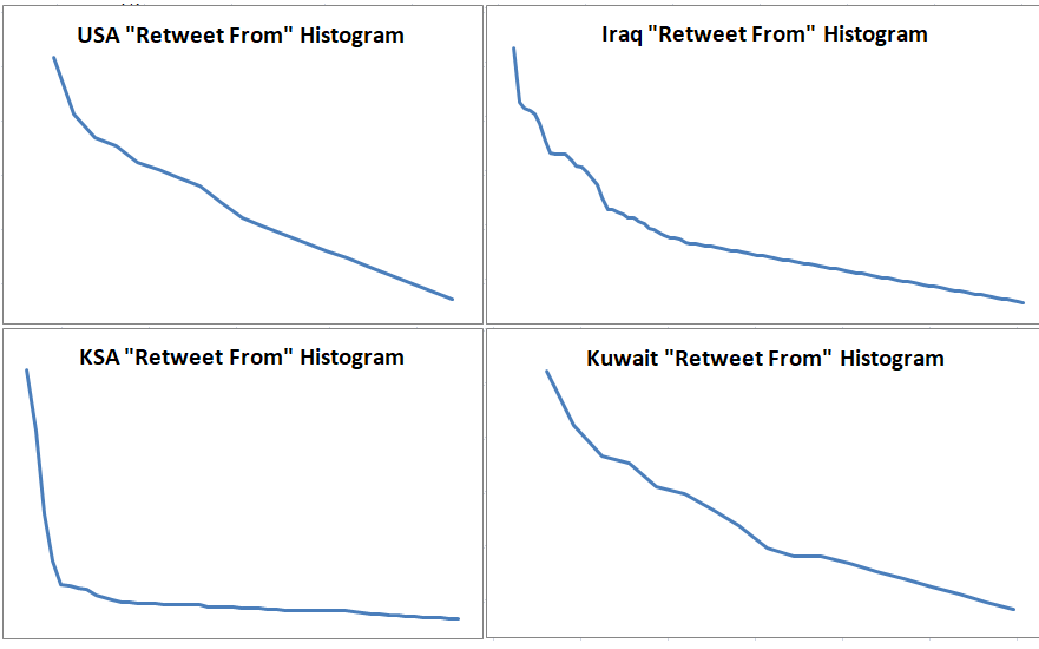 Figure 3: Retweet histograms showing the difference between organic reach (Iraq/USA) and inorganic spikes (KSA).
Critical Insight & Conclusion
The paper’s greatest contribution is the validation of distribution metrics over attribute metrics. While an account's "Account Age" (averaging 54 months in the KSA group) showed they were old and established, their behavioral metrics (High Retweet, Low Favorite, Narrow Source Focus) betrayed their nature as digital trolls.
Takeaway: To catch modern trolls, stop looking at their profiles and start looking at their relationships. High-frequency retweeting with low engagement and narrow source targeting remains the most effective "smoking gun" for identifying state-sponsored digital influence operations.
Future Directions
The authors suggest that future work should incorporate Natural Language Processing (NLP) to analyze the sentiment and semantic similarity of the tweets. If thousands of accounts are retweeting the same five people with identical or slightly varied text, the confidence in classifying them as "Electronic Flies" reaches near-certainty.