
Detecting Hidden Alliances: A (d-)chain Approach to Academic Integrity
Detection of Conflicts of Interest in Social Networks
This paper introduces a graph-based approach to detect Conflicts of Interest (COIs) in social networks, specifically applied to the academic peer-review process. Using a novel concept of "(d-)chains," the method identifies high, medium, and low levels of COI by analyzing paths between authors and reviewers in a multi-relational network.
TL;DR
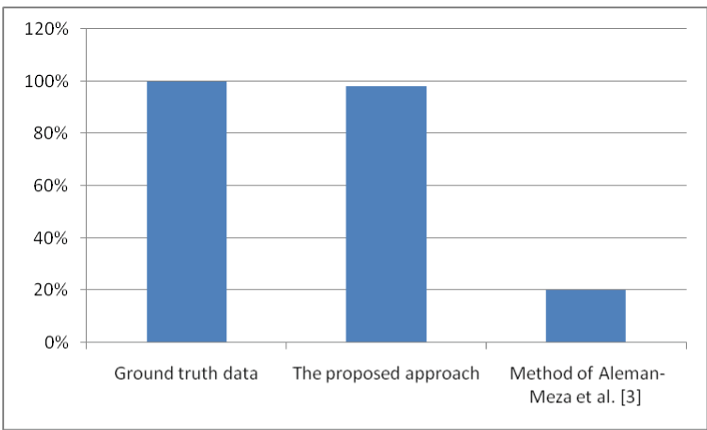
Ensuring objectivity in peer review is a cornerstone of science, yet identifying Conflicts of Interest (COI) is increasingly difficult as academic networks grow complex. This paper proposes a structural graph-based approach using (d-)chains to uncover high, medium, and low-level COIs. By focusing on path topology rather than just collaboration weights, the method achieves a staggering 98% detection rate compared to traditional semantic methods.
Background: The Limits of Weight-Based Detection
In clinical trials, legal proceedings, and notably, academic peer reviews, COIs can degrade public trust. Previous state-of-the-art methods (like those by Aleman-Meza) often used "collaboration strength" heuristics—essentially weighting a relationship by how many papers two people co-authored.
The Problem? A single co-authorship is often legally and ethically sufficient to constitute a conflict, regardless of "weight." Furthermore, prior systems often ignored indirect paths (e.g., "Reviewer A works at the same lab as Author B's frequent collaborator"), leaving a gap for subtle biases to slip through.
Methodology: The Power of (d-)chains
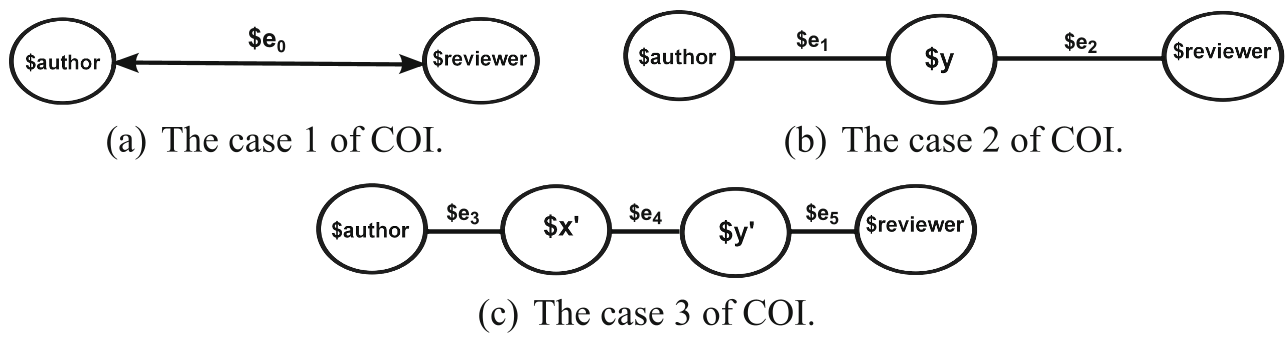
The authors represent the peer-review entity as a directed, multi-relational graph. The core innovation is the (d-)chain: a sequence of arcs where at least one edge is "double-sense" (reciprocal, like a friendship or co-authorship).
Architecture of Conflict
The authors define three tiers of COI based on the distance and type of nodes:
- High Level (Length 1): Direct co-authorship or co-editorship.
- Medium Level (Length 2): Sharing a common collaborator or being part of the same organization.
- Low Level (Length 3): Complex indirect ties involving both organizations and external collaborators.
Experimental Performance
The study utilized the SwetoDblp dataset and a custom-built Dataset Generator to simulate realistic conference scenarios (modeled after ICCNA’2018).
Better than the SOTA
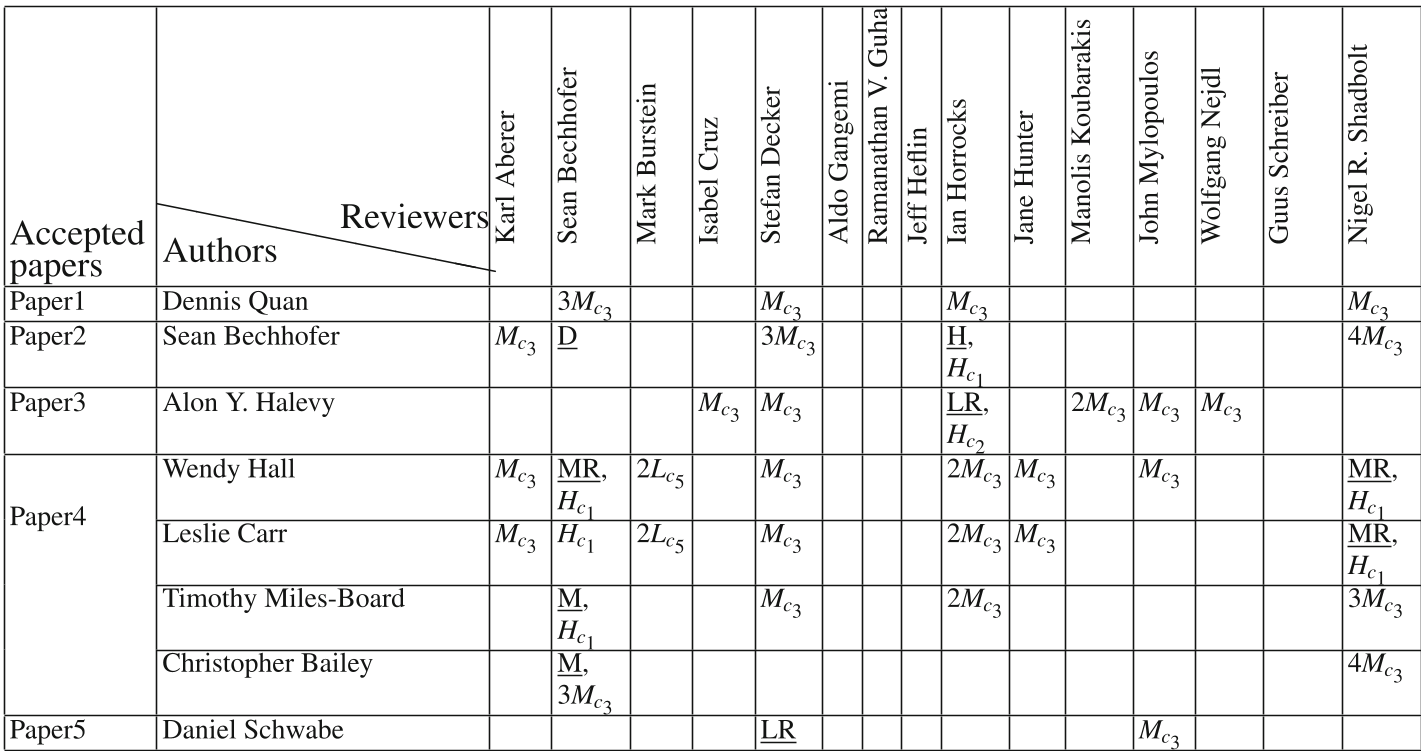
The proposed algorithm outperformed traditional methods by capturing "hidden" relationships that weight-based filters missed. For instance, in the WWW2004 track, the authors identified high-level COIs between Leslie Carr and Sean Bechhofer that previous tools overlooked because they didn't account for the specific temporal collaboration in 2001.
Key Results Table (Subset of WWW2004 Findings):
Critical Insight & Future Outlook
While the paper demonstrates high efficiency, its primary limitation is the "Max-Level" bias. The current algorithm only identifies the highest level of conflict found. If an author and reviewer are both former students of the same advisor (Medium) and currently work at the same company (Medium), the system might treat them the same as a pair with only a single weak link.
Future Work: Integrating this structural chain approach with Temporal Analysis (to see if a COI has "cooled off" over 10 years) and NLP (to detect cognitive overlaps in research topics) would create the ultimate academic integrity suite.
Summary
By shifting the focus from "how much they collaborated" to "how are they structurally linked," this d-chain approach provides a robust framework for conferences to automate the detection of even the most subtle institutional biases.