
StegoBot: Unmasking the Covert Botnets Hiding in Your Social Feed
Detection of StegoBot: a covert social network botnet
This paper introduces an anomaly-based detection framework for "StegoBot," a covert social network botnet that utilizes image steganography for Command and Control (C2) communication. The proposed method leverages multiple image entropy measures and an ensemble of AdaBoost classifiers to distinguish between clean and infected images shared on OSNs like Facebook.
TL;DR
Social networks have become a breeding ground for a new breed of stealthy malware: StegoBot. Unlike traditional botnets that leave loud network signatures, StegoBot hides its instructions in plain sight—inside the pixels of your shared photos. This paper proposes a defense mechanism using Image Entropy Analysis and Ensemble Learning to detect these "infected" images with up to 94% accuracy.
The Evolution of Stealth: From IRC to Image Pixels
Most botnets are "noisy." Whether they use IRC or P2P protocols for Command and Control (C2), they create distinct traffic patterns that network defenders can easily spot. StegoBot changes the game by being probabilistically unobservable.
It exploits the social habit of image sharing. When a user views an "infected" profile, the social platform (like Facebook) automatically downloads the image in the background. If the user's machine is compromised, the bot extracts hidden commands from the image pixels using steganography. No new connections are made; no suspicious protocols are used.
Methodology: The Entropy Fingerprint
Why does hiding a few bits of data in an image make it detectable? The authors' core insight is that embedding changes the statistical "chaos" (entropy) of an image, even if the human eye sees no difference.
1. Feature Extraction
The system doesn't just look at the image as a whole. It breaks the image into disjoint blocks and scans them horizontally and vertically. It then calculates a suite of information-theoretic measures:
- Conditional Entropy: Captures how much the information in one block depends on its neighbor.
- K-L Divergence: Measures the "distance" between the pixel distributions of different blocks.
- Renyi Entropy: Provides a generalized measure of information to catch higher-order statistical shifts.
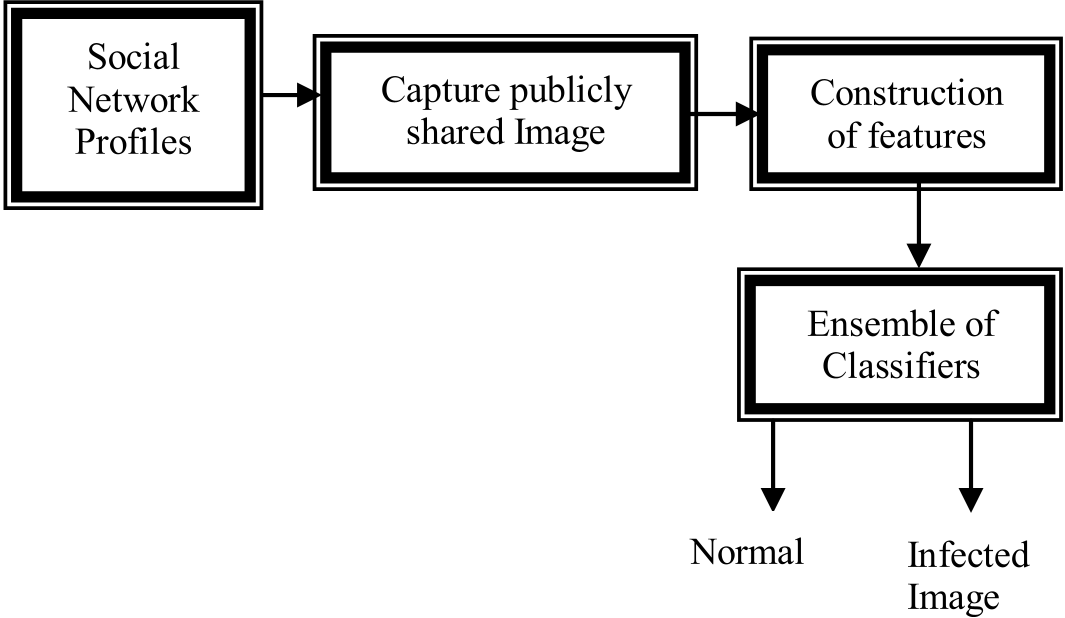 Figure 1: The proposed host-based detection architecture.
2. Ensemble Classification
Rather than relying on a single "weak" detector, the authors use AdaBoost. This ensemble method combines multiple weak classifiers, focusing on the "hard" examples that previous iterations missed. This is particularly effective for catching different steganographic techniques like F5, Outguess, or YASS.
Experimental Battleground
The researchers tested their system against 1,000 images from the Washington image database, infected with various malwares (Trojans, Worms, Viruses) using several SOTA steganography tools.
Key Results:
- High Performance: The system achieved a 94.6% detection rate for Win32 Trojans.
- File Type Sensitivity: Detection was most effective on PNG (92% TPR) and GIP (89% TPR) formats.
- The Power of Ensembles: The ensemble approach consistently outperformed single classifiers across all embedding methods (YASS, F5, etc.).
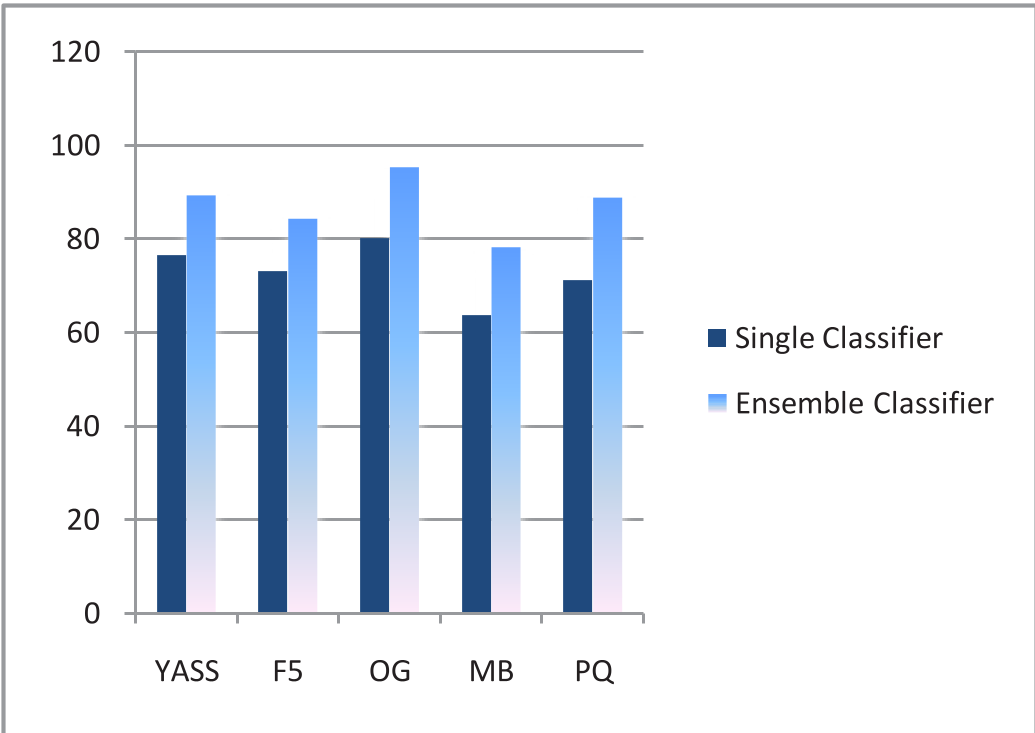 Figure 2: Performance comparison showing Ensemble classifiers (line) vs. Single classifiers (bars).
Critical Insight & Future Outlook
While the paper demonstrates a strong proof-of-concept for detecting covert social botnets, it highlights a brewing arms race. As malware becomes more sophisticated—using smaller payloads or custom embedding algorithms—the entropy shifts become harder to resolve.
The Takeaway: If you manage a platform where users share high volumes of media, you can no longer assume that "legitimate traffic" is safe. Statistical anomaly detection at the host or edge level is becoming a prerequisite for modern cybersecurity.
Limitations: The authors admit that scalability remains an issue. Analyzing every image in a social network with billions of uploads per day requires immense computational power. Future research will likely focus on optimizing these entropy calculations for the "Big Data" scale of modern OSNs.