
Overlapping Community Detection: Decoding the Social Fabric of Mobile Networks
A detection of overlapping community in mobile social network
The paper proposes a novel overlapping community detection method specifically designed for Mobile Social Networks (MSNs). By employing directed and weighted link clustering based on an agglomerative hierarchical approach, the method successfully captures the inherent complexities of mobile interactions, achieving higher community strength compared to traditional baselines like CPM and EAGLE.
TL;DR
Researchers from Kyungpook National University have developed a specialized algorithm to detect communities in Mobile Social Networks (MSNs). Unlike traditional methods that force individuals into a single group, this approach recognizes that people belong to multiple circles. By analyzing the direction and weight of calls and messages through link clustering, the method significantly outperforms general-purpose algorithms in accuracy and community strength.
Background & Motivation: Beyond Simple Graphs
In the world of network science, a "community" is a cluster where internal connections are dense and external ones are sparse. However, human society is messy. In mobile networks, a single person (node) is often a bridge between family, coworkers, and friends.
The authors argue that existing "hard partitioning" methods fail because:
- Weight Matters: A 50-minute call implies a stronger bond than a 1-second missed call.
- Direction Matters: Social hierarchies are often reflected in who initiates the interaction.
- Overlap is Natural: You are not just a "member" of one group; you are a participant in many.
Methodology: The Power of Link Clustering
The core innovation lies in shifting the focus from nodes to links. If we cluster the connections (edges) rather than the people (nodes), a person can naturally belong to multiple communities if their various links are assigned to different clusters.
1. Similarity through Vectors
To compare two links, the authors define weighting vectors that incorporate interaction weights (frequency) and neighbor sets. They use the Tanimoto coefficient to determine how similar two directed, weighted edges are in the social space.
2. Hierarchical Agglomeration
The algorithm starts with every link as its own community and iteratively merges the most similar pairs. This creates a Dendrogram—a tree-like structure representing the social hierarchy.
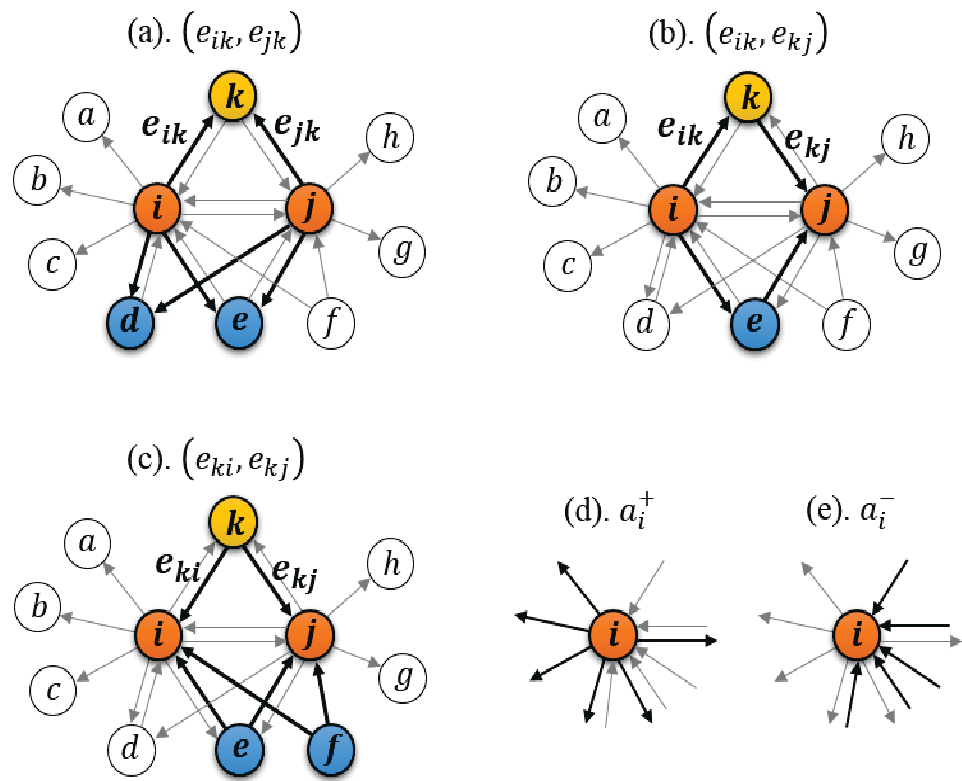 Figure 1: Comparison of different edge pair directions used to calculate similarity vectors.
3. Finding the "Sweet Spot" (Quality Function Q)
To decide where to "cut" the tree to find the best communities, the authors use a link density function . This function favors partitions where internal links are dense and weights are maximized.
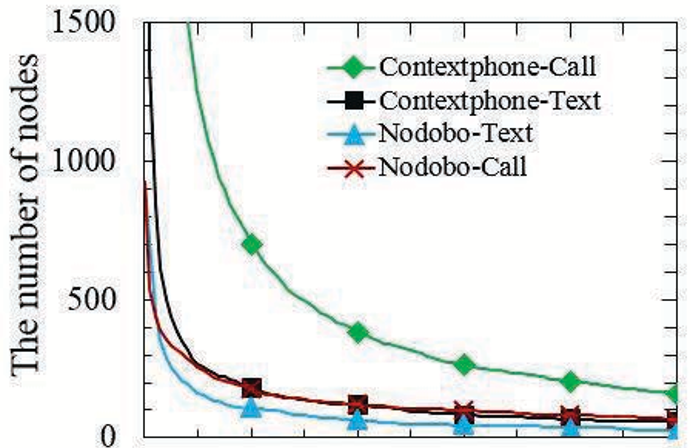 Figure 2: The process of identifying the optimal community structure by maximizing the quality function Q.
Experimental Results
The researchers tested their method on real-world datasets: Contextphone (94 participants) and Nodobo (27 participants).
Key Findings:
- Community Strength: Using the metric (the ratio of internal vs. total interaction), the proposed method consistently stayed above baselines like CPM and LC, especially as the social interaction frequency increased.
- Core Group Identification: The method excelled at identifying "core" groups in sparse mobile data where traditional algorithms often lost the signal among the noise.
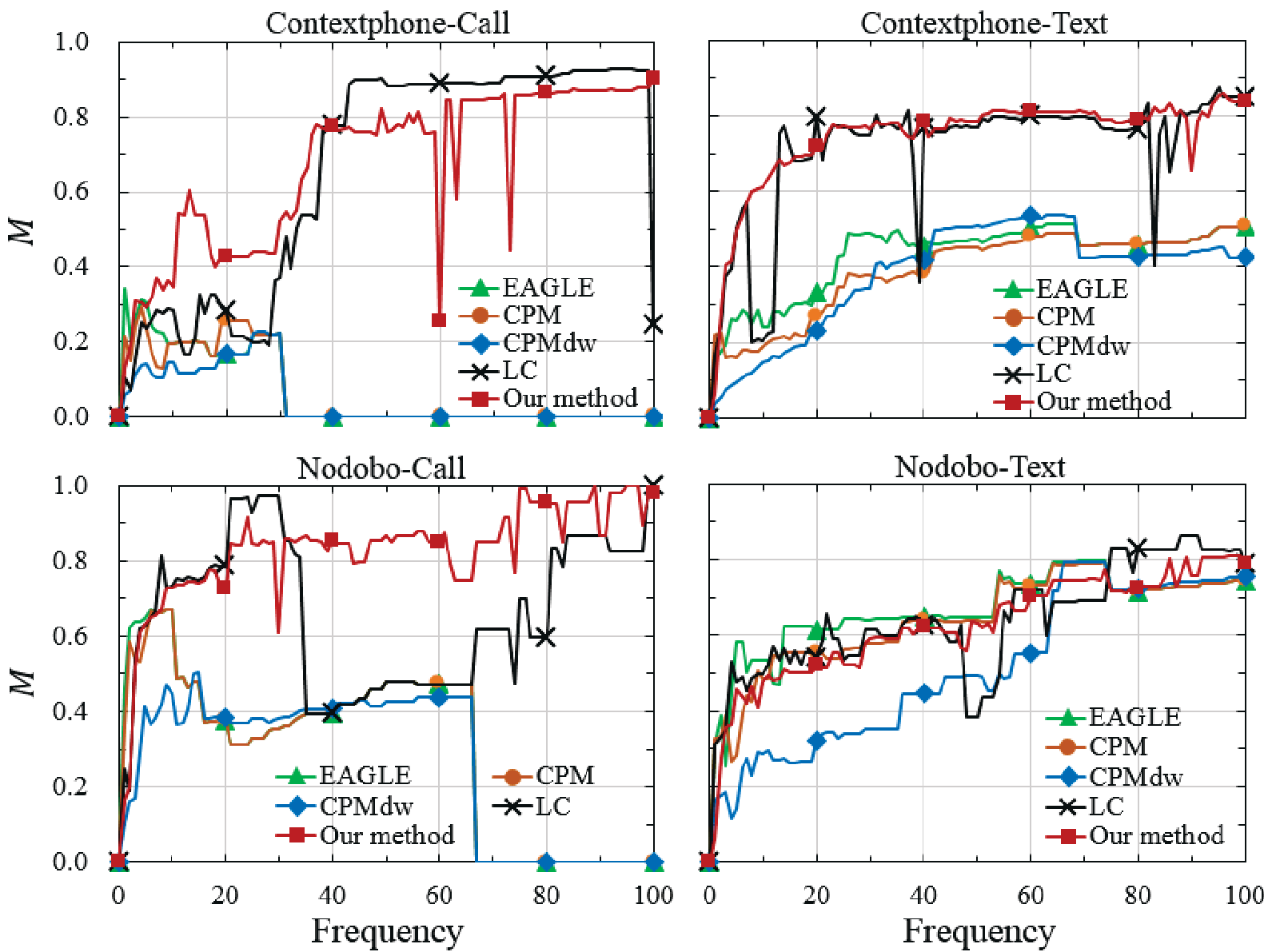 Figure 3: Measuring the ratio of inter-community vs intra-community interaction across different thresholds.
Critical Analysis & Conclusion
Takeaway
The shift to link-centric clustering is a game-changer for mobile social analysis. By respecting the directed and weighted nature of our digital footprints, this method provides a much clearer picture of how sub-groups form and overlap in modern society.
Limitations & Future Work
- Computational Complexity: Hierarchical clustering on links can be computationally expensive for massive networks (millions of nodes) because the number of links often exceeds the number of nodes.
- Temporal Dynamics: Social groups change over time. Future iterations could incorporate "time-stamps" to see how communities evolve or dissolve.
This research lays a solid foundation for more intelligent social apps, better targeted mobile marketing, and a deeper understanding of human collective behavior.