
VivoSpace: Engineering Health Behavior Change via the ABC Framework
Determining the Determinants of Health Behaviour Change through an Online Social Network
This paper introduces the ABC (Appeal, Belonging, Commitment) Framework and a corresponding prototype, VivoSpace, an online social network designed to trigger health behavior change. The study validates the framework through a triangulation of direct surveys and innovative behavioral economics experiments, demonstrating its effectiveness in fostering user engagement and group cohesion.
TL;DR
Can a social network actually make you healthier? While many apps track steps, few understand the social "glue" that keeps us moving. This paper presents VivoSpace, a system built on the ABC Framework (Appeal, Belonging, Commitment). By moving beyond simple surveys and using behavioral economics experiments, the researchers proved that well-designed social interfaces can trigger deep-seated feelings of group reciprocity and commitment, which are essential for lasting lifestyle changes.
Problem & Motivation: The "Utility" Trap
Most health apps suffer from a "utility-only" design. They provide charts (Knowledge) and allow you to set a target (Goal-Setting), but they often fail because human behavior is not purely rational—it is social.
The authors argue that existing systems like Houston or UbiFit are incomplete. They treat the user as an isolated actor or a mere data-sharer. To truly change behavior, a system must address the psychological journey from individual interest (Appeal) to social integration (Belonging) and finally to habitual adherence (Commitment).
Methodology: The ABC Framework & VivoSpace
The core contribution is the ABC Framework, which synthesizes 10+ major theories (e.g., Social Identity Theory, Theory of Planned Behavior) into three dimensions:
- Appeal: Why should I use this? (Individually focused).
- Belonging: Do I fit in? (Socially focused).
- Commitment: Will I stay? (Temporally focused).
To test this, they built VivoSpace, a medium-fidelity prototype featuring nutrient logging, newsfeeds, and specialized social structures like "Clubs" (collaborative) and "Challenges" (competitive).
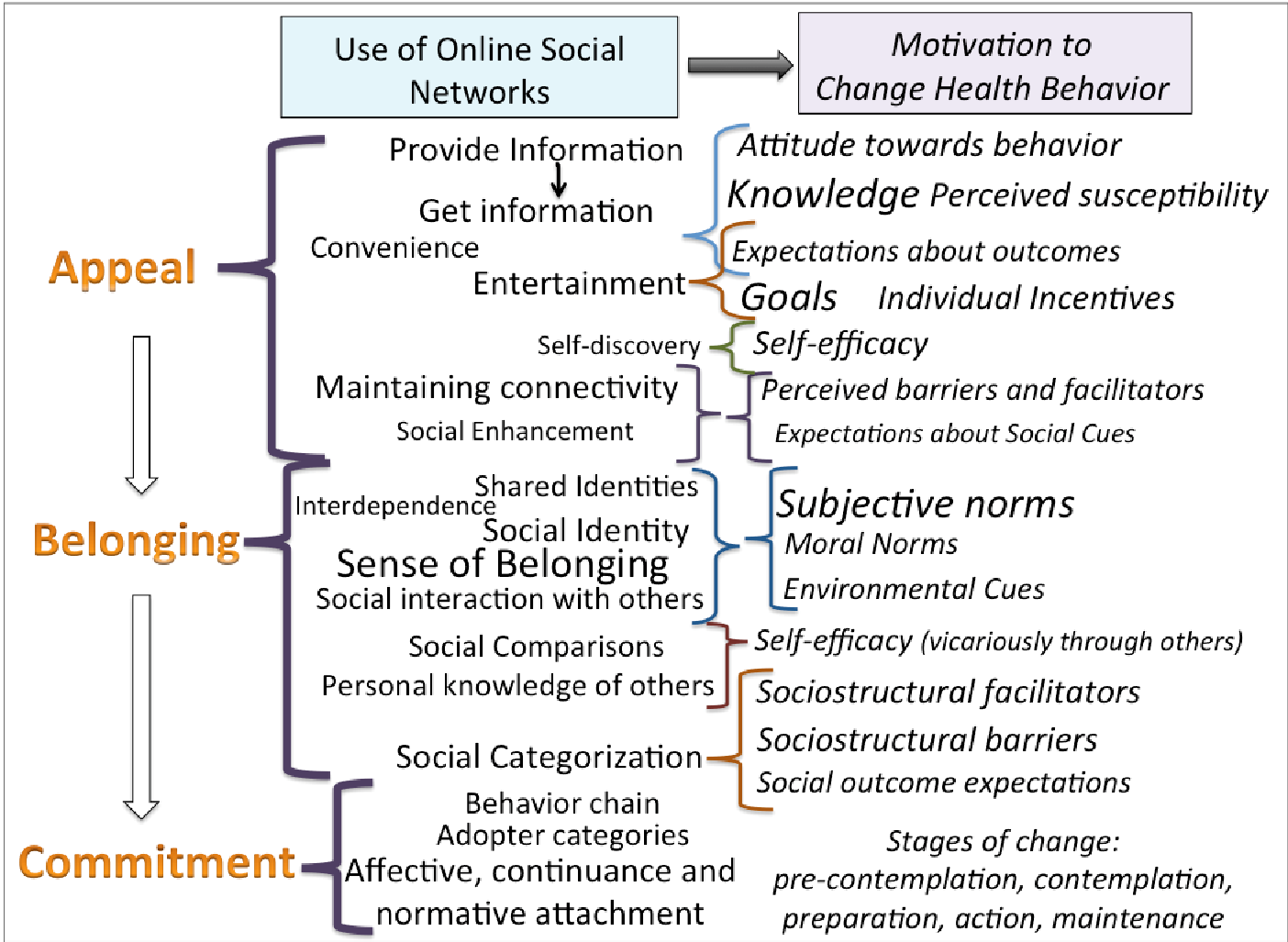 Figure 1: The Main activity page of VivoSpace, showing the integration of social feeds and health tracking.
The "Helping Game": Measuring the Unmeasurable
One of the most brilliant aspects of this study is how they measured Belonging. Instead of just asking "Do you feel like you belong?" (which is notoriously unreliable), they used a Helping Game from behavioral economics.
- The Setup: A "Expert" user (Participant A) could help a "Novice" (Participant B) complete tasks at a real-money cost to themselves.
- The Insight: If the system successfully fosters "Belonging," users will help others based on the shared environment of VivoSpace, not just the other person's "score" or status.
Experimental Results
The experiments (conducted with 36 participants) yielded fascinating insights:
- Appeal: Users loved the "Dashboard" for self-discovery (Mean > 5.94) but were less motivated to actually log data—a classic hurdle in health tech.
- Belonging (Indirect Reciprocity): Unlike traditional economic games where people only help those with "high scores," VivoSpace users helped their partners regardless of status. This suggests the platform established a strong group norm of cooperation.
- Commitment: In the group commitment experiment, participants chose to stay with their "team" even when offered $50 to leave or when their team performed poorly.
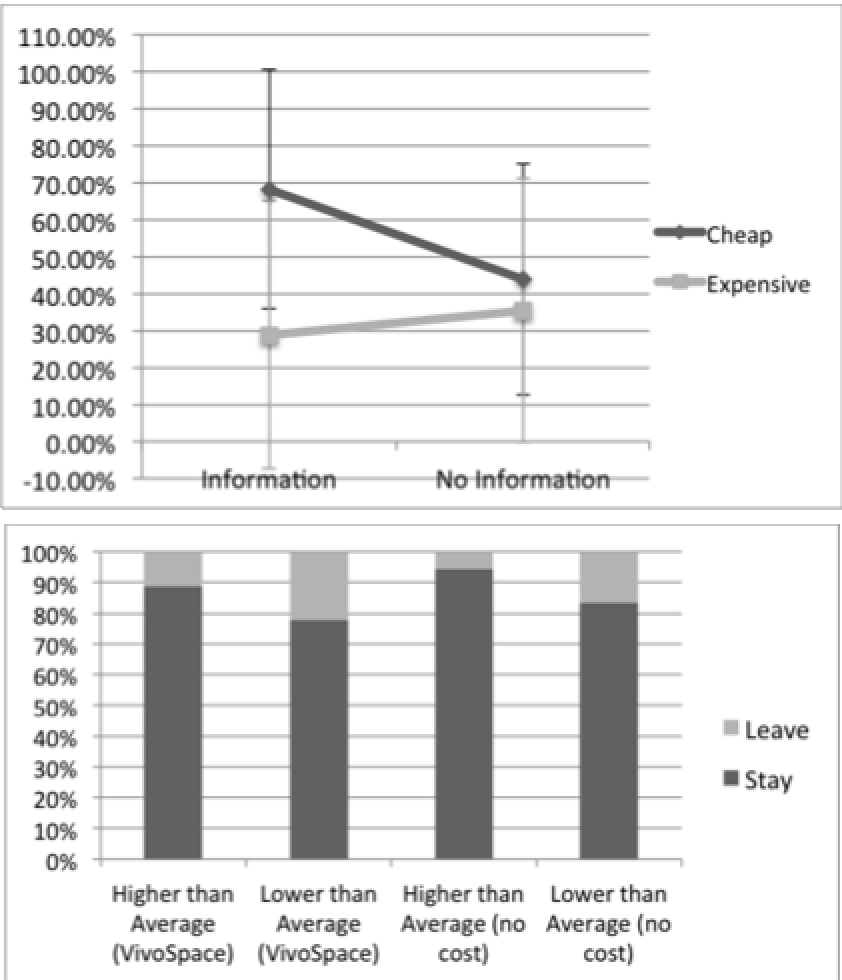 Figure 2: Analysis of group commitment, showing a high percentage of participants choosing to stay with their team despite poor performance.
Critical Analysis & Conclusion
The paper successfully demonstrates that behavioral change is a social engineering challenge. By using the ABC framework, developers can move away from "feature-bloat" and toward "psychological-resonance."
Key Takeaway: A successful health social network must prioritize indirect reciprocity. When users feel that helping others is a group norm, they are more likely to stay engaged themselves.
Limitations:
- The study used a "medium-fidelity" prototype and "fake money" costs. Real-world stakes might alter behavior.
- The demographic was heavily student-biased (UBC), which may not represent the general population's tech habits.
Future Outlook: This work paves the way for "Socially-Aware Health AI." Imagine an AI coach that doesn't just remind you to run, but facilitates these "ABC" determinants by introducing you to the right "Club" or prompting reciprocity within your social circle.
Main Contribution Summary: Triangulating direct feedback with behavioral economics to prove that the ABC framework can effectively design and evaluate technologies for health behavior change.