
Deciphering Social Shopping: Why Taiwan and Japan Buy Differently
Elucidating the determinants of purchase intention toward social shopping sites: A comparative study of Taiwan and Japan
This comparative study examines the determinants of purchase intention for Social Shopping Sites (SSS) in Taiwan and Japan. By proposing a framework integrating Website Quality (perceived system, information, and service) and Relationship Quality (satisfaction, commitment, and trust), the authors identify significant cross-cultural differences in how these factors influence consumers.
TL;DR
Is a high-quality website enough to drive sales in social commerce? Not necessarily. This comparative study reveals a stark cultural divide: while Taiwanese consumers are highly motivated by website service and personal satisfaction, Japanese consumers view technical quality as a given, basing their purchase decisions almost exclusively on long-term commitment and trust.
The Social Shopping Context
Social Shopping Sites (SSS) represent the convergence of e-commerce and social networking. Unlike traditional e-tailers, SSS platforms like Rakuten rely on social interactions—reviews, shared wishlists, and community feedback—to catalyze transactions. However, as merchants expand across borders, they encounter a critical question: Does the same platform design work everywhere?
The Core Conflict: Technical Quality vs. Human Connection
The researchers identified two primary pillars that influence a user's intent to hit the "buy" button:
- Website Quality: The "Hard" factors (System, Information, and Service quality).
- Relationship Quality: The "Soft" factors (Trust, Commitment, and Satisfaction).
The study hypothesized that cultural differences between Taiwan and Japan—despite their geographic proximity—would lead to different weightings of these pillars.
Methodology: The Rakuten Benchmark
To ensure a fair comparison, the study focused on Rakuten Ichiba, a dominant player in both regions. By using the same platform, the researchers could isolate cultural behavior from platform-specific technical variance.
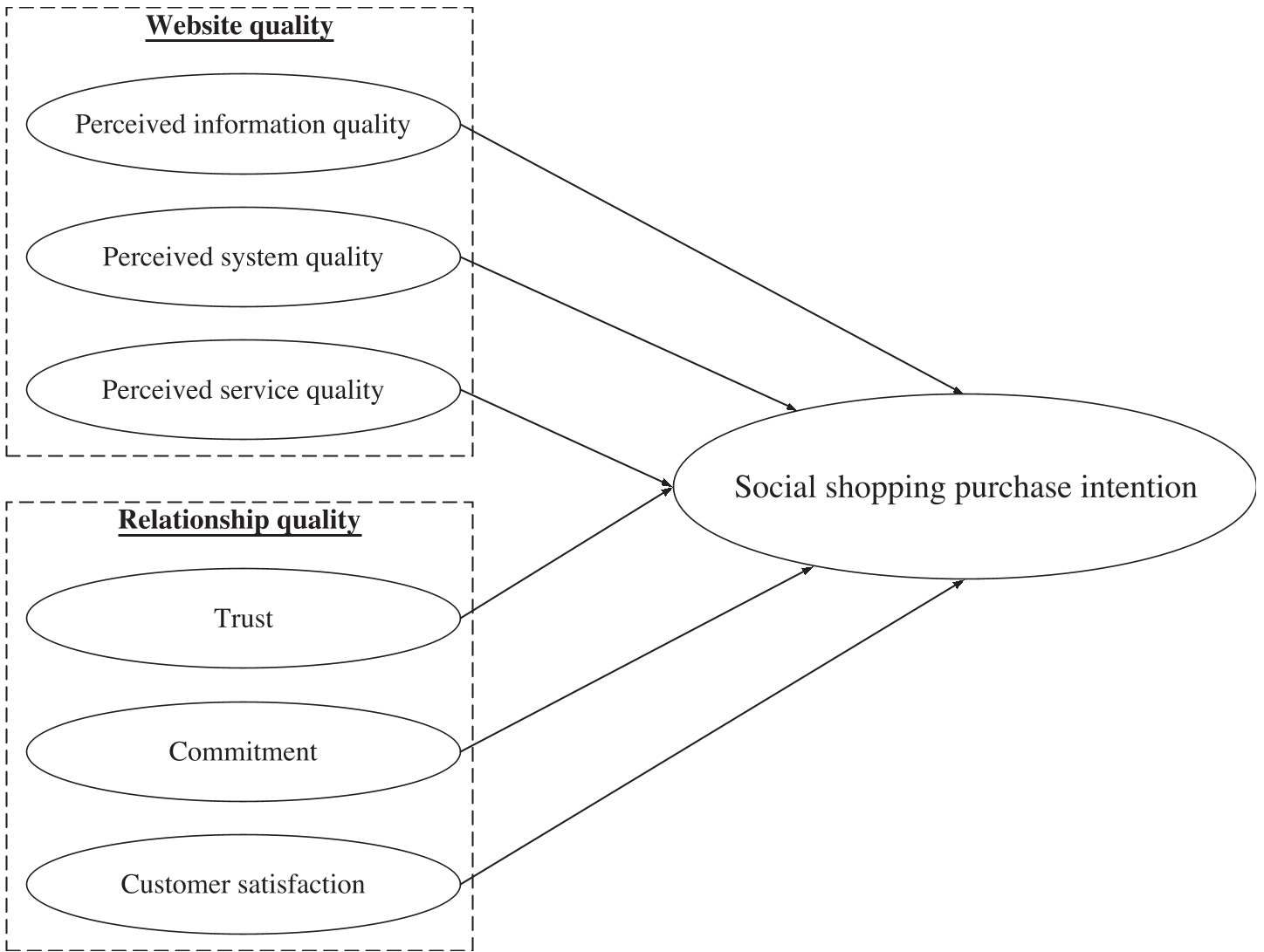 Figure 1: The proposed analytical framework connecting Quality dimensions to Purchase Intention.
Key Findings: A Tale of Two Cultures
The data from 840 respondents yielded several "Aha!" moments:
1. The Japanese "Technical Prerequisite"
Surprisingly, for Japanese respondents, Website Quality (Information, System, and Service) had no significant statistical impact on purchase intention.
- Insight: The authors suggest this is due to Japan's highly developed tech landscape. Japanese users expect a website to be fast, accurate, and easy to use. Because excellence is the baseline, it no longer functions as a competitive motivator.
2. The Taiwanese "Satisfaction Driver"
In contrast, Taiwanese consumers showed a strong correlation between Service Quality (delivery, ease of return) and Satisfaction, which directly fueled their intent to purchase.
3. The Universal Power of Relationship
While technical factors varied, Commitment and Trust remained vital across both nations. However, the intensity differed:
- Japan: Commitment was the single strongest predictor of purchase intention (Beta = 0.659 for males).
- Taiwan: Trust played a more balanced role alongside satisfaction.
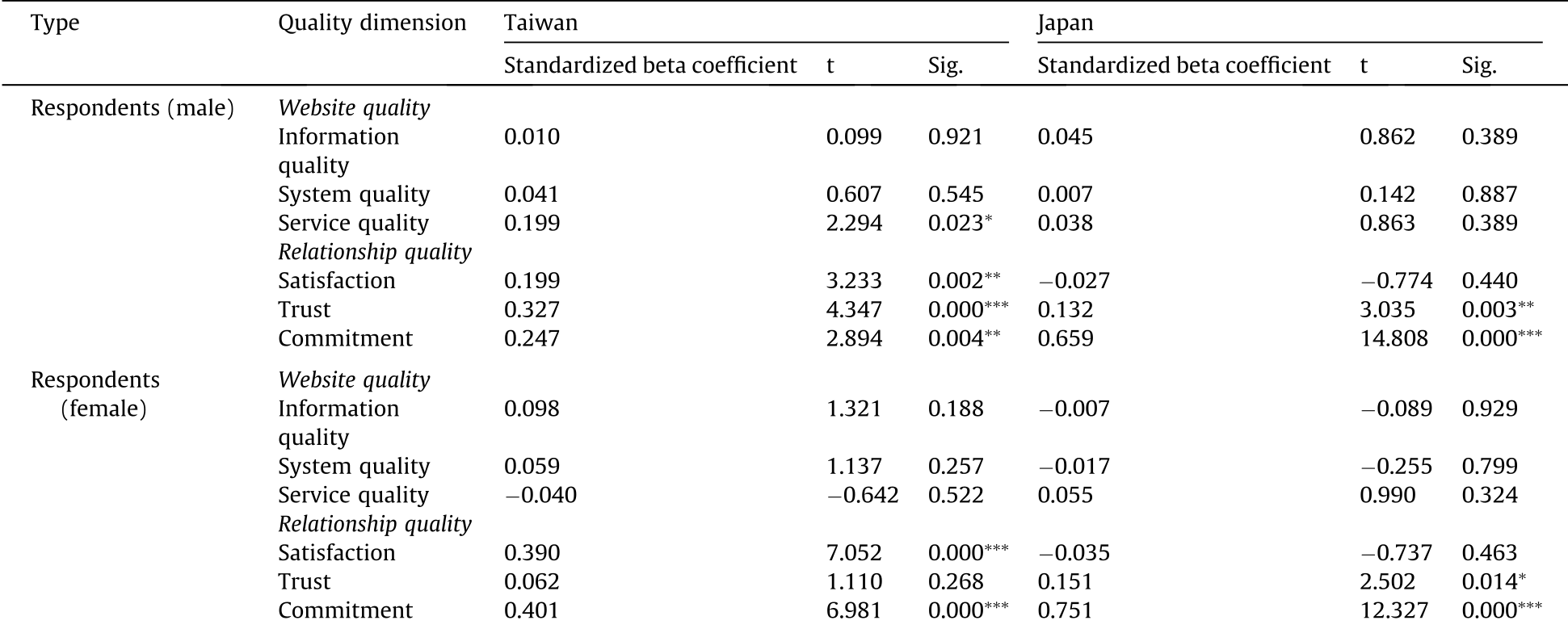 Table 8: Standardized beta coefficients showing the weight of each determinant by country and gender.
Strategic Implications for Global SSS
The study provides a clear roadmap for international expansion:
- In Taiwan: Invest in the "front-end" experience. Focus on delivery accuracy, easy payment channels, and service-level satisfaction.
- In Japan: Focus on the "back-end" bond. Marketing should emphasize brand integrity, benevolence, and building a long-term "committed" relationship with the user. Social features should be geared toward building trust rather than just displaying information.
Critical Insight & Conclusion
The merit of this paper lies in its rejection of the "one-size-fits-all" digital strategy. It proves that perceived quality is relative to cultural environment. As technology matures in a society, "System Quality" transitions from a motivator to a "hygiene factor"—something that causes dissatisfaction if missing but adds no extra value if present.
Future research should look toward the "Why" behind these perceptions—perhaps exploring how Japan's Omotenashi (hospitality) culture or Taiwan's rapid social media penetration shapes these distinct digital expectations.