
Bridging the Cultural Gap: A Social Information Platform for Cool Japan in Asia
Developing Social Information Platform for Cool Japan in Asian Countries
The paper introduces a social information platform designed to expand "Cool Japan" (Japanese culture and fashion) into Asian markets. By leveraging a network of Asian universities and social media data, the research utilizes Natural Language Processing (NLP) and the proprietary "CWC" feature selection technique to analyze cross-cultural consumer sentiment.
TL;DR
To counter the shrinking domestic appetite, the "Cool Japan" initiative is turning to Asian markets. This paper unveils a specialized social information platform that uses a university network and a high-speed feature selection algorithm, CWC, to decode how different Asian cultures perceive Japanese fashion. The results show that what's "casual" in Tokyo might be "fancy" in Hanoi, providing a data-driven roadmap for international expansion.
Background & Motivation: Moving Beyond Traditional Consulting
For over a decade, the Japanese government and giants like Dentsu have promoted "Cool Japan"—a soft-power export of manga, fashion, and food. However, many initiatives fail because they treat "Asia" as a monolith. The economic and cultural nuances between Thailand, Vietnam, and India are vast.
The authors argue that existing market research services are often too rigid or expensive. Their solution? A grass-roots, academia-led network that taps into the most active consumer segment: young generations on social media.
Methodology: The Tech Behind the Sentiment
The researchers don't just count "Likes." They've built a logic-driven pipeline to understand why certain content resonates.
1. The University Network
By partnering with researchers in target countries (Vietnam, Thailand, Philippines), they bypass the translation barrier. Local experts perform morphological analysis on raw comments in local languages before translating the keywords into English for feature extraction.
2. The Core Algorithm: CWC (Categorical Word Combination)
Instead of standard TF-IDF, the authors use CWC, a fast consistency-based feature selection algorithm.
- The Intuition: CWC identifies subsets of features (words) that can completely determine a class label (e.g., whether a photo will be popular or viewed as "sporty").
- The Advantage: It is significantly faster than traditional mutual information methods, making it ideal for the high-velocity world of social media data.
 Fig 1: The architecture of the social information platform, from collection to industrial delivery.
Experimental Insights: The Vietnam Case Study
The first trial targeted Japanese female fashion, specifically content from the magazine Non-no. Using 184 comments collected from Vietnamese Facebook users, the team applied CWC to generate "Tag Clouds" that visualize the unique sensitivity of the market.
Key Findings:
- Sensitivity Mismatch: A specific outfit (Photo No. 2) was labeled "casual" by Japanese testers but was overwhelmingly described as "lovely/pretty" by Vietnamese testers. This suggests that marketing copy needs to be adjusted; what is sold as everyday wear in Japan should be marketed as "special occasion" wear in Vietnam.
- Seasonal Specialization: Despite Vietnam's warm climate, winter fashion (Photo No. 3) received high engagement and positive tags like "stylish" and "chic," indicating a potential niche for high-fashion winter exports as a status symbol.
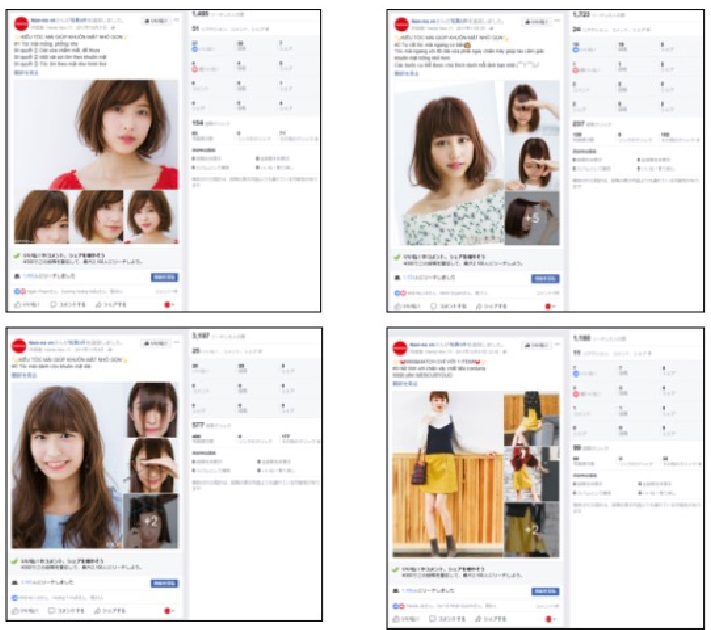 Fig 2: Tag clouds generated via CWC showing distinct keyword groups for different fashion styles.
Critical Analysis & Takeaways
Why this matters:
This work demonstrates that data mining is a bridge for cultural diplomacy. By using CWC, companies can move from "guessing" what people like to "knowing" the specific vocabulary that triggers an emotional response in a local audience.
Limitations:
- Language Nuance: While they use local researchers, the translation to English for CWC processing may still lose subtle cultural connotations.
- Sample Size: The preliminary experiment had a relatively small dataset (184 comments). Scaling this to millions of data points will require even more robust automated NLP pipelines.
Conclusion
The "Cool Japan" social information platform is a sophisticated blend of social science and data engineering. By moving from a centralized promotion model to a decentralized, data-driven network, the authors provide a viable blueprint for any industry looking to navigate the complex cultural waters of the Asian market.