
Simple Teleda: Rebuilding the Social Fabric for the Elderly Through Social TV
Development and Field Trial of a Social TV System for Elderly People
This paper presents the development and field trial of "Simple teleda," a social TV system specifically designed to facilitate communication among the elderly in Japan's hyper-aged society. By integrating Video on Demand (VOD) with a simplified Social Networking Service (SNS) interface, the system successfully reached SOTA-level engagement for senior citizens within a "Senior Cloud" framework.
TL;DR
As Japan faces a hyper-aged society, the "Senior Cloud" project aims to transition the elderly from being "supported" to being active social participants. This paper introduces a specialized social TV system, Simple teleda, which combines Video on Demand (VOD) with a simplified SNS. By using TV programs as conversational "icebreakers," the system successfully activated communication among seniors, proving that content-driven, closed-group environments are key to digital inclusion for the 65+ demographic.
The Problem: The Digital Generation Gap
Most SNS platforms are designed by and for digital natives (teenagers to those in their 30s). For the elderly, these platforms often feel like hostile or overwhelming environments. Previous research highlights three main barriers:
- Complexity: Too many features lead to non-use.
- Safety Concerns: Seniors are highly selective and formal, fearing interactions with anonymous strangers.
- Lack of Context: Without a specific reason to talk, starting a digital conversation feels unnatural.
Methodology: Content as a Social Trigger
The researchers hypothesized that TV programs—a medium the elderly are deeply comfortable with—could serve as a shared foundation for communication.
1. The Simple Teleda Architecture
The system was streamlined to reduce cognitive load. Key features included:
- VOD Integration: Users could watch specific themed programs (Health, Gardening, Travel) within the app.
- Contextual Messaging: A comment section pinned to specific programs to keep conversations on-topic.
- Enhanced Trust: A map interface and profile pages to help users understand who they were talking to, reducing the fear of the unknown.
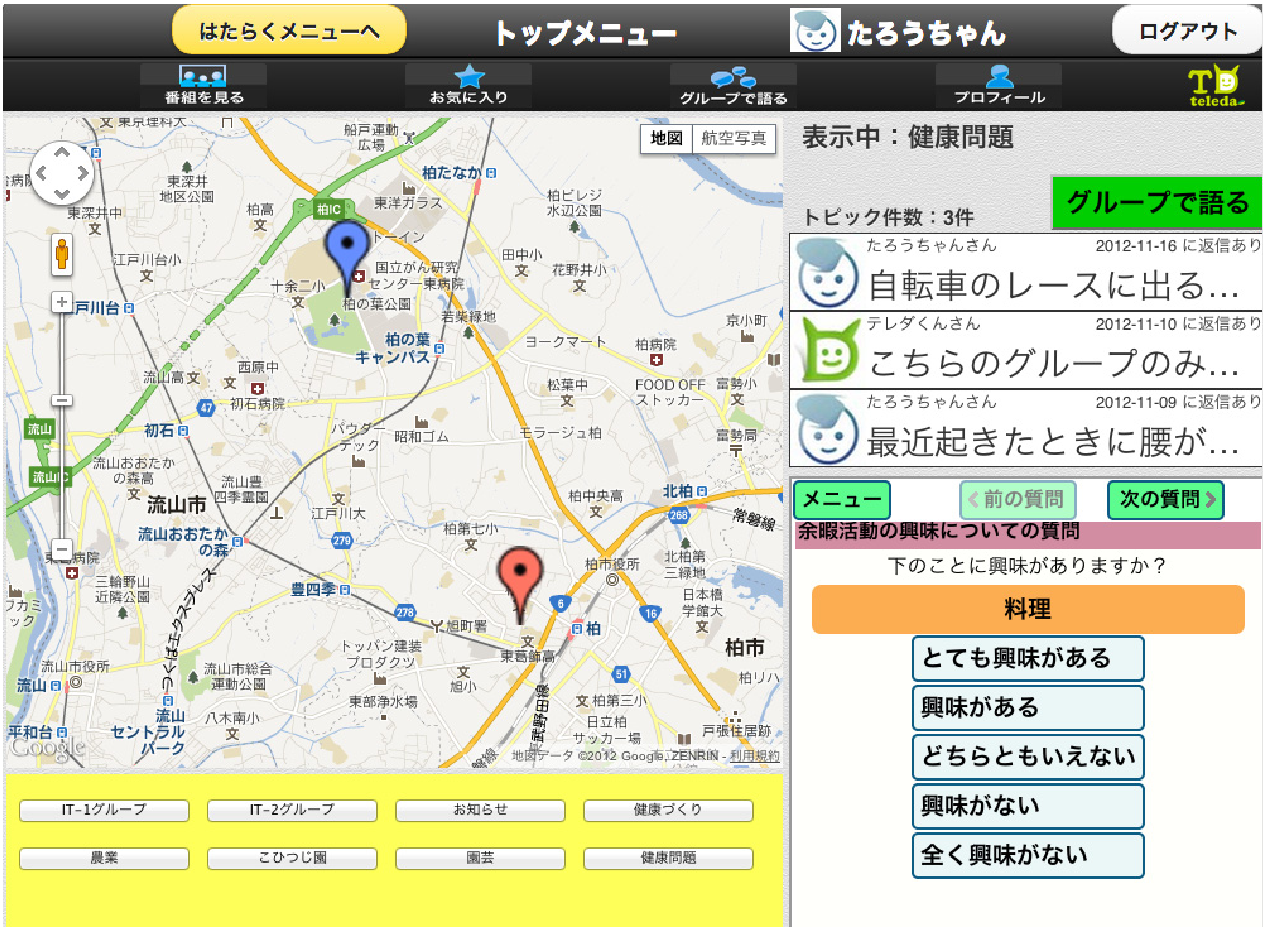 Figure 1: The Simple Teleda system interface showing the map-based user directory and program-based communication.
2. The Facilitation Factor
A unique aspect of the study was the use of Facilitators. These individuals didn't just provide content but responded to posts, creating a "warm" atmosphere that encouraged seniors to move from passive viewing to active posting.
Experimental Insights: What Makes Seniors Talk?
The 50-day field trial in Kashiwa City yielded significant data on senior digital behavior.
Closed vs. Open Groups
The study found that psychological safety is paramount. The average number of posts per person in "closed" groups (acquaintances or small interest-based groups) was 8x higher (4.0 posts) than in the "open" group (0.5 posts). This confirms that seniors prefer tight-knit, verified communities over broad public forums.
The "View-to-Talk" Correlation
The data showed a strong positive correlation (c = 0.79) between the number of users watching a program and the total number of comments generated.
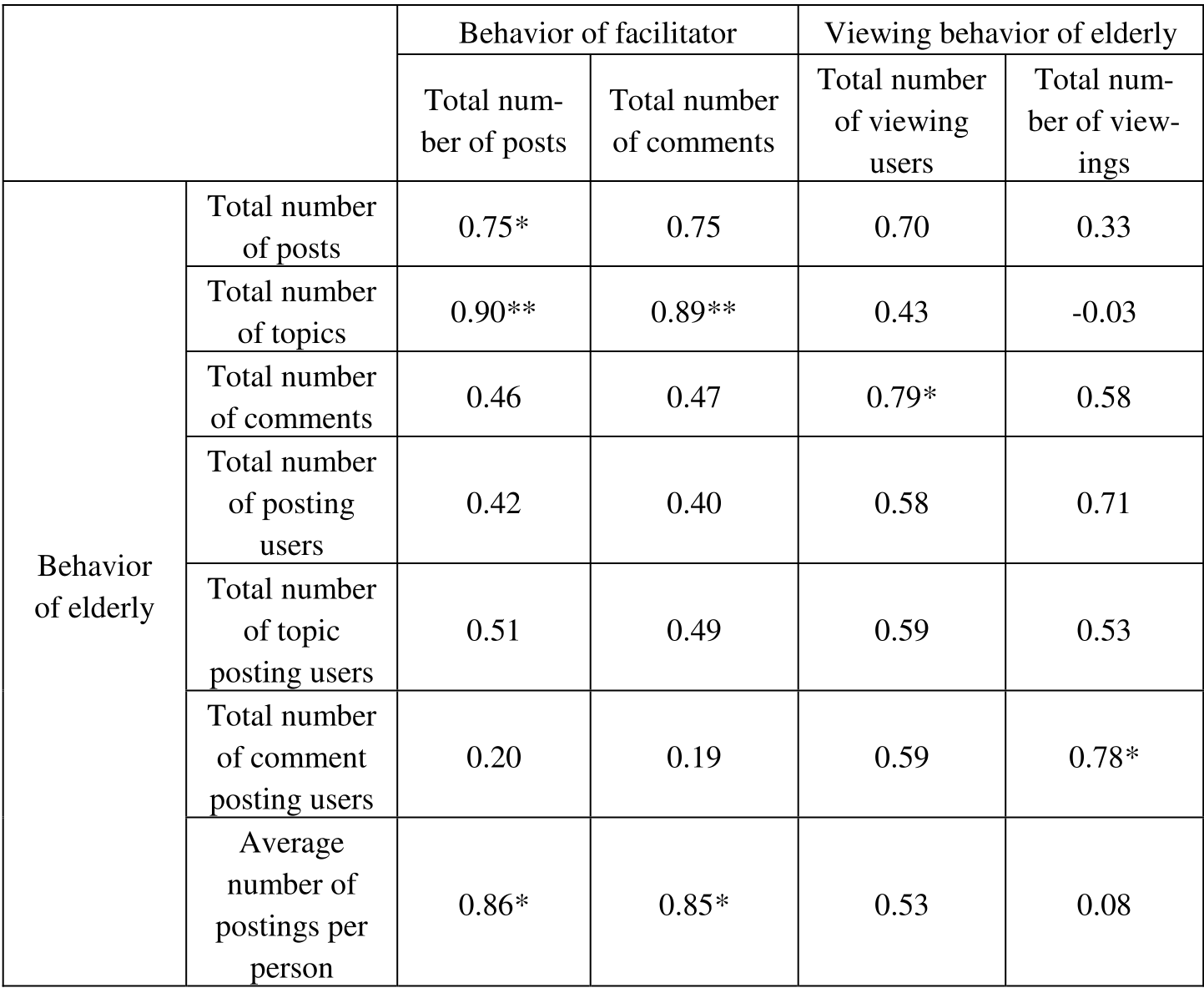 Table 1: Statistical correlation showing the impact of facilitators and viewing behavior on user posts.
Critical Analysis & Conclusion
Why it Works
The "Simple teleda" system succeeds because it respects the social graph of the elderly. By utilizing TV—a passive, familiar habit—and turning it into an active social event (Social TV), the researchers lowered the "activation energy" required for seniors to use ICT.
Limitations & Future Work
While successful, the study relied heavily on human facilitators. To scale this to a national level, the authors suggest the need for Facilitation Technology—perhaps AI-driven systems that can summarize discussions or propose counter-arguments to keep the conversation flowing.
Takeaway for the Future
The "Senior Cloud" project teaches us that for the elderly, technology should not be a "new world" to learn, but a "bridge" to their existing interests. As we move toward 2060, systems like Social TV will be vital in transforming "healthy elderly" individuals into a digitally-connected workforce and social support pillar.