
Deciphering the Crowd: A New Scale for Extrinsic Motivation in Micro-tasks
Development and Validation of Extrinsic Motivation Scale for Crowdsourcing Micro-task Platforms
This paper develops and validates a specialized scale for measuring the extrinsic motivation of crowd workers on micro-task platforms. Based on Self-Determination Theory (SDT), the authors refine the Work Extrinsic Intrinsic Motivation Scale (WEIMS) to better understand the nuances of how external factors drive human performance in digital labor markets.
TL;DR
Why do people really do micro-tasks? While many assume it's "just for the money," the reality is a complex spectrum of psychological drivers. This paper introduces a validated 12-item scale based on Self-Determination Theory (SDT) to measure extrinsic motivation in crowdsourcing. By distinguishing between "doing it for a paycheck" and "doing it because it aligns with personal goals," platform designers can create better incentive structures that boost both quality and worker satisfaction.
Background: Moving Beyond the "Homo Economicus" Fallacy
In the world of Amazon Mechanical Turk (MTurk) and similar platforms, the prevailing logic has been simple: pay more, get more. However, academic research has long suggested that this "monetary reward" view is reductive. Crowd workers are a diverse population; some kill time, some seek fun, and others see micro-tasks as a stepping stone to career goals.
The authors argue that we need a way to measure the internalization of motivation—how a worker transitions from feeling "forced" by a reward to feeling "autonomous" in their task choice.
The Logic: Self-Determination Theory (SDT)
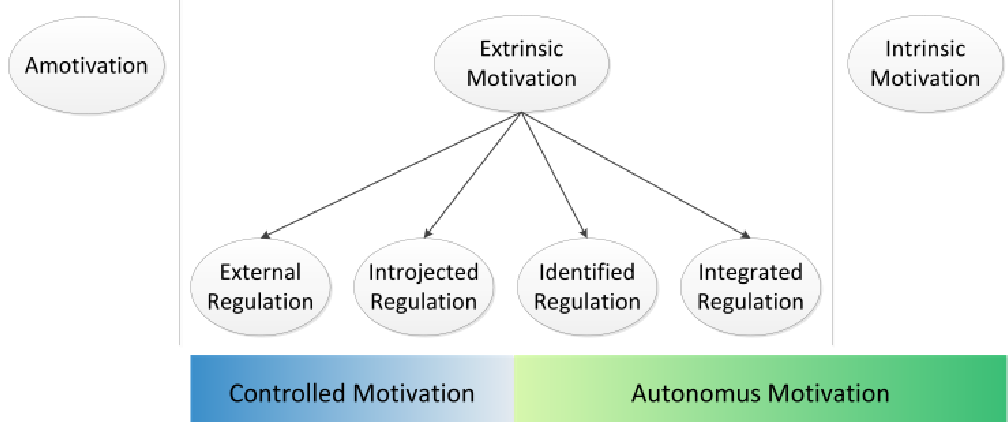
The study is rooted in SDT, which suggests that motivation isn't just about "how much" energy you have, but the "type" of regulation you experience. The authors look at a continuum:
- External Regulation: Purely for the reward (e.g., "I need the money").
- Introjected Regulation: Driven by ego or guilt (e.g., "I'd be ashamed if I didn't do well").
- Identified/Integrated Regulation: The task aligns with personal values (e.g., "This work helps my career goals").
- Amotivation: A total lack of direction or intent.
Methodology: Refining the Scale
The researchers didn't just invent questions; they refined the existing Work Extrinsic Intrinsic Motivation Scale (WEIMS).
- Data Collection: 256 MTurk workers (USA-based) were surveyed.
- Precision Filtering: To ensure high-quality data, they used an "Inconsistency Score" (weighted Euclidean distance) to filter out workers providing contradictory answers to repeated questions.
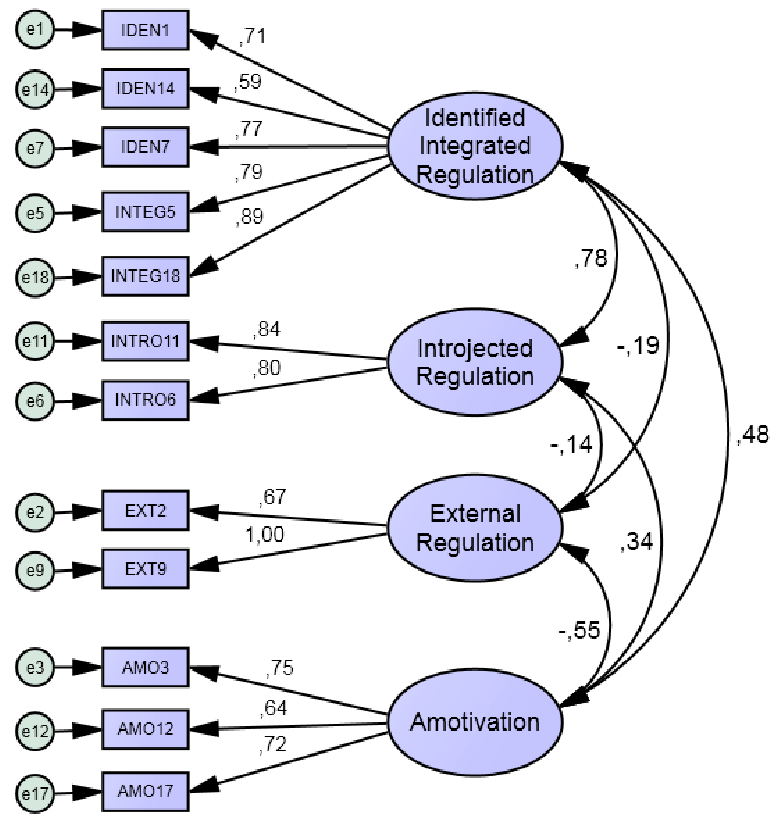
- Factor Analysis: They used Exploratory Factor Analysis (EFA) to see how items naturally grouped and Confirmatory Factor Analysis (CFA) to prove the structure was statistically sound.
Key Findings & Results
The most interesting structural discovery was that Integrated and Identified Regulations merged into a single factor. In the high-speed, often repetitive world of micro-tasks, workers don't distinguish between a task being "part of who they are" and it being "a means to an important objective."
- Reliability: All dimensions achieved high Composite Reliability (CR > 0.6) and Cronbach’s Alpha (> 0.7).
- Dimensionality: The final validated scale consists of 12 items across 4 distinct dimensions.
Final Validated Scale Items (Selection)
| Motivation Type | Example Item |
|---|---|
| Identified/Integrated | "Because this job is a part of my life." |
| Introjected | "Because I want to succeed... if not I would be very ashamed." |
| External | "For the income it provides me." |
| Amotivation | "I don't know why, we are provided with unrealistic conditions." |
Critical Insight: Why Does This Matter?
This scale isn't just an academic exercise. For platform providers, it serves as a diagnostic tool.
If a platform's workforce is primarily driven by External Regulation, they are at high risk of "crowding out"—where the pressure of the reward actually decreases the quality of the work. If a platform can shift workers toward Identified Regulation (e.g., by explaining how the data helps medical research or AI safety), they may see higher quality without necessarily increasing the per-task pay.
Limitations
- Sample Geography: The study focused on US-based MTurk workers. Motivation dynamics might shift in global markets where economic necessity is higher.
- Item Merging: The inability to distinguish between "Integrated" and "Identified" regulation suggests that micro-tasks might be too "small" to become deeply integrated into one's identity.
Conclusion
This paper provides a robust, proven instrument to measure the "Why" behind the crowd. By moving beyond monetary metrics and looking into the psychological regulation of workers, we can design crowdsourcing ecosystems that are more sustainable, ethical, and high-performing.