
DiabeticLink: Revolutionizing Patient Empowerment through Health Big Data and Social Intelligence
DiabeticLink: A Health Big Data System for Patient Empowerment and Personalized Healthcare
This paper introduces DiabeticLink, a cross-national health big data system designed for the US and Taiwan markets. It integrates advanced data mining, natural language processing, and web crawling techniques to provide a comprehensive patient portal for chronic disease self-management and social support.
TL;DR
With the global prevalence of diabetes expected to double by 2030, traditional reactive healthcare is no longer sustainable. DiabeticLink is a pioneering "Health Social Media" system that leverages big data analytics to empower patients. By fusing clinical EHR data, FDA safety reports, and millions of social forum posts into one interactive portal, it provides a personalized "just in time, just for me" advisory system.
Background: The Crisis of Chronic Disease Management
The economic burden of diabetes in the US alone has climbed toward $245 billion. Despite being a preventable or manageable disease, the failure of current systems lies in the lack of proactive empowerment. Patients often feel lost between clinic visits, lacking direction on lifestyle choices and peer support.
The authors position DiabeticLink at the intersection of two critical technology thrusts:
- Automated Insight Discovery: Using diverse data to provide evidence-based wellness support.
- Cyber-enabled Empowerment: Utilizing sensors and social tools to give patients a seat at the decision-making table.
Methodology: The "Patient Intelligence" Engine
DiabeticLink isn't just a tracking app; it’s a sophisticated data-mining pipeline. Its architecture rests on four pillars:
1. Social Sentiment Mining
The system uses focused crawlers to aggregate over 5.3 million posts from various English and Chinese forums (e.g., DiabetesDaily, TuDiabetes). It applies Sentiment Analysis to gauge community reactions to specific medications and symptoms, revealing real-world patient experiences that clinical trials might miss.
2. Clinical Context (EHR & NHI)
By analyzing 2.5 million records from Taiwan's National Health Insurance and major hospitals, the system identify "scenario-based" symptom-disease-treatment associations. This allows the system to show a patient: "People with your profile who switched to insulin saw a X% improvement in HbA1c."
3. Safety Insight (FDA ADE)
The portal visualizes the FDA’s Adverse Event Reporting System (FAERS), allowing users to compare drug side effects and safety concerns through a simplified interface.
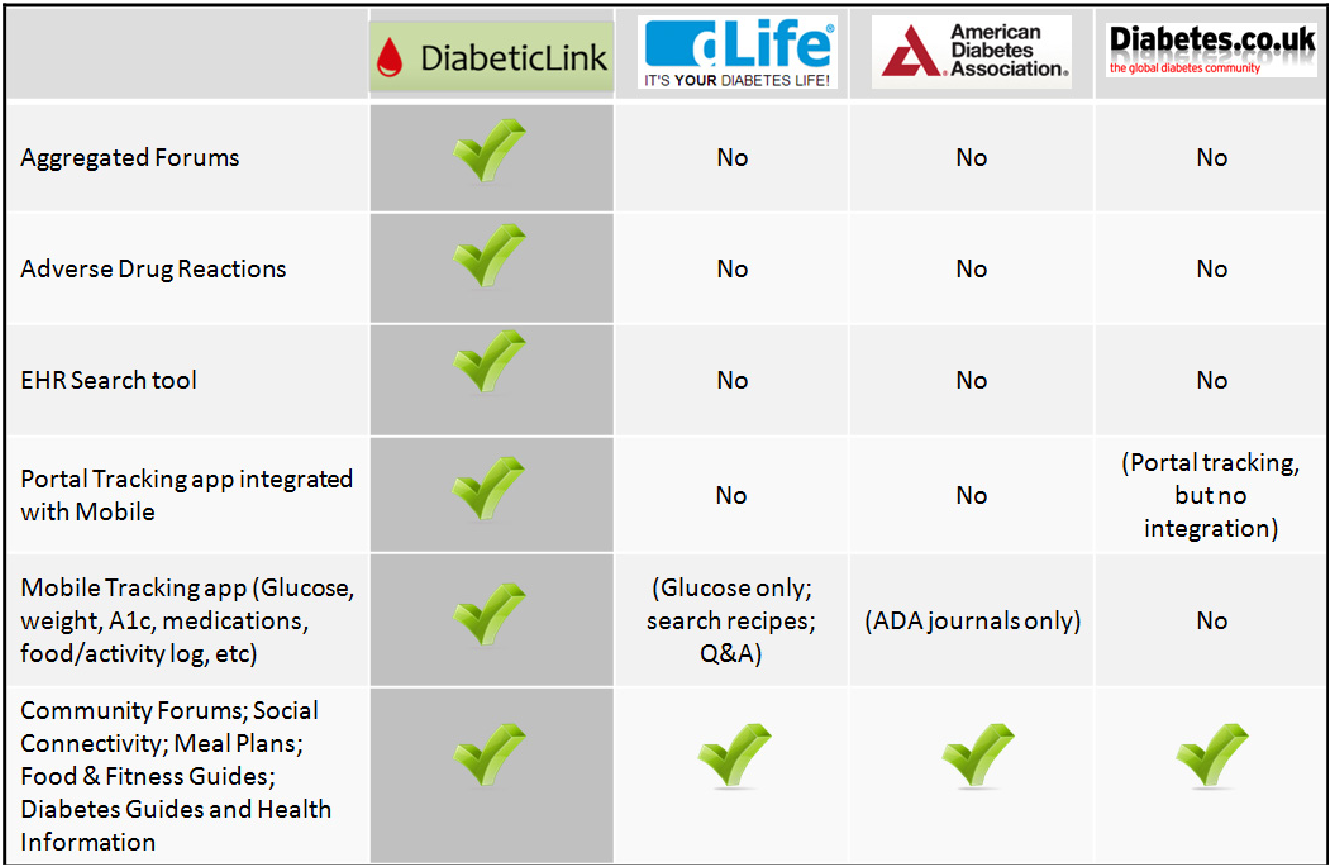 Table 1: DiabeticLink compared to existing platforms like the ADA and Life!.
Architecture and User Interface
The methodology focuses on making complex data "human-readable." The inclusion of blood glucose dashboards, carbohydrate-to-insulin tracking, and nutrition charts for healthy recipes (unique to the Taiwan version) creates a closed-loop system for daily management.
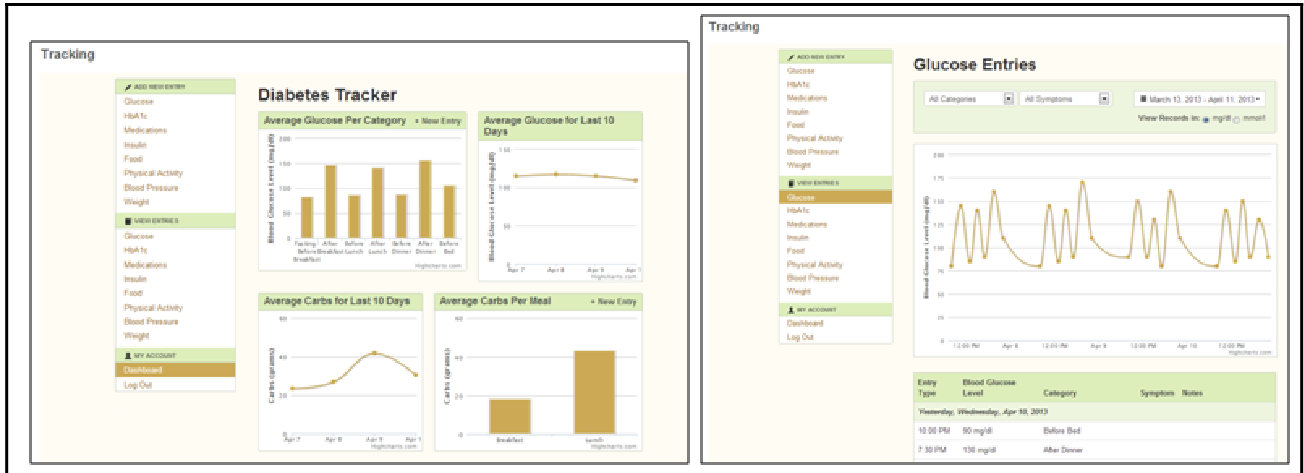 Fig 1: The tracking module provides side-by-side visualization of multiple health metrics to reveal hidden lifestyle trends.
Experimental Insights & User Feedback
The system underwent rigorous evaluation in both the US and Taiwan markets:
- Physician Feedback: Doctors at National Taiwan University Hospital (NTUH) emphasized that the dietary management and complication tracking features fill a critical gap in outpatient care where time is limited.
- Patient Empowerment: US users found the multi-forum search highly valuable, as it allows them to find "patients like me" across the entire web rather than being siloed in one community.
- Drug Safety: The ability to mine sentiment regarding drug side effects provided real-time feedback that traditional clinical databases often lag in providing.
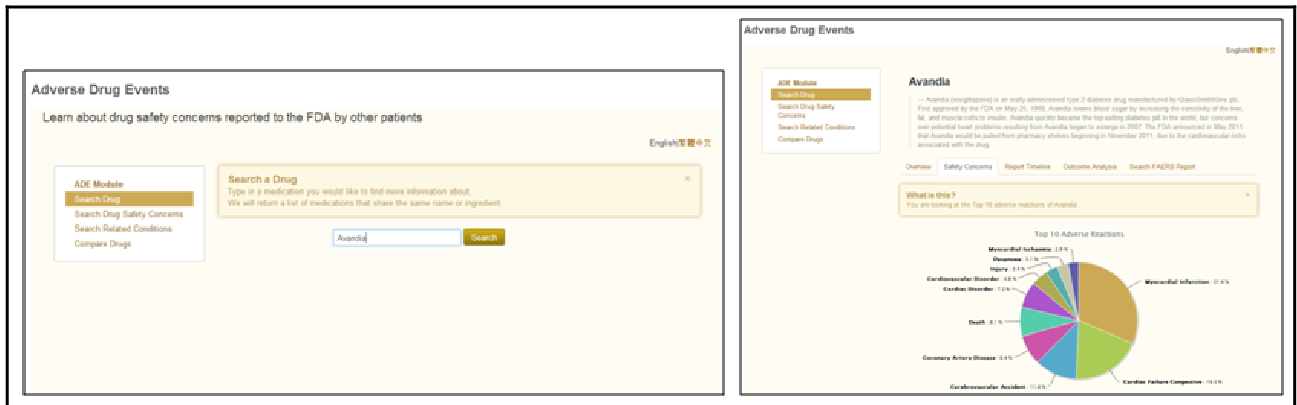 Fig 2: Visualization of FDA side-effect reports for specific diabetic medications.
Critical Analysis & Future Outlook
Summary of Contribution
DiabeticLink successfully proves that big data isn't just for researchers; it can be democratized for patient use. By bridging the gap between "official" medical data (EHR/FDA) and "informal" patient wisdom (social media), it creates a high-fidelity digital representation of the disease.
Limitations & Challenges
- Data Privacy: While the paper emphasizes anonymity, aggregating EHR and social data always carries risks of re-identification.
- Algorithm Transparency: As the system moves toward more complex "scenario-based" mining, ensuring the algorithms don't replicate biases found in clinical history is paramount.
Conclusion
The move toward "Health Big Data" is inevitable. DiabeticLink serves as a blueprint for how future AI-driven health systems should look: interoperable, social, and data-driven, with the ultimate goal of transforming the patient from a passive recipient of care into an empowered manager of their own biological destiny.