
Diagnosing the Gender Gap: Why HCI Research Still Defaults to "Male"
Diagnosing Bias in the Gender Representation of HCI Research Participants: How it Happens and Where We Are
This paper presents a comprehensive mixed-methods diagnosis of gender representation bias among participants in Human-Computer Interaction (HCI) research. By analyzing 1,147 CHI papers spanning 40 years and interviewing 13 researchers, the authors introduce a systematic data schema and provide empirical evidence of persistent underrepresentation of women and the near-total invisibility of non-binary individuals.
TL;DR
Despite 40 years of progress, the "average" participant in Human-Computer Interaction is still likely a man. A deep-dive meta-analysis of 1,147 CHI papers reveals that women are persistently underrepresented, non-binary individuals are virtually invisible (0.07%), and popular recruitment platforms like MTurk are actually becoming more biased over time.
Background Positioning
In the world of HCI, we often assume our findings are universal. However, if the data used to build a "smart home" or a "VR interface" mostly comes from one demographic, the technology becomes at best exclusionary and at worst dangerous. This paper is a critical "SOTA audit," moving beyond simple counts to identify the systemic variables—recruitment shortcuts and research topics—that perpetuate inequality.
The Problem: The "Default Male" and Data Silences
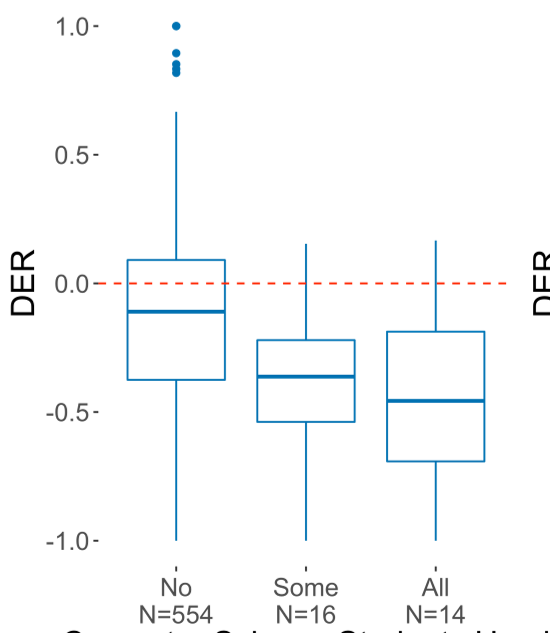
The authors identify a core tension: researchers need participants quickly, leading to "convenience sampling." This often means recruiting from Computer Science (CS) departments. Since CS students are predominantly male, the "CS shortcut" creates a feedback loop where technology is designed by men, for men, based on data from men.
Methodology: Beyond the Binary
The researchers didn't just count heads. They interviewed 13 lead researchers to understand the "Realpolitik" of academic research—where time pressure often forces diversity criteria to be dropped.
They developed a new metric: Distance from Even Representation (DER). A DER of 0 represents equality; -1 is all men, and +1 is all women.
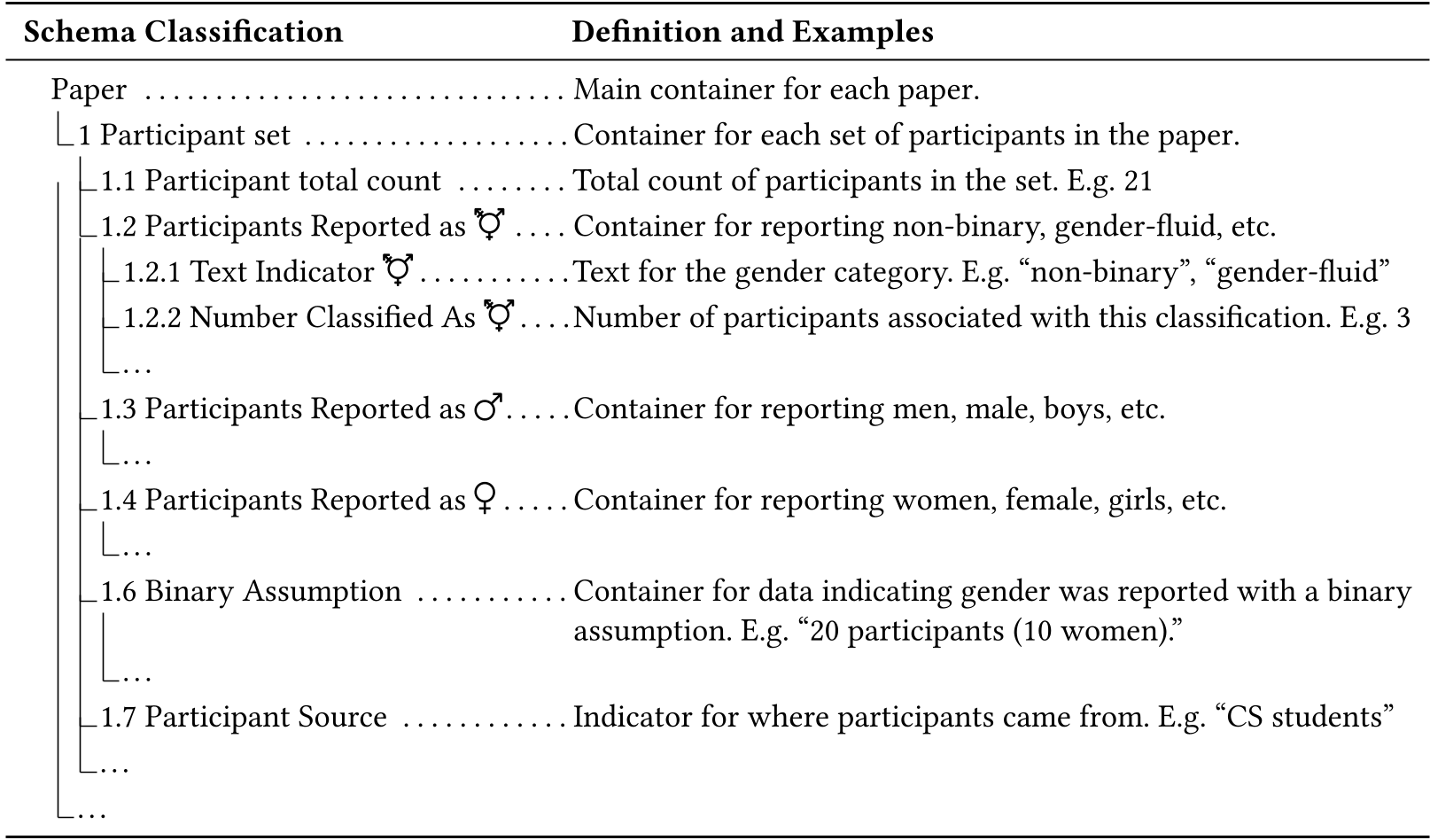
To handle the massive volume of data, they built MAGDA (Machine Assisted Gender Data Annotation), a tool that uses machine learning to highlight demographic sections in PDFs, reducing extraction time from 10 minutes to 2.5 minutes per paper.
Key Findings: The Geography of Bias
The study provides empirical proof that certain research "neighborhoods" are more biased than others:
- The MTurk Decay: Contrary to popular belief, Amazon Mechanical Turk is becoming less representative. The proportion of women participants has significantly decreased over the last decade.
- Topic-Specific Bias: Research involving physical interaction (Haptics, Virtual Reality, Eye Tracking) shows the highest male bias. Conversely, social context topics (Family, Health, Social Media) tend to be more gender-balanced.
- The Non-Binary Void: Only 12 out of 548 studies even mentioned non-binary participants. Outside of one massive mega-study, non-binary people represent a microscopic 0.07% of the HCI dataset.
Critical Insights & Takeaways
- The Proportionality Trap: "Gender balancing" (50/50 splits) often defaults to a binary assumption. This "others" non-binary individuals by forcing them into an "Other" category or making them invisible.
- Recruitment is Destiny: If you recruit from CS, you get men. If you recruit from Psychology, you get women. The paper proves that the source of your participants is the single biggest predictor of gender bias.
- A Call for Structural Change: The authors argue that gender representation shouldn't be an "extra" check—it should be a primary research constraint, like budget or hardware requirements.
Conclusion
This isn't just a "diversity" issue; it's a validity issue. If HCI continues to ignore the gender gap in its participant pools, we risk building a future that only fits half the population. To move forward, the community must standardize non-binary reporting and actively question the "CS student shortcut."
Limitations: The study relies on what authors explicitly report. If authors conflated "sex" and "gender" in their writing, that confusion is reflected in the dataset.