
Differentially Private SIoT: Bridging Social Intelligence and Data Security
Differentially Privacy-preserving Social IoT
The paper introduces a privacy-preserving framework for the Social Internet of Things (SIoT) that integrates Differential Privacy with social network analysis. By leveraging social graphs and Bayesian networks to quantify user behavior, the proposed scheme achieves more accurate service discovery and reliable data transmission compared to traditional IoT models.
TL;DR
The Social Internet of Things (SIoT) represents an evolution where IoT devices mimic human social behaviors to improve service discovery. However, this connectivity creates massive privacy risks. This paper proposes a robust framework that combines Social Graph Creation, Bayesian Feature Quantification, and Differential Privacy to ensure that data utility remains high while user identities and sensitive interactions stay protected.
Problem & Motivation: The SIoT Privacy Paradox
The "Small World" theory suggests that any device can be reached within a few hops if social connections are utilized. While this drastically improves how we find services (e.g., finding the nearest bus or checking local weather via a friend's sensor), it opens a Pandora's box of privacy issues.
Prior Work Limitations:
- Context Blindness: Existing privacy models treat IoT nodes as isolated islands, ignoring that social links can be exploited to infer sensitive habits.
- Computational Rigidity: Standard encryption is too heavy for tiny, resource-constrained sensors (motes).
- Re-identification Risks: Traditional anonymization (like k-anonymity) fails when attackers have background knowledge of a user's social circle.
The authors' insight is that privacy must be probabilistic rather than absolute. By using Differential Privacy, they allow for statistical analysis of data without revealing whether a specific individual’s data was part of the set.
Methodology: The Four-Stage Privacy Engine
The framework operates through a sophisticated pipeline designed to transform raw sensor data into secure, social-aware services.
1. Social Graph & Bayesian Quantification
Devices establish "friendships" based on shared interests or proximity. To handle the uncertainty of real-world events (like rain changing a user's habits), the system uses Bayesian Networks. This allows the model to calculate the probability of a service being available even when anomalous events occur.
2. Differential Privacy Injection
This is the core security layer. Before a mote sends data to a potentially untrusted Service Provider, the system adds a calculated amount of "Noise."
- Sensitivity Analysis: The system measures how much a single user's data can change the output.
- Noise Calibration: It adds just enough noise to mask individual contributions but keeps the aggregate data useful for recommendations.
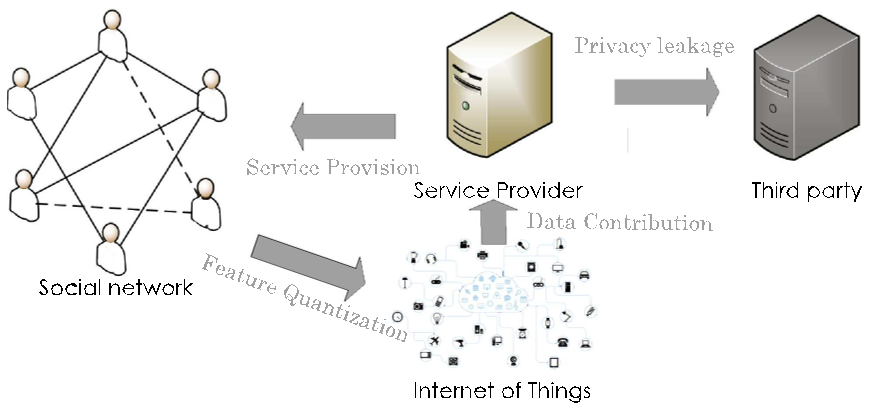 Fig. 1: The Overview Model illustrating the flow from Social IoT devices to the Differential Privacy layer.
3. Greedy Search Discovery
When a service is requested, the system uses a greedy algorithm to navigate the social graph, prioritizing nodes with high "social weight" and similarity, ensuring faster discovery than blind broadcasting.
Experiments & Results: Efficiency Meets Security
The authors validated their approach using the Cooja simulator (on Contiki OS), which allows for bit-level simulation of real sensor hardware (Motes).
Key Performance Metrics:
- Success Rate: Measured by how accurately the system recommends a service provider.
- Network Cost: Measured by the "Average number of relay motes." Fewer relays mean lower battery consumption and less congestion.
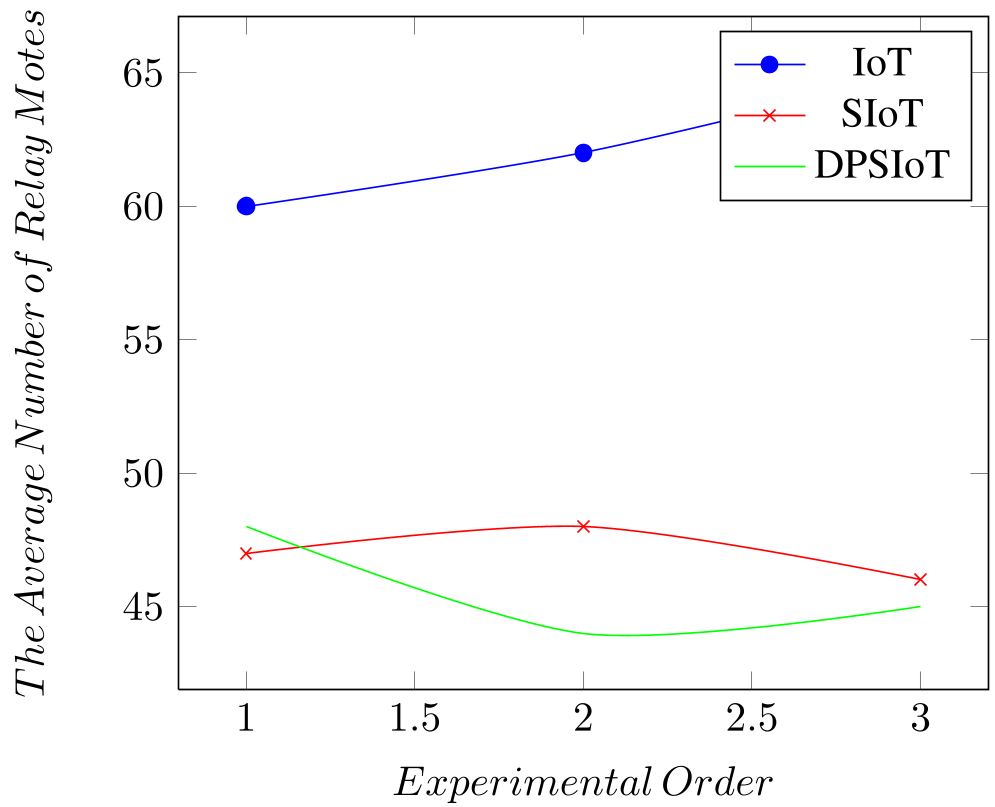 Fig. 3: Comparative analysis showing the success rate and relay counts.
Analysis of Findings:
- Accuracy Boost: The social-aware model significantly outperformed baseline IoT models that ignored social connections.
- Privacy Overhead: The addition of Differential Privacy caused a negligible drop in accuracy, proving that security doesn't have to break the service.
- Scalability: As the social network matured (later stages), the accuracy improved, demonstrating the model's ability to learn and adapt.
Critical Analysis & Conclusion
Takeaways
This paper successfully argues that the Social Internet of Things is not just about connectivity, but about trust and efficiency. By quantifying social relationships, we can route data more effectively. By applying Differential Privacy, we can do so without turning the IoT into a mass surveillance network.
Limitations & Future Work
While the results are promising, the current model assumes a relatively static environment. The authors acknowledge that:
- Mobility: Frequent location changes (moving vehicles/wearables) increase computational load.
- Edge Integration: Future versions should leverage Edge Computing to process privacy algorithms closer to the device, reducing latency.
- Dynamic Knowledge: Adapting to seasonal changes or unexpected human behavior (e.g., holidays) requires more complex temporal modeling.
Overall, this work provides a solid mathematical foundation for a future where our devices are "socially intelligent" but "privately secure."