
Differentiated Incentives: Solving the Privacy-Growth Paradox in Social Networks
Differentiated Incentive Rewarding for Social Networking Services
This paper proposes a differentiated incentive-rewarding mechanism for Social Networking Services (SNS) that balances user participation with privacy risks. By adjusting reward ratios for "friend-limited" versus "public-open" content, the authors optimize social graph expansion and page view metrics using a learning-based simulation.
TL;DR
To grow a social network, you need users to post publicly, but users prefer the safety of "friend-only" circles. This paper introduces a mathematical framework to solve this by paying users more for public posts. Using a simulation based on Learning Automata, the authors prove there is a "sweet spot" in reward distribution that maximizes both user activity and the expansion of the social graph.
The Friction: Perceived Risk vs. Network Growth
In any SNS (Social Networking Service), there is a fundamental tension. From a platform perspective, Public Content is the engine of growth—it allows "friends of friends" to discover each other and form new links. From a user perspective, however, public content carries a high Perceived Risk (privacy exposure).
The authors' survey of students confirmed this: over 60% of users feel significantly higher risk when posting publicly. Consequently, without intervention, users default to private sharing, the social graph stagnates, and the platform's value plateaus.
Methodology: The Reward Differentiation Mechanism
The core of the paper is the Incentive Rewarding System. Instead of a flat reward for all views, the authors propose a differentiated model:
1. The Satisfaction Equation
User motivation is modeled as a simple balance: Where is the reward incentive and is the perceived risk (cost). If , the user is motivated to post.
2. Differentiated Rewarding
The platform distributes a total reward pool () based on the ratio of page views () modified by a differentiation parameter : By lowering for friend-limited content and increasing it for public content, the platform can "subsidize" the privacy risk taken by the user.
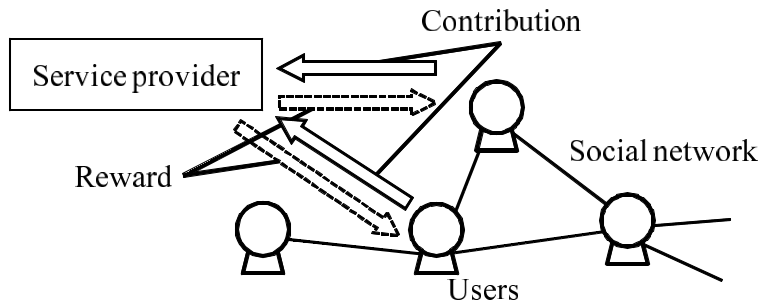 Figure 1: The proposed centralized reward distribution architecture.
Simulation: Finding the "Sweet Spot"
The researchers didn't just use static formulas; they used Learning Automata. This means the simulated users "learned" over time which posting behavior (Public vs. Private) yielded the most satisfaction.
Key Discoveries:
- The Optimal Ratio: When the reward value is high (), the optimal (friend-limited weight) is around 0.2. This means giving 80% of the weight to public views maximizes total platform activity.
- The "Insufficient Reward" Trap: If the total reward pool is too small (), the platform cannot compensate for the public privacy risk. In this scenario, the strategy shifts toward simply encouraging any content at all, even if it's private.
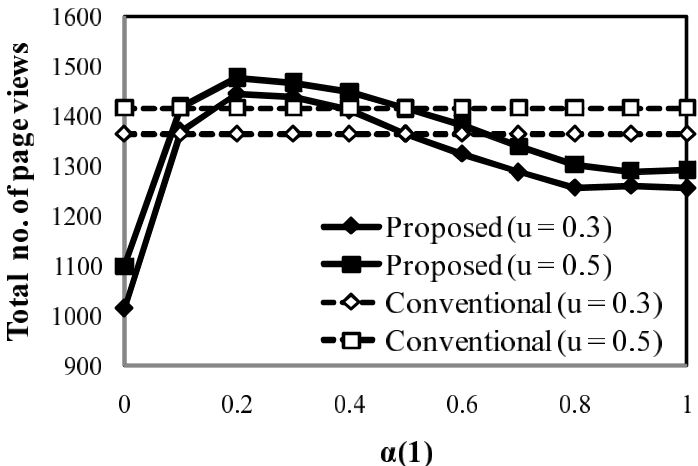 Figure 2: Total page views at different reward levels. Note the peak (optimal point) in graph (a).
Critical Insights & Conclusion
This work highlights that not all engagement is created equal. A "view" on a private post helps retain an existing connection, but a "view" on a public post builds a new one.
Takeaways for the Future:
- Risk-Adjusted Rewards: Future social platforms (especially Web3/decentralized ones) should not just reward "clout" or "likes," but specifically reward the utility provided to the network graph expansion.
- Limitations: The model assumes risk is purely personal cost. It doesn't account for "viral" risks or the negative externalities of public content (like harassment), which would significantly alter the variable.
Ultimately, the paper provides a rigorous mathematical defense for why platforms often "nudge" users toward public sharing—and shows that with the right incentive tuning, both the user and the network can win.