
Digging in the Digg: Why Synchronization Trumps Social Connections in News Spread
Digging in the Digg Social News Website
This paper presents a large-scale empirical study of Digg.com, analyzing 1.5 million users and 10 million stories to understand content dissemination. The researchers employ a multi-perspective crawling methodology to uncover the roles of friendship networks versus random user discovery in information spread.
TL;DR
Is the social graph truly the king of information spread? This large-scale study of Digg.com — encompassing 1.5 million users — challenges the "viral marketing" myth for social news. It reveals that friendship networks only facilitate about half of content dissemination, while the platform's user interface and the temporal synchronization of active users play a far more vital role in making a story "popular."
The "Friendship" Illusion
In the mid-2000s, the academic consensus was that Online Social Networks (OSNs) functioned like biological epidemics: information was expected to infect nodes and spread across friendship links. However, the authors of "Digging in the Digg Social News Website" noticed a gap. Previous studies either used small datasets or ignored the "disconnected" users who didn't follow anyone but were still active participants.
The core friction lies in the nature of the content. Unlike photos on Flickr, which have a long "shelf-life," news on Digg is highly transient. This study asks: How does a friendship network handle content that becomes obsolete in mere hours?
Methodology: The Four-Way Crawl
To avoid the bias of Breadth-First Search (BFS) which only follows existing links, the team utilized a simultaneous multi-perspective crawl:
- Site Perspective: Monitoring popular/upcoming queues.
- Story Perspective: Tracking every "digg" and its timestamp.
- User Perspective: Profiling individual activity history.
- Social Network Perspective: Mapping the actual follower/mutual friend graph.
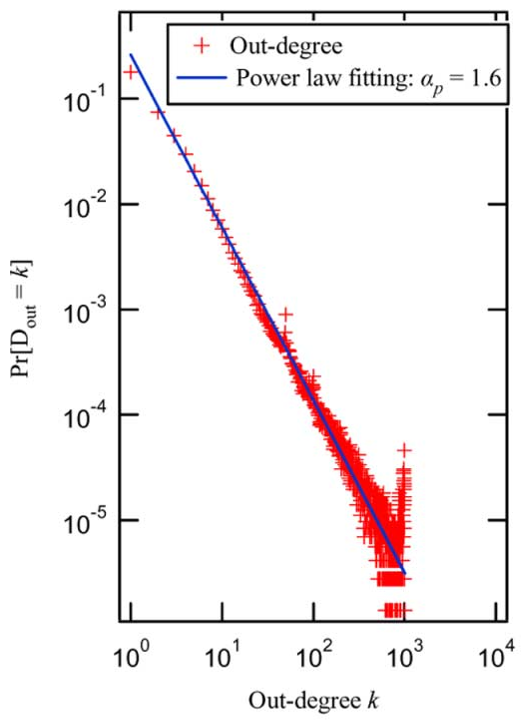
Key Insight 1: The Asymmetric Reality
Unlike Facebook or early Flickr where friendship was largely reciprocal, Digg's social structure is largely asymmetric. Only 38% of links are bi-directional. Furthermore, the network is not "assortative"—meaning highly connected users don't necessarily hang out with other highly connected users.
Interestingly, while friends do share similar interests (with a "similarity hop" average of 1.7), they rarely act on those interests at the same time.
Key Insight 2: Synchronization is Everything
The study found that stories usually need to become popular within 24 hours or they face obsolescence. This creates a "synchronization" requirement:
- The 2% Rule: Only 2% of friendship links ever actually facilitate a shared "digg."
- Activation Failure: A user with 1,000 fans can usually only "activate" about 7 of them to digg the same story.
- Interface Dominance: In 45% of cases, non-friends browsing the "Upcoming" or "Popular" pages do more to promote a story than a submitter's actual followers.
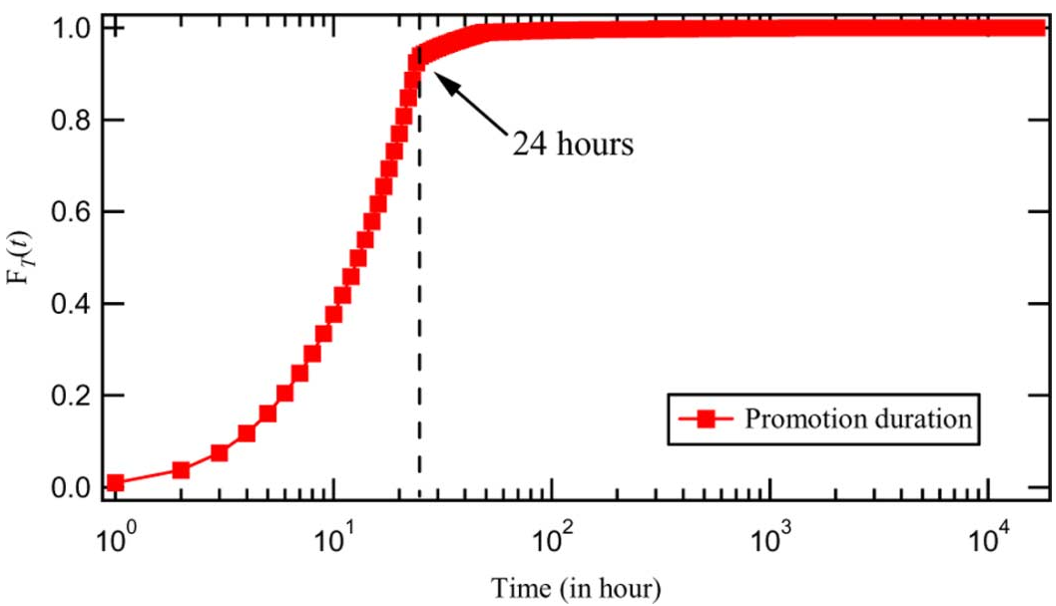
As shown in the charts above, the period following "Promotion" (the transition from upcoming to the front page) leads to an explosion of votes from non-friends, effectively drowning out the initial social signal.
Experimental Results: The Lognormal Satiation
The popularity of stories on Digg follows a lognormal distribution. The authors noted that once a story hits the front page, it obtains most of its votes within the first 2-3 hours and stabilizes by hour 40.
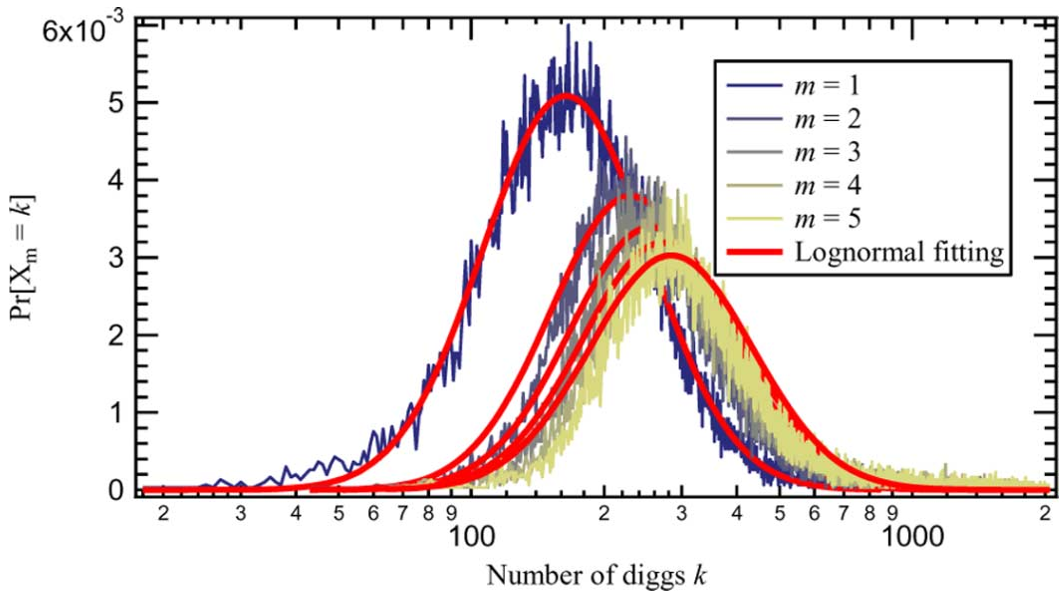
The efficiency of the friendship network is suppressed because digging activities are not properly synchronized in time. If your friend diggs a news story while you are asleep, the story might already be "old news" by the time you log in, rendering the social link useless for that specific information flow.
Critical Analysis & Takeaways
The paper effectively debunks the idea that a dense social graph is enough for a "viral" platform.
- Friendship is Sparse: 98% of friendship links are "dark" (never used for content spread).
- Structure vs. Behavior: Topological importance (like Link Betweenness) does not correlate with actual information flow.
- UI/UX Matters: The design of "Recommended" and "Popular" queues is more influential than the follower graph for transient content.
Limitations: The study is specific to the "Digg era" of 2005-2009. In modern contexts, algorithmic recommendation engines (like TikTok's For You Page) have essentially automated the "synchronization" that the authors identified as the missing link in Digg's social network.
Future Outlook: This research laid the groundwork for understanding that "Influence" isn't a static property of a node in a graph, but a temporal alignment of interests and attention.