
Digital Banking 2.0: Leveraging AI & Big Data for the Indonesian Intelligence Age
Digital Banking Transformation: Application of Artificial Intelligence and Big Data Analytics for Leveraging Customer Experience in the Indonesia Banking Sector
This study investigates the integration of Artificial Intelligence (AI) and Big Data Analytics (BDA) within the Indonesian digital banking landscape. By interviewing top-tier bank executives and analyzing global best practices, the authors propose a specialized Digital Banking Enterprise Architecture designed to transform banks from workflow-centric systems into customer-centric organizations.
TL;DR
Indonesian banking is undergoing a seismic shift. No longer satisfied with simple mobile apps, customers demand hyper-personalized, "cashless society" experiences. This paper explores how Indonesian banks are moving past basic digitization toward an AI-driven, data-centric model. By interviewing industry leaders, the authors propose a new Digital Banking Enterprise Architecture that bridges the gap between legacy core systems and modern customer experience (CX) expectations.
The "Workflows vs. Experience" Trap
The central motivation of this research is a common industry failure: the misconception that digital transformation is merely a technical upgrade. While many Indonesian banks adopted internet banking in the early 2000s, they often remained focused on internal workflows rather than customer journeys.
As digital disruption accelerates, bankers face a critical realization: customer loyalty in the modern era is driven by perceived service quality and the ability to anticipate needs. If a bank cannot offer a pre-approved loan via a mobile app at the exact moment a customer needs it, a Fintech startup likely will.
Methodology: Insights from the C-Suite
To understand the reality on the ground, the researchers interviewed CIOs and IT Executives from eight major Indonesian banking institutions. This qualitative approach allows for a deep dive into the "Why" and "How" of technology adoption.
The study reveals a landscape in the "Early Stage" of AI and BDA implementation. While global giants like Bank of America use AI-enabled tools for financial guidance, Indonesian banks are currently prioritizing:
- Natural Language Processing (NLP): Deploying chatbots (e.g., Mandiri, BCA, BNI) to handle service inquiries.
- Anomaly Detection: Utilizing Machine Learning for fraud prevention (e.g., CIMB Niaga, Danamon).
- Predictive Analytics: Using BDA for customer segmentation and past-data behavior analysis.
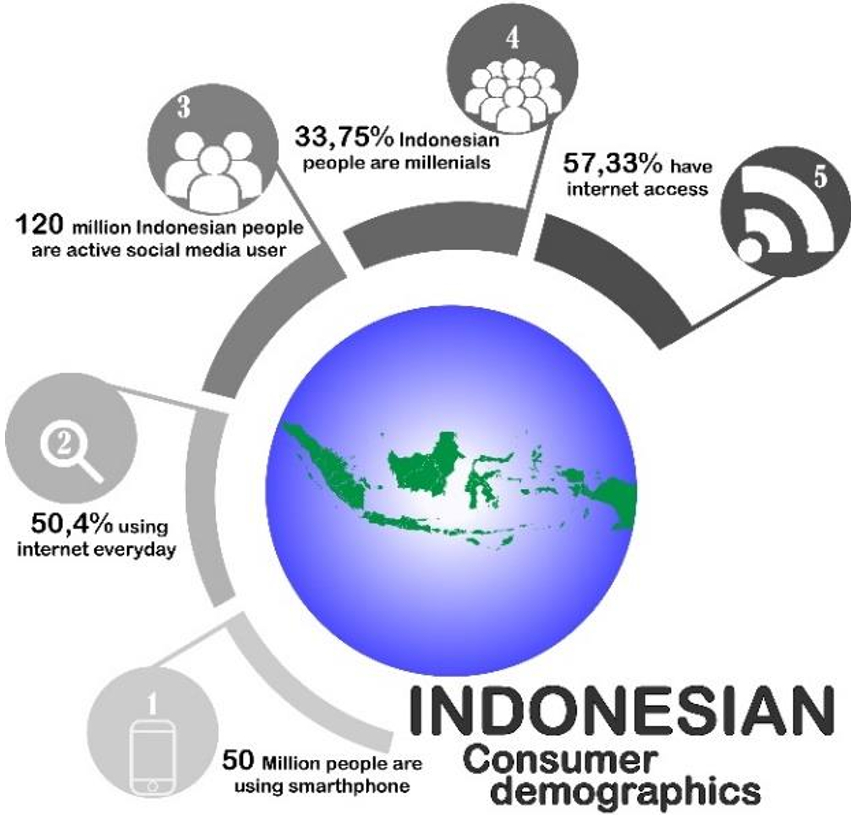 Fig 1. The demographic pressure: Indonesia's shifting consumer behaviors require a massive technological pivot.
The Proposed Solution: A New Enterprise Architecture
The paper's primary contribution is a blueprint for a Digital Banking Enterprise Architecture. This is not just a software stack; it is a roadmap for integrating AI and BDA into the bank's DNA.
The architecture emphasizes a "Data-Driven" core where:
- High-velocity data is ingested from multi-channel behaviors.
- AI Layers (Neural Networks, Deep Learning) process this data to identify patterns.
- Actionable Insights are delivered back to the customer via personalized engagement layers.
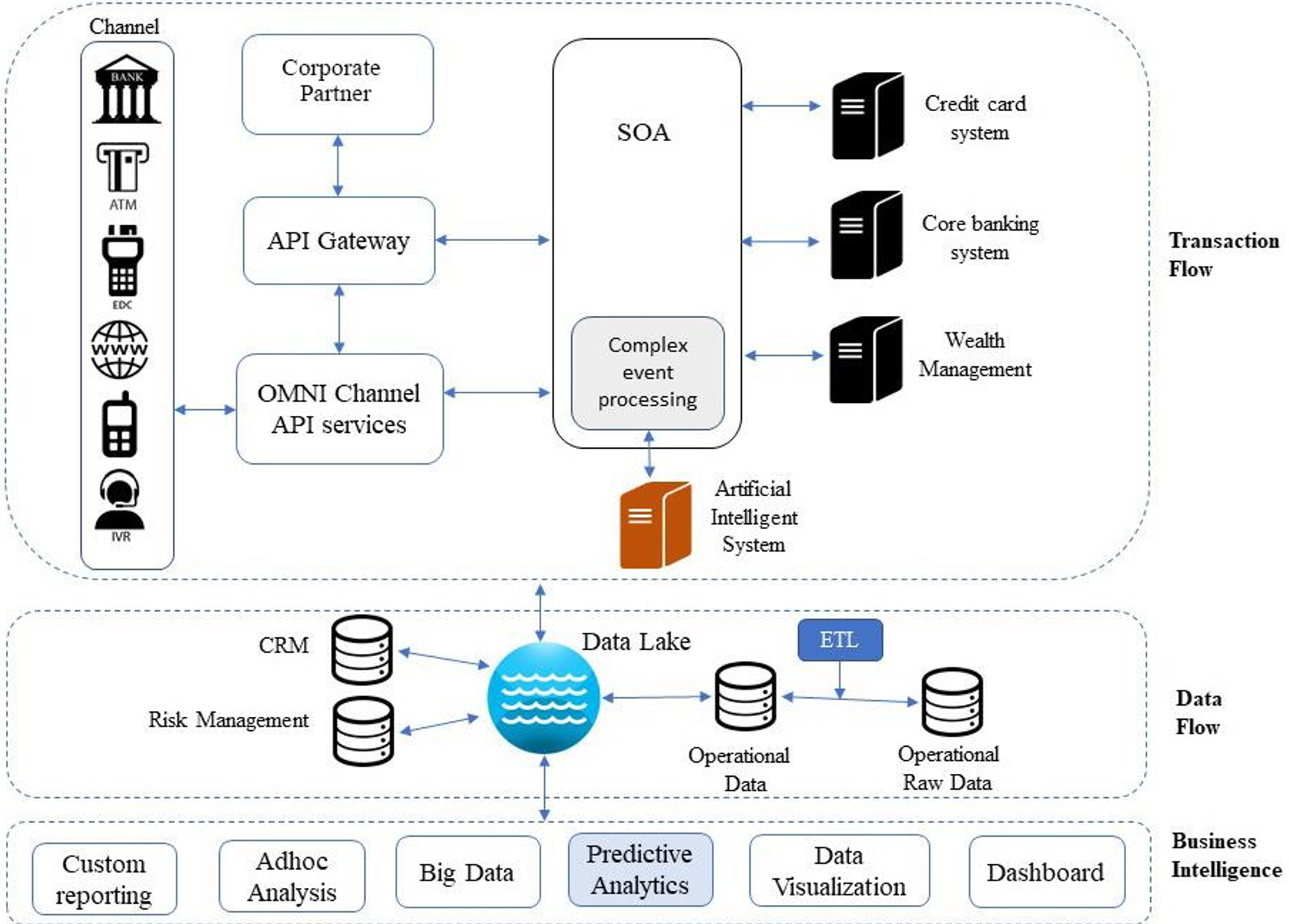 Fig 6. The proposed architectural framework for next-generation digital banks.
Key Hardships: Legacy and Regulation
The interviews highlighted several "Pain Points" that act as friction against this transformation:
- Data Accuracy: Without clean data, "AI could hurt the user experience rather than enhance it."
- Legacy Systems: Old core banking platforms lack the integration capabilities (APIs) necessary for real-time BDA.
- The Talent Gap: A severe lack of properly skilled teams capable of managing complex AI models.
Experiments & Results: Global vs. Local Best Practices
The paper provides a compelling comparison between global leaders and Indonesian progress:
| Feature | Global Context (e.g., HSBC, JPMorgan) | Indonesian Context (e.g., Mandiri, BNI) |
|---|---|---|
| Process Automation | High-level back-office automation | Early-stage RPA implementation |
| Personalization | Voice-activated financial guidance | Chatbots and targeted marketing campaigns |
| Channel Logic | Steering customers to low-cost channels | Multi-channel behavior recognition |
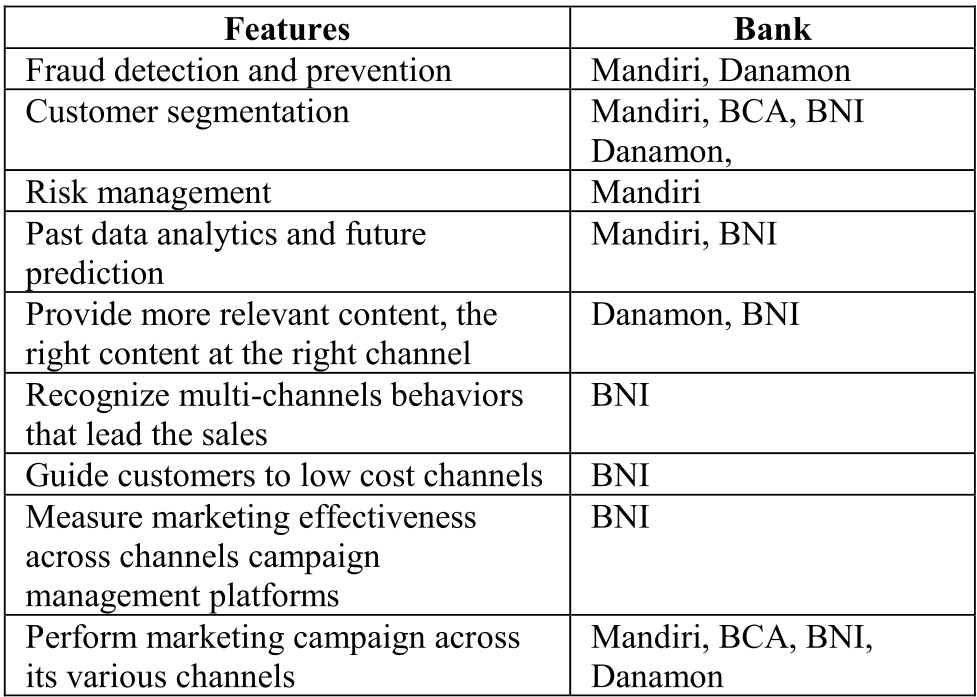 Table: Current AI/BDA feature adoption across major Indonesian banks.
Deep Insight & Conclusion
The study concludes that for Indonesian banks, the "intelligence age" is no longer optional. The value of AI and BDA lies in their ability to provide memorable moments that drive loyalty.
Takeaway for the Industry: To succeed, CIOs must move beyond "siloed" experiments. Success requires a holistic architecture that addresses infrastructure limitations and regulatory constraints while keeping the customer's perceived value at the center of every algorithm. Future research must now shift to the customer perspective to see if these technical deployments truly meet the lived expectations of the Indonesian public.