
SLBIF: Reshaping SME Innovation through Deep Learning and Social Intelligence
Digital Innovation and Transformation
The paper introduces the Semantic Learning-Based Innovation Framework (SLBIF), a novel open-innovation model designed specifically for Small- and Medium-sized Enterprises (SMEs). It leverages deep learning—including sparse autoencoders and Cross-Language Latent Dirichlet Allocation (CL-LDA)—to transform unstructured social media data into actionable product and service innovations.
TL;DR
Small- and Medium-sized Enterprises (SMEs) often find themselves at a disadvantage in the R&D arms race. The Semantic Learning-Based Innovation Framework (SLBIF) challenges this status quo by utilizing deep learning and social network analysis to turn platforms like Facebook, Twitter, and Weibo into cost-efficient R&D labs. By automating idea selection and identifying "Lead Users," SMEs can innovate faster and cheaper than ever before.
The "Insight Gap" in SME Innovation
Most SMEs use social media as a megaphone for marketing, but few use it as a microscope for innovation. The core problem is Resource Scarcity. Traditional R&D requires heavy investment in infrastructure and labor. While "Open Innovation"—the practice of sourcing ideas from customers—is a solution, it creates a "Big Data" problem: How does a small team filter through millions of social media posts to find the one "breakthrough" idea?
The authors argue that without the analytical capability to process semantic data, SMEs are stuck making decisions based on "gut feelings" rather than empirical customer needs.
Methodology: The Three-Stage Engine
The SLBIF operates through a structured, three-stage pipeline that bridges the gap between raw social media noise and market-ready products.
1. Idea Selection (The Semantic Filter)
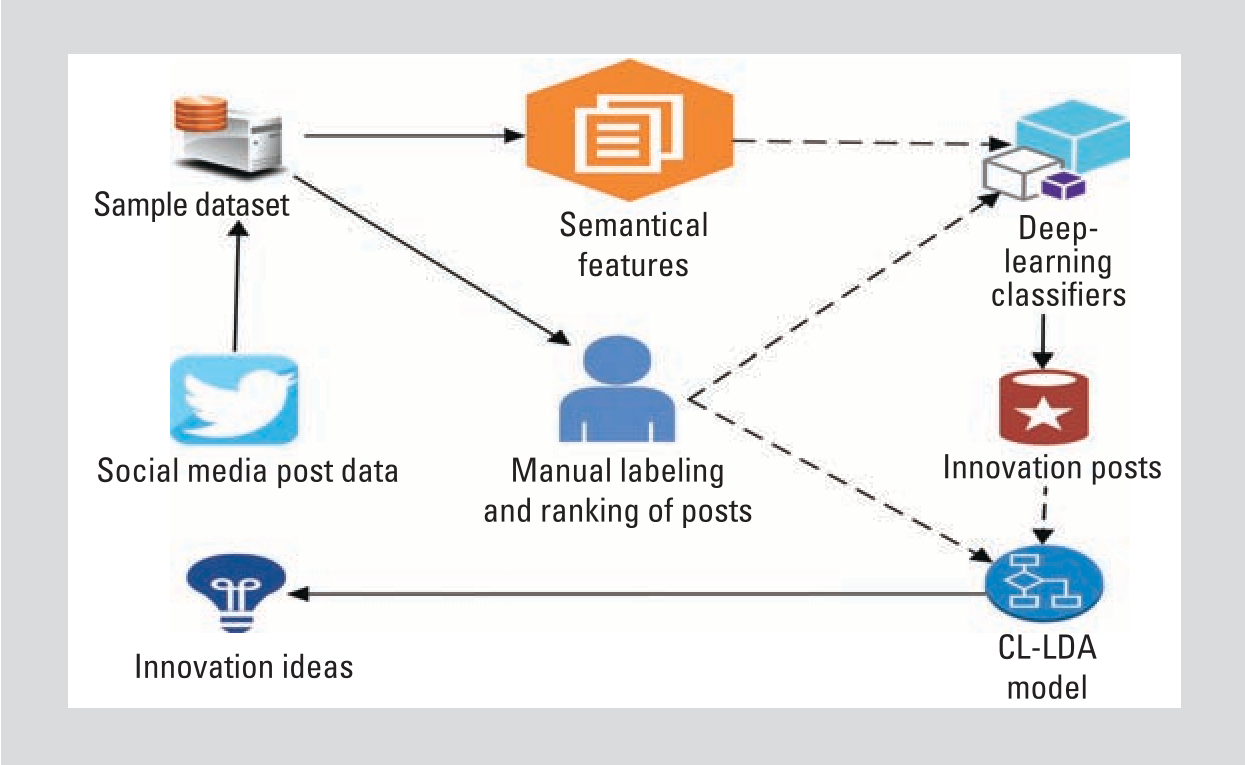
This is where the heavy lifting of AI occurs. The framework proposes a hybrid deep-learning architecture to analyze customer preferences.
- Sparse Autoencoders: An unsupervised neural network that learns a compressed, "perfect" representation of customer posts.
- CL-LDA (Cross-Language Latent Dirichlet Allocation): Used to identify specific innovation "topics" or themes within the filtered data.
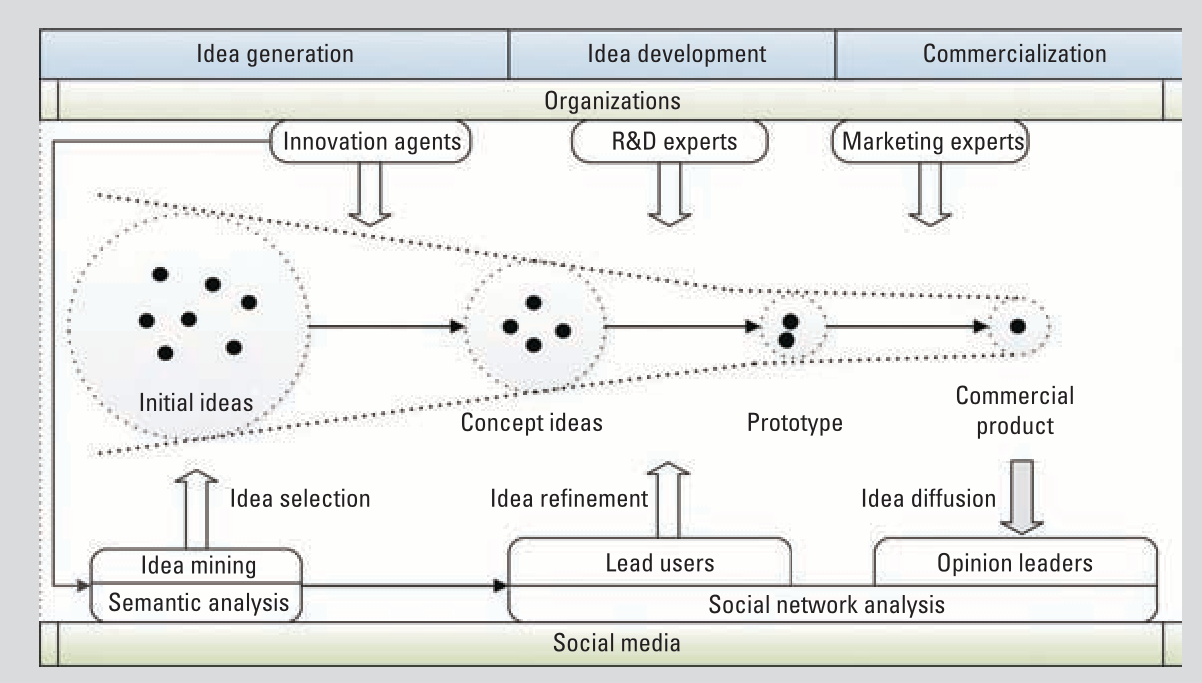
2. Idea Refinement (Lead User Collaboration)
Once ideas are selected, they need to be tested. The framework uses Social Network Analysis (SNA) to identify "Lead Users"—experts who experience needs months before the general market. By involving these users in prototyping, SMEs reduce the risk of market failure.
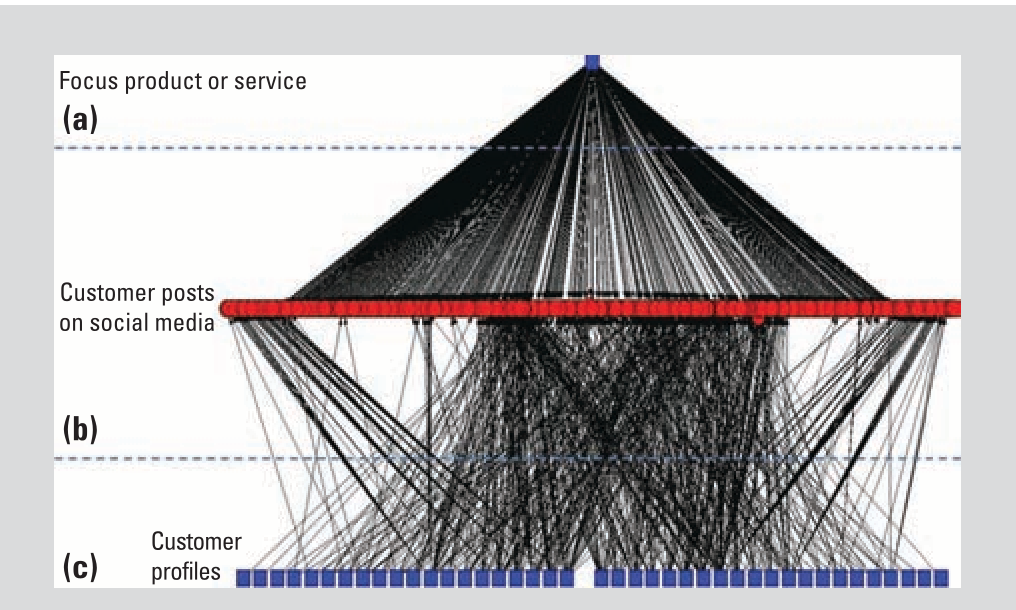
3. Idea Diffusion (The Multiplier Effect)
Finally, the framework identifies Opinion Leaders (influencers) to trigger rapid adoption. Unlike lead users who help design the product, opinion leaders have the "Network Centrality" required to spread the word.
From Algorithms to Revenue: Experimental Evidence
The paper emphasizes that this isn't just theoretical. It highlights several high-impact cases:
- Barclays & Expedia: Utilizing social media feedback to pivot service offerings in real-time.
- HP's Blogger Campaign: Using 31 influential tech bloggers to drive an 85% increase in sales after traditional marketing failed.
- 3M: Lead-user integration generated projects with 8x higher sales projections than standard internal methods.
Critical Insight & Conclusion
The SLBIF represents a shift from Internal R&D to Semantic R&D. The primary contribution of this work is the democratization of sophisticated AI for smaller players. By automating the extraction of "Innovation Dimensions" (feasibility, disruptiveness, and manufacturing potential), SMEs can compete with the analytical departments of global conglomerates.
Limitations: The framework depends heavily on the quality of the initial "Innovation Agents" who label the training data. If the initial human labeling is biased, the resulting AI model will be as well.
Future Outlook: As Large Language Models (LLMs) continue to evolve, replacing LDA with Transformer-based embeddings could further enhance the "SLBIF" by understanding even more subtle nuances in customer sentiment and latent needs.