
Digital Discovery: How Social Media Triggers the Urge to Explore New Products
The Impact of Digital Marketing on Exploratory Buying Behavior Tendencies (EBBT)
This marketing study investigates the impact of four digital marketing components—Internet, Mobile, Email, and Social Media marketing—on consumers' Exploratory Buying Behavior Tendencies (EBBT). Using data from 110 respondents analyzed via correlation and factor analysis, the research identifies Social Media Marketing as the most significant driver for exploratory purchasing.
TL;DR
In the digital age, a "click" is more than a transaction—it is an act of exploration. This study analyzes how digital marketing channels drive Exploratory Buying Behavior Tendencies (EBBT). By surveying consumers and applying factor analysis, the research concludes that Social Media Marketing is the most powerful catalyst for pushing consumers to step outside their brand comfort zones and experiment with new products.
Context: Why "Exploration" Matters
Marketing isn't just about satisfying a known need; it's about stimulating a new one. The concept of EBBT hinges on two pillars:
- Exploratory Acquisition of Products (EAP): The sensory desire for excitement and variety.
- Exploratory Information Seeking (EIS): The cognitive drive to learn about and compare diverse options.
As consumers migrate to digital platforms, the cost of "exploration" has dropped to near zero, yet the volume of information has exploded, creating a unique psychological environment for modern shoppers.
Methodology: Deconstructing the Digital Influence
The researchers focused on a sample predominantly consisting of young adults (84.5% aged 20-30), a demographic that serves as the "canary in the coal mine" for digital trends. They utilized Principal Component Analysis (PCA) to distill 34 different statements regarding marketing and behavior into actionable insights.
 The study confirmed high reliability (Cronbach's Alpha: 0.868) and sample suitability (KMO: 0.807), ensuring the data was robust enough for factor extraction.
Key Findings: The Social Media Supremacy
The study’s core contribution is the ranking of digital drivers. While Internet marketing remains the foundation due to India's massive user base, Social Media (SM) is where the "thirst for exploration" is quenched.
- The Power of Interaction: Unlike static websites, social media allows for direct interaction with sellers and peers, fulfilling the "Information Seeking" (EIS) component of EBBT more effectively.
- Advertising Impact: Social media advertising recorded a high factor loading of 0.852, indicating it is a primary trigger for exploratory tendencies.
- Cognitive over Sensory: Consumers are increasingly opting for detailed product information (cognitive stimulation) over purely sensory features when navigating digital spaces.
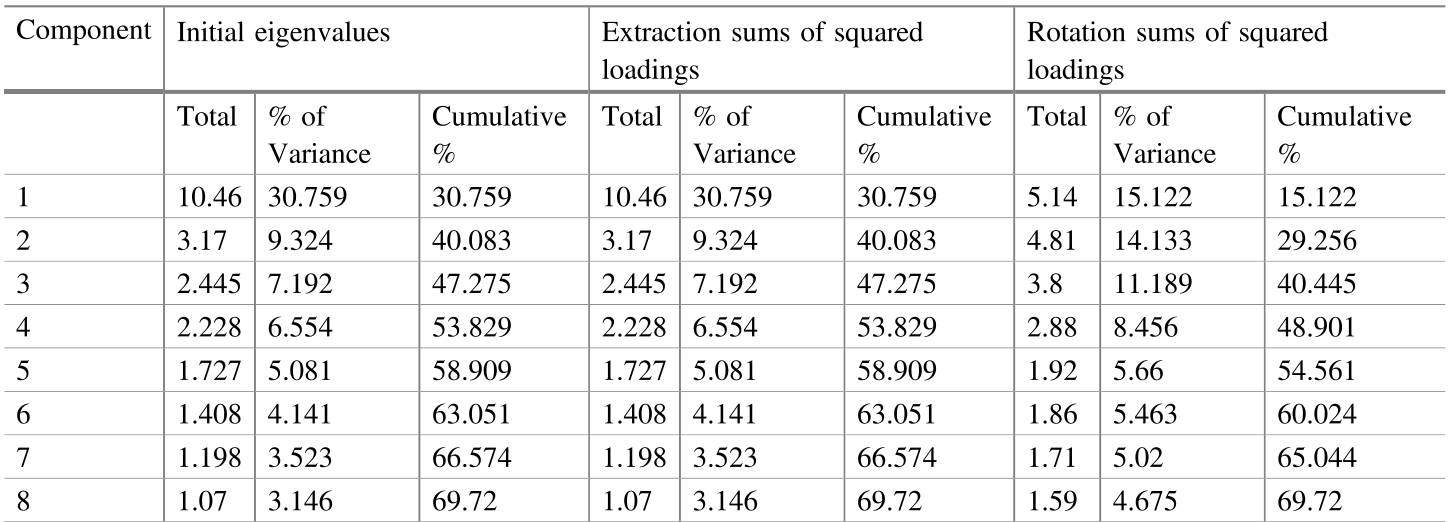 The factor analysis successfully explained nearly 70% of the total variance in consumer behavior, proving that the digital marketing mix is the dominant force in current buying patterns.
Critical Insight: The Role of AI in EBBT
An interesting observation made by the authors is the role of Artificial Intelligence. When a user searches for one brand, AI algorithms immediately populate their feed with "exploratory" alternatives—different brands, better features, or lower prices. This algorithmic "nudge" essentially automates the Exploratory Information Seeking process for the consumer, making brand loyalty harder to maintain but market entry easier for newcomers.
Conclusion and Takeaways
The research confirms that for businesses to thrive, they must move beyond "informative" marketing and embrace "exploratory" marketing.
- For Brands: Platforms like Instagram and YouTube are no longer optional; they are the primary "discovery engines" where consumers are most willing to take the risk of trying unknown products.
- The Shift: The transition from seeking sensory satisfaction (sight/touch) to seeking comprehensive information (EIS) through digital channels means content quality and transparency are now the key competitive advantages.
Limitations: The study primarily focused on a younger, female-leaning demographic (57.3% female, 84.5% under 30) in India. Future research should explore if these exploratory tendencies hold true for older demographics who may have higher brand inertia.