
Digital Platform for Industrial Investment: Bridging Big Data and China's Private Equity
Process Design of Digital Platform for China’s Industrial Investment Fund
This paper proposes a process design for a digital platform dedicated to China’s Industrial Investment Fund (IIF). It introduces a systematic selection framework using Web Text Extraction for industry identification and Data Mining (Logistic Regression) for company-level risk assessment to optimize investment decision-making.
TL;DR
This research addresses the "black box" of investment decisions in China's Industrial Investment Fund (IIF) sector. By proposing a digital platform architecture, the authors leverage Web Text Extraction to align with government policies and Logistic Regression to mitigate the information asymmetry inherent in unlisted company investments.
Background & Motivation: The Symmetrization Challenge
Despite the booming growth of China's IIF market (reaching $30 billion by 2012), the sector remains plagued by high liquidity and credit risks. Unlike public markets, IIF targets are unlisted enterprises, meaning data is scarce and risks are concentrated.
The authors identify a critical gap: existing research discusses how funds are structured, but not how decisions are made. The core problem is Information Asymmetry. Investors need a way to ensure their 10-year commitments align with both state direction and enterprise-level solvency.
Methodology: The Two-Stage Selection Engine
The proposed digital platform operates through a hierarchical filtering process.
Stage 1: Industry Identification (Top-Down)
The system uses Web Crawlers to monitor two primary data sources:
- Policy Signals: Scraping regulations from the NDRC, Ministry of Finance, and local governments (e.g., Tianjin, Shanghai).
- Performance Indices: Monitoring prosperity indices (e.g., Petrochemical industry sentiment) to rank sectors.
Stage 2: Company Selection (Bottom-Up)
Once an industry is targeted, the platform shifts to micro-level analysis. It merges traditional data (bank credit) with modern signals (social media reputation).
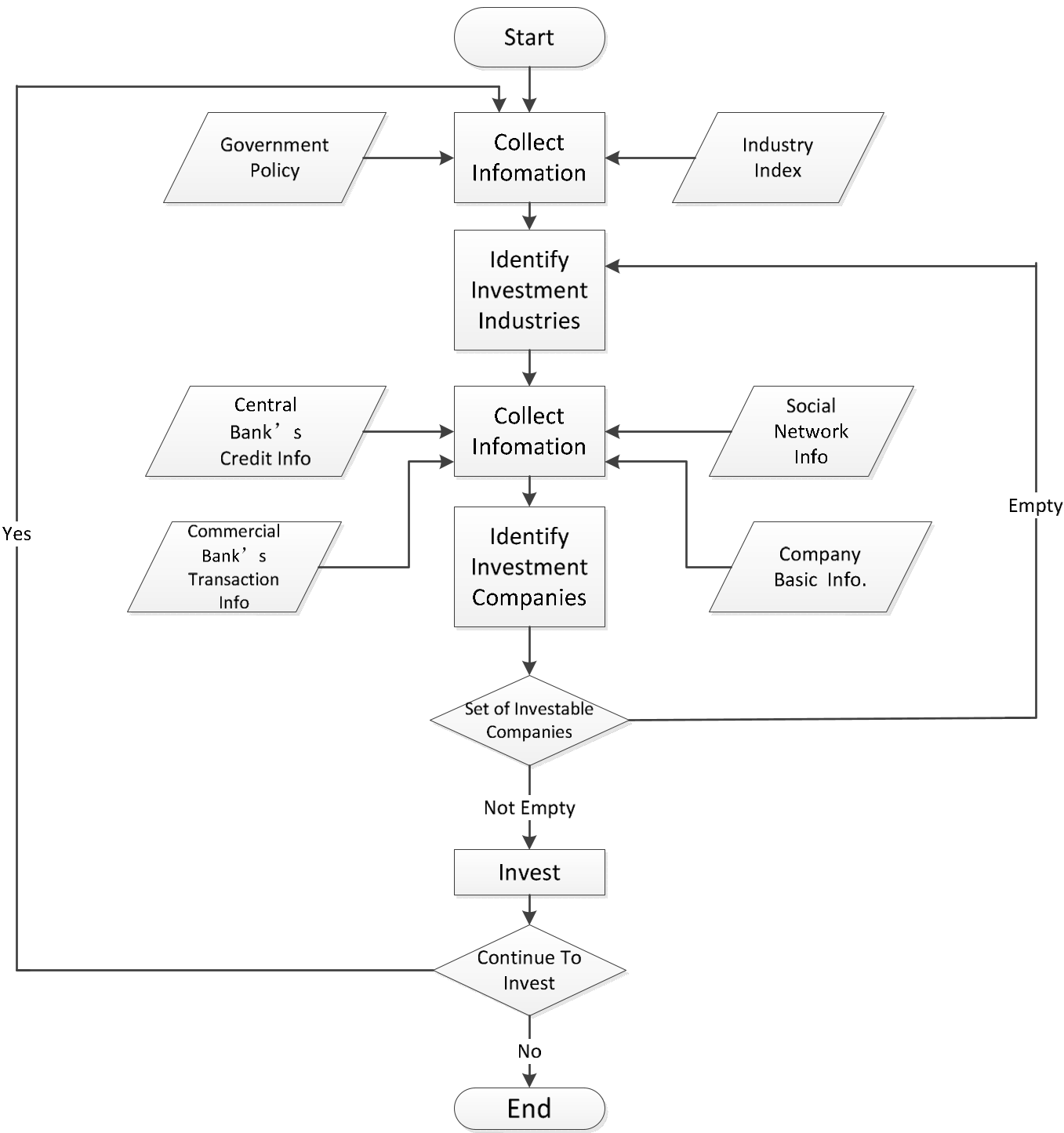
The Logistic Regression Logic: The authors employ a Logistic Regression model where the dependent variable is the "default status" (categorical). By analyzing independent variables—such as cash flow patterns and reputation scores—the model predicts the probability of an enterprise being a "safe" investment.
Critical Evidence: The Landscape of China's IIF
The paper provides a comprehensive breakdown of the organizational and investment patterns that define the current Chinese market.
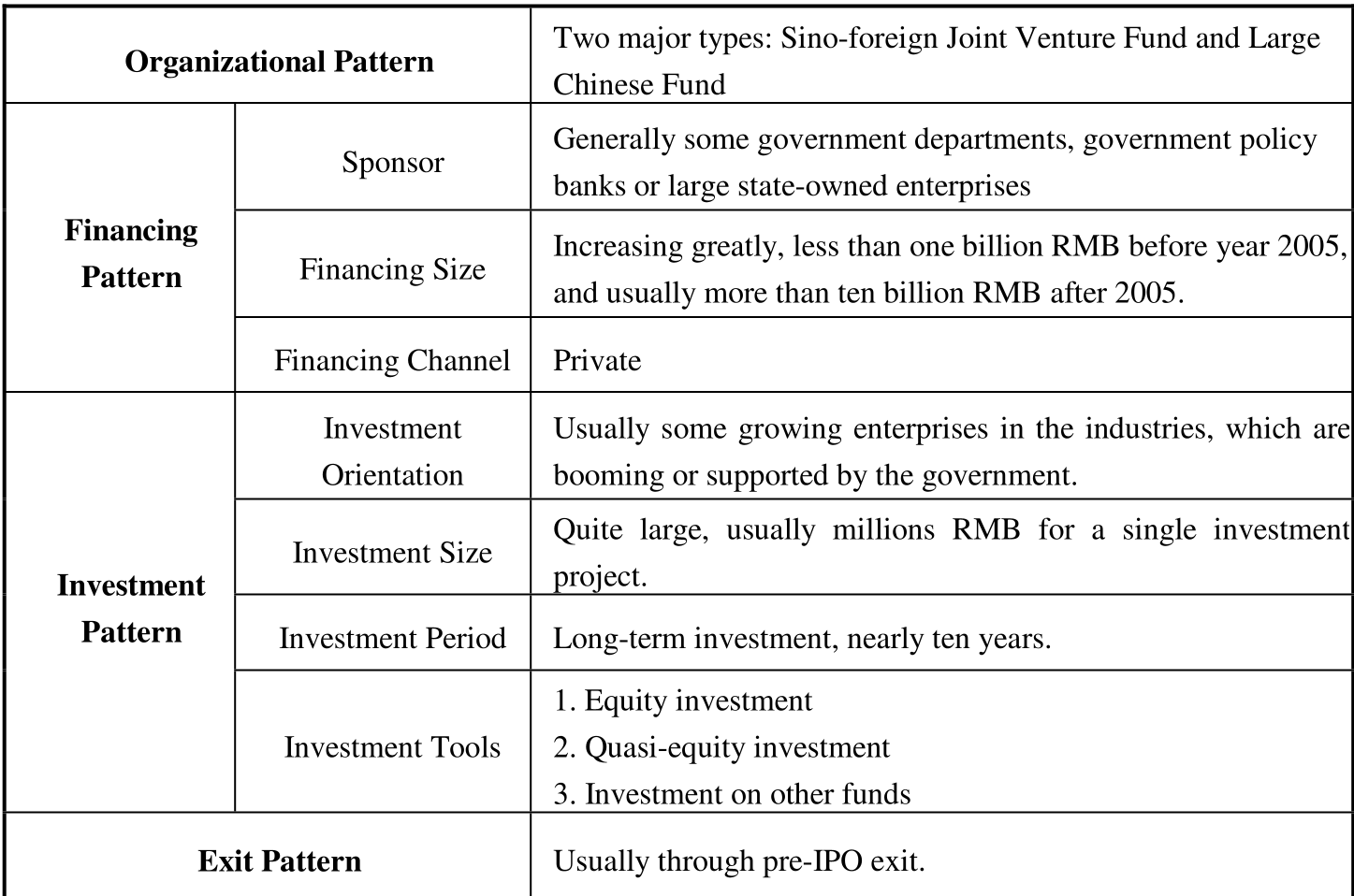
Table 1: Characteristics of China's Industrial Investment Fund. Note the shift toward financing sizes exceeding 10 billion RMB after 2005.
Deep Insight: Why Logistic Regression?
While more complex AI models exist, the choice of Logistic Regression is grounded in its interpretability—a "must-have" for state-backed funds where the cost of a "black box" mistake is social welfare loss. The model allows investors to understand which specific features (e.g., a dip in social reputation or a specific credit flag) are driving the risk score.
Conclusion & Future Outlook
The paper concludes that a win-win situation between investors and enterprises is only possible through "Big Data Analysis." However, the authors admit that this is a theoretical design.
Future Work: The next step for this research is empirical verification—testing these crawlers and regression models against real-world historical exit data of Chinese funds to see if "digital wisdom" truly outperforms "expert intuition."
Key Takeaway for the Industry
The era of "government-led" investment in China is evolving into "data-led" investment. Digital platforms are no longer just administrative tools; they are the new gatekeepers of capital allocation.