
Digital Twin in Healthcare: Bridging the Gap Between IoT Data and Life-Saving Diagnostics
8397_Digital Twin for Intelligent Context-Aware IoT Healthcare Systems.
The paper proposes an intelligent context-aware healthcare framework leveraging Digital Twin (DT) technology to create virtual replicas of patients for real-time monitoring. The authors implement an ECG heart rhythm classifier using various machine learning models, achieving state-of-the-art diagnostic accuracy using the MIT-BIH Arrhythmia Database.
TL;DR
This research transforms the theoretical concept of the Digital Twin (DT) into a functional healthcare framework. By combining IoT-driven real-time data with deep learning (specifically LSTM networks), the authors have built a system capable of classifying heart rhythms with over 97% accuracy, providing a blueprint for a context-aware, predictive health ecosystem.
The "Data Inefficiency" Crisis
Medical errors claim approximately 400,000 lives annually, often due to fragmented data or delayed diagnoses. While the Internet of Things (IoT) has provided us with wearable sensors, the industry has long lacked a unified "virtual replica" that can synthesize this data into a longitudinal digital history. The challenge lies in moving beyond simple data collection to Intelligent Context-Awareness—where the system understands the "Normal" vs. "Abnormal" state of a specific patient in real-time.
Methodology: The Three-Phase Digital Twin
The authors propose a robust architecture that shifts healthcare from reactive to proactive. The framework is divided into three critical functional layers:
- Processing and Prediction: Raw ECG data is captured via sensors, cleansed, and fed into a deep learning engine.
- Monitoring and Correction: A Human-in-the-loop (HITL) phase where medical professionals verify AI predictions, injecting clinical expertise back into the model.
- Comparison Phase: An innovative cross-referencing stage where the system compares a patient’s DT with similar anonymous cases to refine predictive accuracy.
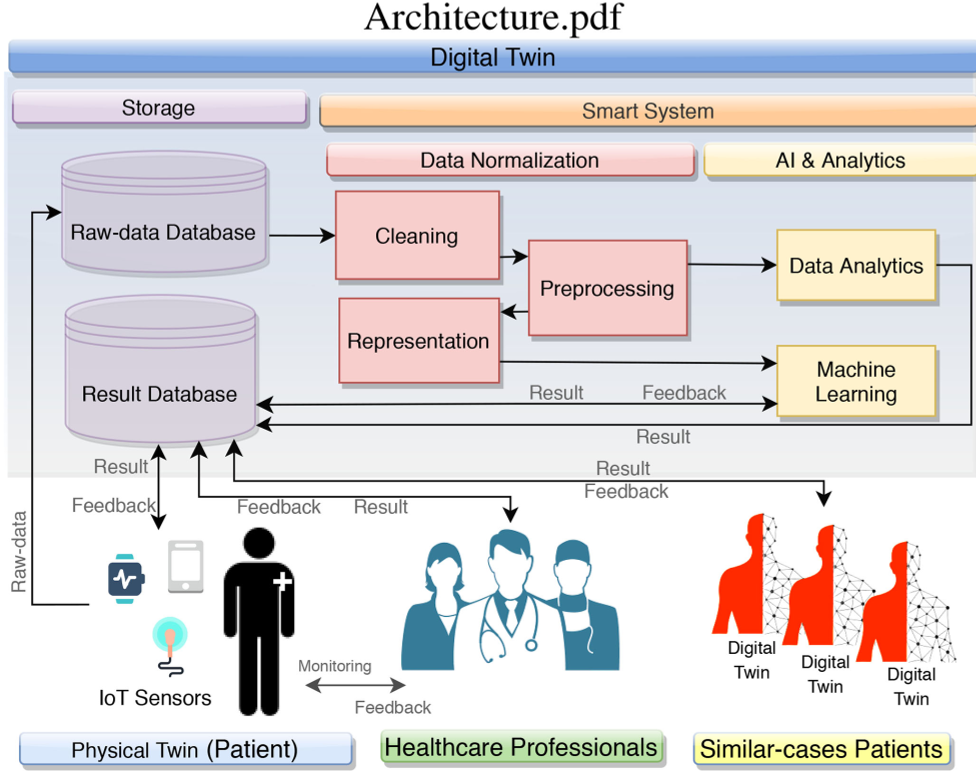 Fig 1: The proposed end-to-end IoT-to-Digital-Twin ecosystem.
Battle of the Algorithms: Why Deep Learning Wins
To validate the framework, the authors benchmarked five distinct models on the MIT-BIH Arrhythmia Database. The results provide a clear hierarchy of technical efficacy:
- The Champion (LSTM): Long Short-Term Memory networks achieved the highest scores (97.09% accuracy). LSTMs are uniquely suited for ECG data because they can capture temporal dependencies in heart rhythms.
- The Contender (CNN): Convolutional Neural Networks followed closely, proving excellent at pattern recognition within single segments of ECG signals.
- The Baseline (Logistics Regression & SVC): Traditional ML algorithms failed to handle the "imbalanced" nature of healthcare data, often missing rare but critical arrhythmia events (High Type II error).
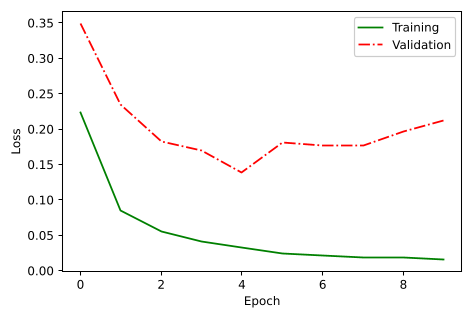 Fig 2: Comparative performance showing the superiority of Neural Networks over traditional ML.
Critical Insight: The Performance-Loss Paradox
A fascinating finding in their experiment was the observation of loss and accuracy during training. For both LSTM and CNN, while accuracy peaked early, the validation loss began to creep up after certain epochs. This highlights the inherent difficulty in Generalization for healthcare AI—models quickly learn the "signatures" of common heartbeats (Normal), but require careful tuning to remain "certain" about rare abnormalities.
Looking Ahead: Trust and Standardization
While the technical results are impressive, the authors conclude with a sobering look at the hurdles ahead:
- Trust: Can we trust a virtual replica enough to prescribe medication?
- Security: How do we protect the "Digital Me" from cyber attacks?
- Heterogeneity: Handling the "noise" from different types of wearable sensors remains an open research question.
Conclusion
This paper serves as a pivotal bridge from theory to practice. By proving that RNN-based architectures like LSTM can effectively power the "brain" of a Digital Twin, the research paves the way for a future where your doctor doesn't just look at who you are today, but monitors your digital shadow to predict where your health is going tomorrow.