
The Dual Face of AI in Education: Navigating the Dilemma between Efficiency and Humanism
The Dilemma and Countermeasures of AI in Educational Application
The paper categorizes AI applications in education into student-oriented, teacher-oriented, and manager-oriented domains, focusing on personalized adaptive learning and administrative efficiency. It identifies critical technological and ethical bottlenecks and proposes a multi-dimensional countermeasure framework featuring the "Beijing Consensus" principles to ensure safe and human-centric AI integration.
TL;DR
Artificial Intelligence is no longer just a buzzword in education; it is a structural force reshaping how students learn and teachers operate. However, we are currently at a crossroads. This paper dissects the "Educational AI Dilemma"—where technical bottlenecks like algorithm inexplicability and ethical risks like privacy leakage meet the promise of personalized learning—and outlines a strategic roadmap to ensure AI empowers rather than diminishes the human element.
Problem & Motivation: Beyond the Optimization of Test Scores
The primary motivation behind integrating AI in education is the pursuit of Personalized Adaptive Learning. For decades, the "one-size-fits-all" model has failed many students. AI promises to act as a "virtual tutor" that tracks every student's cognitive path.
However, the author points out a sobering reality: The development of AI in education is significantly slower than in finance or manufacturing. Why?
- Complexity of Learning: Human learning is influenced by intelligence, environment, and emotion—factors a simple correlation-based algorithm cannot fully grasp.
- The "Black Box" Barrier: If an algorithm suggests a student is failing, but cannot explain why (causality), its diagnostic value is limited.
- Intellectualism Overload: Current AI focuses on "declarative knowledge" (facts), often ignoring the "moral, aesthetic, and emotional" development critical to a holistic education.
Methodology: A Three-Tiered Application Framework
The paper organizes the AI educational landscape into three distinct subjects of interest:
1. Student-Oriented AI (Adaptive Learning)
The goal here is the "Individualized Self-Adaptive" model. By processing complex data streams, these systems pinpoint knowledge gaps and dynamically adjust difficulty.
- Vision: Flipped learning where AI handles concept acquisition and humans handle deep discussion.
2. Teacher-Oriented AI (Potential Release)
AI is not here to replace teachers (with a replacement probability of less than 1%), but to transform them into "Super Teachers."
- Automation: Grading, question generation, and routine Q&A are offloaded to bots.
- Insight: AI provides teachers with deep "learning style" profiles of each student.
3. Manager-Oriented AI (Administrative Efficiency)
This creates "Invisible Service," where campus life (attendance, catering, loan assistance) is optimized through data without invasive manual oversight.
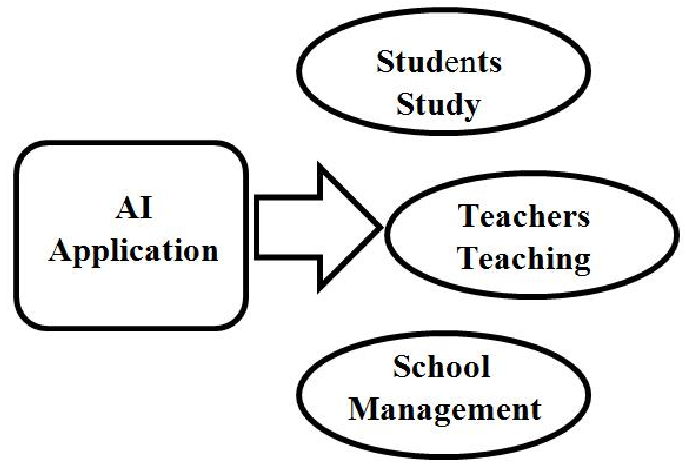 Figure 1: The tripartite structure of AI in educational subjects.
Challenges: The Five Layers of Resistance
The road to AI-rich education is blocked by five significant hurdles:
- Technical: Machine learning relies on correlation, not causation. Natural language understanding hasn't reached the level of true human dialogue.
- Effect: The "Non-Significant Difference" phenomenon—where new tech fails to yield better results than traditional methods.
- Legal: AI assistants could become "class spies," monitoring every move of teachers and students, leading to severe privacy risks.
- Ethical: AI lacks empathy. A machine might bluntly mark a sick student's answer as "incorrect," whereas a human teacher would provide emotional support.
- Systemic: The high cost of restructuring school hardware and management to fit new software.
Countermeasures: Building "Responsible AI"
To move forward, the paper advocates for several core principles:
- Strengthening Basic Research: Collaboration between AI scientists and educators to break through the "unexplainable" nature of algorithms.
- Principle of Accountability: Establishing clear legal frameworks for data security and the "right to know" for students and parents.
- Humanistic Education: Schools must focus on "Hard Skills" (digital literacy) AND "Soft Power" (critical thinking, empathy, entrepreneurship).
- Equity and Inclusion: Preventing the "Digital Divide" where only wealthy districts benefit from AI tutoring.
Conclusion: Putting Our Feet on the Ground
The integration of AI and education is a process of mutual empowerment. While AI automates the mechanical, educators must double down on what makes them human: the ability to inspire, to empathize, and to cultivate wisdom. The future belongs to the "Super Teacher" who uses AI as a tool to return education to its original nature—the growth of the soul.
Key Takeaway: Don't just teach children how to use AI; teach them what AI cannot do. Empathy, aesthetics, and moral will are our ultimate "defense against AI."