
Specialized MLP Architectures: Precision Emotion Prediction in Music
Dimensional Emotion Prediction through Low-Level Musical Features
This paper presents a specialized Music Emotion Recognition (MER) system that predicts valence and arousal using 260 low-level acoustic features. By employing a Multilayer Perceptron (MLP) architecture and partitioning the emotional space into quadrants, the authors achieve a state-of-the-art RMSE as low as 0.11 on the Mediaeval dataset.
TL;DR
Researchers have developed a high-precision Music Emotion Recognition (MER) system by moving away from generic global models. By utilizing Multilayer Perceptrons (MLP) and Principal Component Analysis (PCA), and most importantly, training independent models for different emotional quadrants, they reduced prediction error (RMSE) to as low as 0.11.
Background & Motivation
While most digital platforms categorize music by genre, the human experience of music is inherently emotional. Psychologists use a Dimensional Model—mapping emotions on two axes: Valence (pleasure vs. displeasure) and Arousal (intensity vs. calm).
The technical challenge lies in the "semantic gap": how do we translate 260 low-level audio signals (like spectral flux or zero-crossing rates) into abstract human feelings? Prior work using simple linear regressions failed significantly (RMSE ~0.8) because the relationship between audio features and emotion is deeply non-linear and complex.
Methodology: A Modular Pipeline
The authors propose a six-phase functional pipeline to tackle the complexity of the 1,802-song Mediaeval dataset.
1. Dimensionality Reduction (PCA)
With 260 features per song, models often suffer from the "curse of dimensionality." The authors used PCA to retain 95% of the variance while drastically reducing the input noise, which directly led to better convergence and lower error rates.
2. The MLP Architecture
Instead of standard regression, the team utilized a Multilayer Perceptron (MLP). They experimented with:
- Learning Rates: 0.001 to 0.070.
- Hidden Layers: Comparing 1 vs. 2 layers.
- Neuron Density: 64 vs. 128 units.
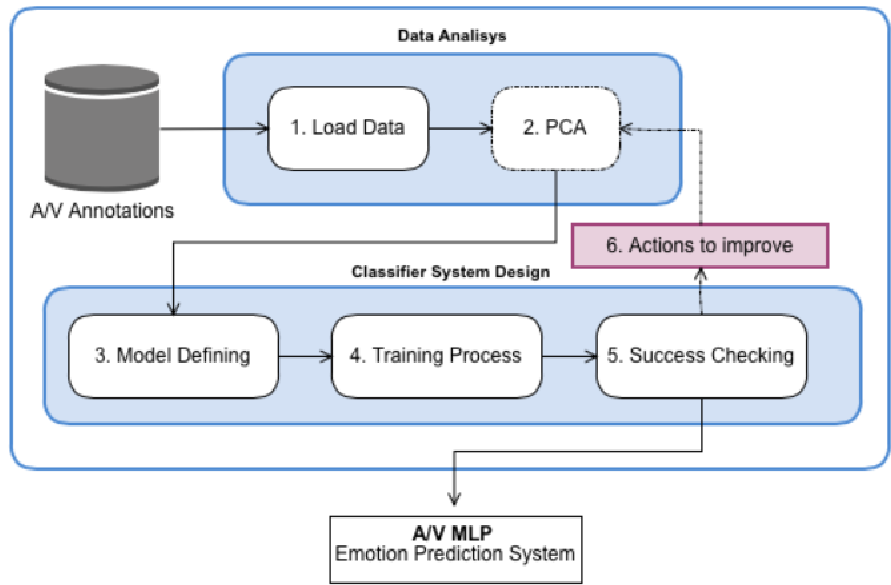 Figure 1: The proposed functional phases of the MER system.
3. The "Divide and Conquer" Insight
The core innovation was the realization that a single model trying to learn the entire V/A plane is inefficient. By creating independent models for each quadrant, the system could "specialize" in the specific acoustic signatures of, for example, high-arousal/low-valence music (like Angry/Aggressive tones).
Experimental Results
The experiments demonstrated a clear hierarchy of improvement. Applying PCA alone dropped the RMSE to the 0.23-0.27 range. However, the specialized quadrant training was the "silver bullet."
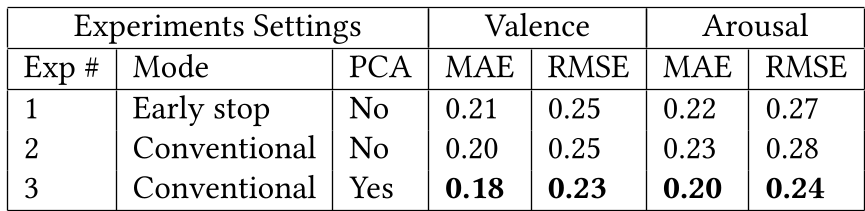 Table 1: Impact of PCA and training modes on global success rates.
In the best-case scenarios (using 2 hidden layers and 64 neurons), the model achieved an RMSE of 0.11. This is a significant leap over previous Support Vector Machine (SVM) and some Recurrent Neural Network (RNN) implementations that typically hover between 0.15 and 0.46.
Critical Insight & Future Outlook
The primary takeaway is that Inductive Bias matters. By forcing the model to focus on a specific quadrant of the emotional spectrum, we reduce the variance the model has to explain, allowing the MLP to find tighter correlations between low-level features and a narrower emotional range.
Limitations: The dataset is naturally unbalanced (some emotions are more prevalent in the Mediaeval set than others). Future work will likely involve Sensitivity Analysis to prune the 260 features down to only the most impactful ones, potentially further speeding up inference for real-time applications in music recommendation engines.
Conclusion
This research provides a robust framework for high-accuracy MER. It proves that even with classic techniques like MLPs, strategic data partitioning and dimensionality reduction can outperform more complex "black-box" architectures in specialized domains like acoustic psychology.