
Digital Conflict & Interactivity: What Actually Drives Political Participation in Spain?
Direct online political communication effects on civil participation in Spain: an experimental study
This paper presents a 2x2 factorial experimental study investigating how online political communication on social media affects civil participation in Spain. By manipulating "interactivity" and "conflict level" in messages from a fictitious political party, the research identifies that prior political interest and sophistication are critical moderators for turning digital consumption into actual mobilization.
Executive Summary
TL;DR: Does arguing on social media actually make people go to the polls? This study explores the "secret sauce" of digital political marketing. By setting up a laboratory experiment with a fictitious party, the researcher discovered that while high-conflict interactive content captures attention, its power to mobilize is strictly limited by the user’s pre-existing interest in politics.
Context: This work sits at the intersection of Political Science and Communication Technology, specifically addressing the Spanish electoral complications of 2015-2016. It shifts from viewing social media as a "magic bullet" to a complex "reinforcement tool."
The "Conflict vs. Interactivity" Dilemma
Existing political literature suggests two main drivers for engagement:
- Conflict Framing: High stakes and arguments attract attention because they signal that "something is at stake."
- Interactivity: The ability to give feedback or comment makes a user feel part of the process.
The author’s intuition was that neither works in a vacuum. The study aimed to see if high-conflict messages require interactivity to move the needle on civil participation—or if they simply alienate the average citizen.
Methodology: The ForumBP Experiment
The researcher created a fictitious political party, ForumBP, and designed four distinct web environments to test the 2x2 variables:
- Strong Conflict + High Interactivity
- Weak Conflict + High Interactivity
- Strong Conflict + Low Interactivity
- Weak Conflict + Low Interactivity
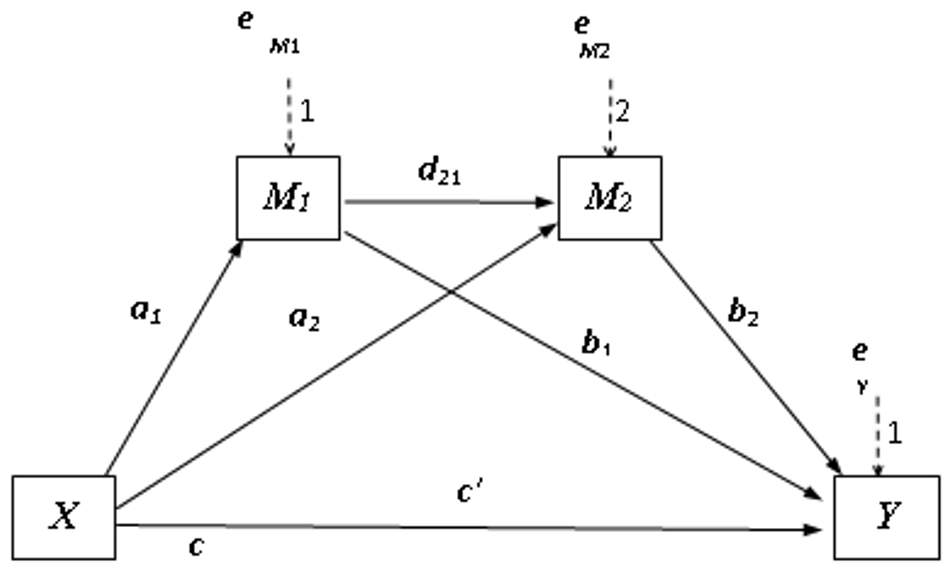 Figure: The Moderated Mediation Model used to analyze internal psychological paths.
Key Results: Interactivity as a Catalyst
The findings suggest a nuanced "Conditional Effect":
- Attention Grabbing: Conflictive messages did NOT work under "Low Interactivity" conditions. However, when the website was interactive, conflict became a significant driver (p = 0.037) for "paying more attention to next election campaigns."
- The Literacy Barrier: The study found that "Political Sophistication" and "Initial Interest" are the primary gates. If a user has no interest in politics, no amount of social media "conflict" will mobilize them.
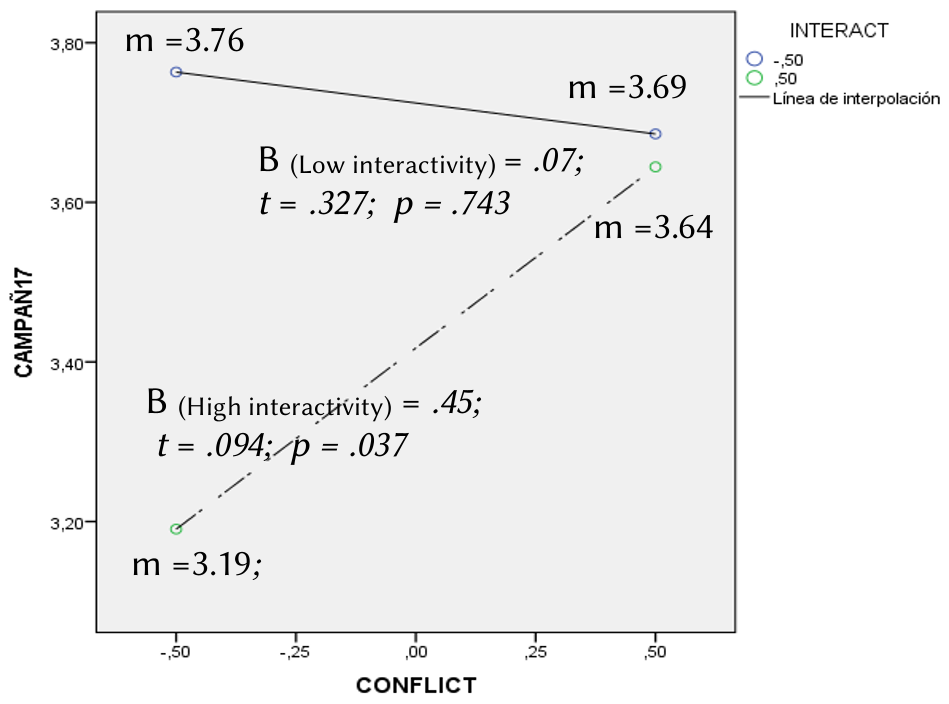 Figure: How conflict and interactivity interact to boost electoral attention.
Critical Insight: The Reinforcement Effect
The most striking takeaway is the Control Analysis result: Individuals with high initial interest showed a strong engagement coefficient (B = 0.42, p = 0.013) when using social media. Conversely, for those with low interest, social media usage had zero statistical impact on their willingness to participate.
Conclusion: Social media is not an "on-ramp" for the politically disengaged; it is a "turbo-charger" for those already in the race.
Limitations & Future Work
The study was conducted in a controlled lab setting with university students, which may not reflect the diverse demographics of the entire Spanish electorate. Future research needs to explore how algorithmic echo chambers (which weren't modeled here) might intensify the "Conflict-Interactivity" loop even further.
Takeaway for Strategists: If you want to mobilize, focus your high-conflict, high-interactivity campaigns on "warm leads"—citizens who already possess a baseline level of political sophistication.