
Harmonizing Trust and Technology: The Rise of Disaster Prevention SNS
Study on the Social Networking System of Disaster Prevention Using Smart Phones
This paper proposes a "Disaster Prevention Social Networking System (SNS)" specifically designed for smartphones to facilitate local community cooperation during emergencies. By integrating real-time information sharing, GPS/mapping, and personal data, the system aims to bridge the gap between individual self-help and official government response through enhanced neighborhood mutual assistance.
TL;DR
Researchers in Oita, Japan, have developed a dedicated "Disaster Prevention SNS" for smartphones that transforms neighborhood social ties into a high-speed rescue network. By digitizing community trust before a crisis, the system significantly slashes the time needed to organize local rescue efforts during earthquakes, outperforming traditional communication in high-stress scenarios.
Background: The Information Paradox in Disasters
In the wake of a sudden earthquake, a cruel irony often emerges: people watching the news hundreds of miles away have a clearer picture of the damage than the victims trapped in the disaster zone. Local infrastructure often collapses, turning communities into isolated "information islands."
The authors argue that the missing link isn't just technology—it's trust. While government aid ("Government-help") is slow and individual survival ("Self-help") is limited, the "Neighborhood-help" layer is frequently underutilized because citizens lack the real-time tools to coordinate safely and efficiently.
The "Digital Neighborhood" Strategy
The core insight of this research is that a disaster prevention system must be an extension of daily life. The methodology emphasizes two phases:
- Normal Times: Building a database of neighborhood vulnerabilities (e.g., identifying elderly residents or those with disabilities) through social interaction.
- Emergency Times: Converting this data into a visual "command center" on a smartphone.
The System Architecture
The proposed application integrates map data, family profiles, and real-time status updates. It moves beyond the "one-to-many" broadcast of traditional radio alerts to a "many-to-many" collaborative platform.
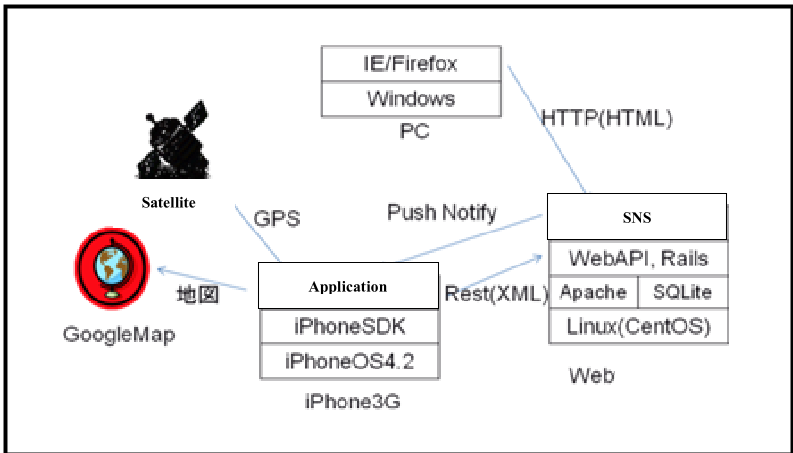 Figure: The Disaster Prevention SNS architecture bridging local users with governmental data.
Experimental Insights: Screen vs. Speech
The research involved two major experiments comparing different communication modes:
- Phase 1: Focused on family-to-family assistance.
- Phase 2: Scaled up to "Neighborhood Association Leaders" managing larger groups.
Key Finding: The Efficiency of Visualization
Interestingly, the researchers found that during "Normal Times," human beings still prefer face-to-face chatting to build trust. However, the moment a disaster strikes, the iPhone condition became vastly superior. The digital interface allowed leaders to see the "big picture" at a glance without the confusion of verbal cross-talk.
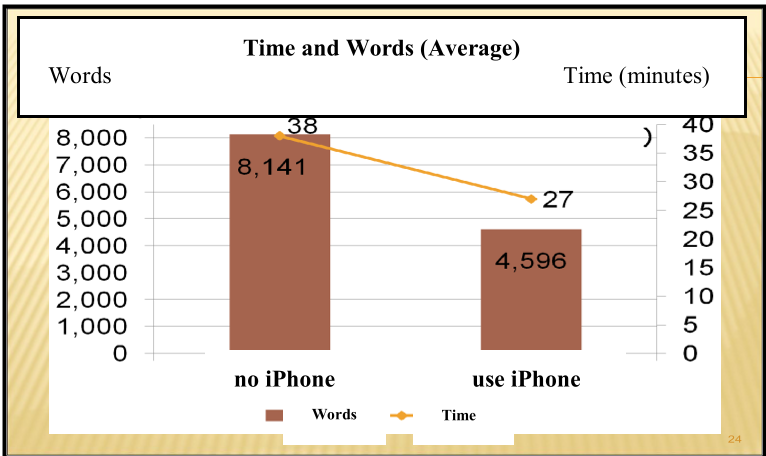 Figure: Comparison showing reduced "rescue consideration time" when using the SNS interface.
The data visualized above proves that the group using the SNS interface spent significantly less time "talking" and more time "acting." The visual representation of who was trapped and which hospital was available streamlined the cognitive load on the leaders.
Deep Insight: Solving the Digital Divide
A common critique of such systems is the "Digital Divide," particularly among the elderly. The paper addresses this through Haptization—using intuitive touch interfaces that even non-technical users can operate under stress. In their survey, 75% of participants found the iPhone's UI easy to use, suggesting that the "affinity" between smartphones and social media is a powerful tool for bridging the information gap for the vulnerable.
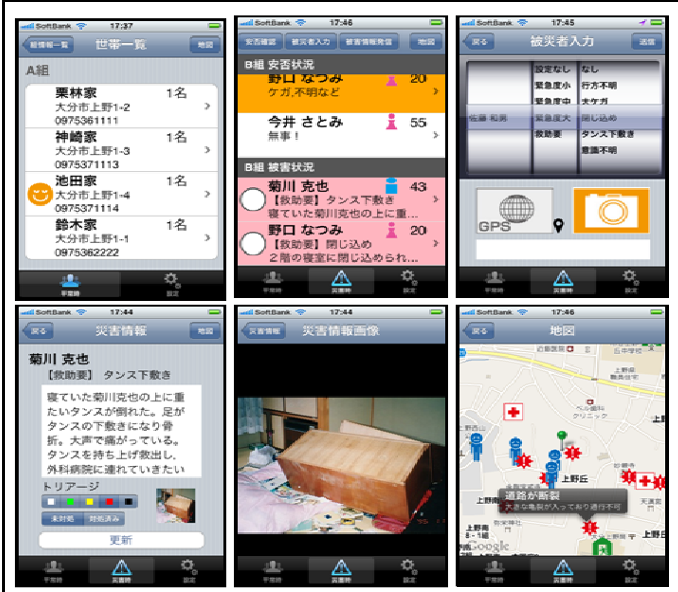 Figure: The specialized UI for real-time safety confirmation and rescue mapping.
Conclusion and Future Outlook
This study serves as a vital proof-of-concept for Social-Technical Disaster Resilience. It proves that smartphones are not just consumption devices, but critical "lifeline terminals."
The next frontier for this research involves integrating more sophisticated ICT services and ensuring battery longevity during prolonged outages. The ultimate takeaway? The effectiveness of a disaster system is measured by how much it was used before the disaster happened. Trust cannot be downloaded during an earthquake; it must be uploaded every day.