
Mining the Noise: Discovering Adverse Drug Reactions Through Twitter Sentiment Analysis
Discovering Adverse Drug Reactions from Twitter: entiment nalysis erspective
This paper presents a framework for discovering Adverse Drug Reactions (ADRs) from Twitter using a combination of sentiment analysis, Natural Language Processing (NLP), and the ADR&CS ontology. The authors created a labeled database of 3,000 tweets and identified a 5% ADR mention rate among filtered personal opinions, demonstrating Twitter's viability as a supplemental pharmacovigilance tool.
Executive Summary
TL;DR: This research tackles the critical issue of drug safety underreporting by mining spontaneous patient opinions on Twitter. By leveraging the ADR&CS ontology and sentiment analysis, the authors filtered through 30,000 tweets to isolate genuine patient experiences, identifying side effects at a 5% rate in filtered data.
Background: Positioned as a methodological bridge between pharmacovigilance and social computing, this work moves beyond simple keyword matching. It establishes a rigorous pre-processing framework to separate "medical noise" (ads/research) from "patient voice," providing a roadmap for integrating Digital Social Media (DSM) into official safety monitoring systems like the FDA's FAERS.
Problem & Motivation: The 90% Blind Spot
The drug release cycle is a decade-long, billion-dollar gamble. Even after clinical trials, many side effects remain hidden until reach a mass population. Official reporting systems are failing: 90% of Adverse Drug Reactions (ADRs) go unreported.
The authors identify a massive "untapped" data source: Twitter. However, the challenge is the signal-to-noise ratio. Social media is cluttered with:
- Commercial Noise: Advertisements and pharmacies selling drugs.
- Scientific Dissemination: Experts sharing studies.
- Linguistic Complexity: Slang, emojis, and informal grammar that break traditional medical dictionaries.
Methodology: Beyond Simple Keyword Matching
The core of the study lies in its multi-layered filtering and labeling process. Instead of just looking for drug names, the authors used a specialized ontology to understand context.
1. The Pre-processing Pipeline
Using Python and NLTK, the researchers implemented a pipeline to normalize the chaotic nature of "Twitter-speak":
- Tokenization & Stemming: Reducing "dizzy," "dizzier," and "dizziness" to a common root.
- Sentiment Analysis: Utilizing TextBlob to assess polarity. ADRs are inherently negative; by identifying negative sentiment, the system can prioritize potential side-effect reports over neutral advertisements.
2. Research Workflow
The study followed a three-step evolutionary flow:
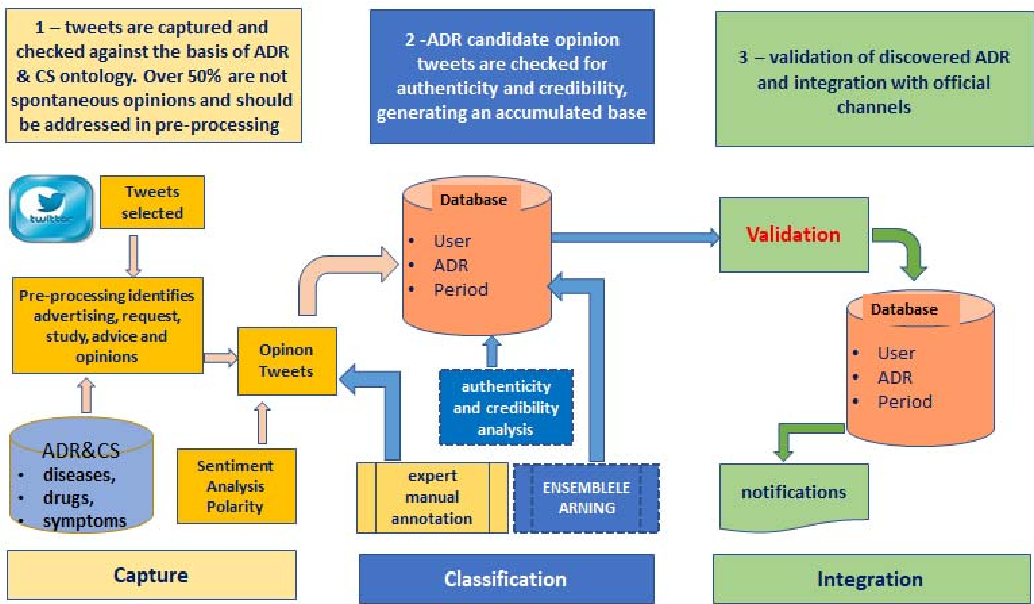 Figure 1: The stages of research from data capture to future statistical integration.
Experiments & Results: Deciphering the Stats
The team analyzed four distinct drugs: Fluoxetine, Quetiapine, Venlafaxine, and Tamoxifen. This selection allowed them to see how ADR reporting varies across different medical conditions (Psychiatric vs. Oncological).
Key Findings:
- Data Volume: 30,000+ tweets captured; 3,000 categorized for modeling.
- ADR Yield: Out of 1,000 manually labeled tweets, 50 (5%) were confirmed ADRs.
- Noise Factor: Over 30% of tweets were discarded because they were posted by experts or ads rather than users.
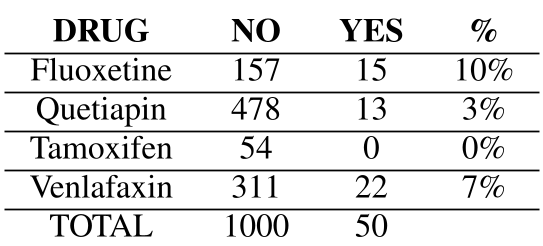 Figure 2: Distribution of ADRs across the four studied drugs. Note that Fluoxetine had the highest reporting rate at 10%.
The results highlight a crucial insight: Domain matters. A model trained on psychiatric drug tweets (which are highly emotional and descriptive) may completely fail if applied to cardiac or cancer medication tweets, where the language is more clinical or scarce.
Critical Analysis & Conclusion
The Takeaway
This work proves that Twitter is no longer just for celebrity gossip; it is a scientifically viable source for pharmacovigilance. By using the ADR&CS ontology, the authors have provided a way to standardize "street talk" into clinical categories.
Limitations
- Sample Bias: Twitter users represent a specific demographic (typically younger, tech-savvy), which might not capture ADRs in elderly populations.
- Sarcasm & Emojis: Current NLP tools still struggle with irony—a patient saying "Oh great, another headache" might be misclassified without advanced context-awareness.
Future Outlook
The next frontier is the inclusion of emojis and hashtags as semantic markers. As the authors move toward the third stage of their project—integrating discovery with official FAERS channels—we are looking at a future where your tweet could literally save lives by triggering an early safety alert for a new medication.