
PWA: Mining Human-Computer Interaction Patterns for Smart Task Delegation
Discovering User Behavior Patterns in Personalized Interface Agents
The paper introduces a Personalized Word Assistant (PWA), an intelligent interface agent that employs Episode Identification and Association (EIA) to discover user behavior patterns in Microsoft Word. By identifying frequent sequences of actions (episodes) through implication networks and statistical tests, the agent provides just-in-time assistance and task delegation.
TL;DR
Researchers have developed a Personalized Word Assistant (PWA) that observes how you use Microsoft Word, learns your habits, and steps in to automate repetitive tasks. By treating user actions as "episodes" in a sequence, the agent can predict your next move—whether it's finishing a common phrase or applying a specific formatting style—reducing manual operations by nearly 40%.
Background: Moving Beyond Static Interfaces
In the era of early 2000s computing, software interfaces were "one-size-fits-all." Whether you were a legal professional or a student, the menus and behaviors of word processors remained identical. While early agents like Letizia helped users browse the web using keyword matching, they couldn't understand the process of creation. This paper shifts the focus from content matching to behavioral sequence mining.
The Problem: The High Cost of Repetition
The authors identify a core frustration in Human-Computer Interaction (HCI): users often perform the same sequences of actions (e.g., bolding a header, then changing the font size, then adding a colon). Existing systems were "blind" to these routines because:
- Temporal Complexity: Actions happen over time, and the relationship between them is often probabilistic rather than absolute.
- Noise: Users make mistakes or perform unrelated actions in between significant steps.
- Data Scarcity: Agents must learn from a limited number of observations without requiring the user to "train" the system explicitly.
Methodology: Episode Identification and Association (EIA)
The "secret sauce" of the PWA agent is its ability to turn a stream of clicks and keystrokes into Implication Networks.
1. Defining the Episode
The system views HCI as a sequence of events . It uses a sliding window approach to count how often specific "episodes" (sequences of events like ) occur.
2. Statistical Validation
To ensure the agent doesn't give "hallucinated" or annoying suggestions, it uses a binomial distribution test. It calculates the probability that an observed association isn't just a coincidence, only offering help when the confidence exceeds a strict threshold ().
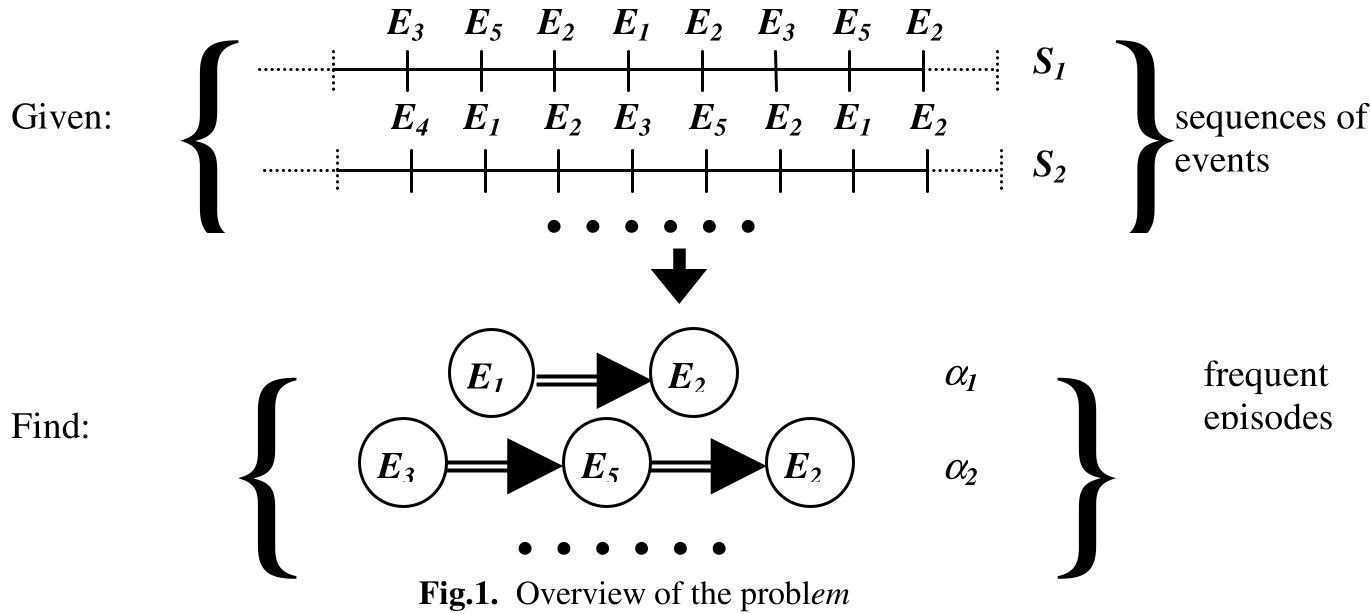 Figure 1: The PWA architecture showing the flow from HCI sequence detection to pattern discovery and delegation.
3. Levels of Assistance
PWA operates across three distinct granularities:
- Text-level: Learning N-gram associations (phrase completion).
- Paragraph-level: Detecting formatting sequences (e.g., if you format one sub-header, PWA offers to do the rest).
- Document-level: Recommending styles and relevant sources based on TF-IDF weighting.
Experimental Evidence: Does it Actually Help?
The authors conducted two trials to validate the PWA's effectiveness.
Efficiency Gains
In a head-to-head comparison, users assisted by PWA were significantly more efficient. The agent's suggestions for format delegation were particularly successful, with an 86% acceptance rate.
 Table 1: Comparison between Group 1 (with PWA) and Group 2 (Manual). Note the dramatic reduction in operation steps.
Deep Insight & Conclusion
This paper is a precursor to what we now call "Intelligent User Interfaces" (IUI). Its core strength lies in its unobtrusive learning—the user doesn't need to write macros or scripts; the agent discovers the "scripts" itself through statistical observation.
Takeaways
- Sequence Matters: Analyzing user behavior as a time-series of events is far more powerful for task automation than simple static modeling.
- Trust involves Accuracy: The high acceptance rate (86% for formatting) suggests that statistical implication networks are effective at weeding out low-quality suggestions that would otherwise annoy the user.
Limitations & Future Outlook
While the system excelled at MS Word, the width of the time window is a critical hyperparameter. If it's too short, it misses long-term patterns; too long, and it detects "noise." Modern LLM-based agents might solve this by using massive context windows, but the EIA method remains a gold standard for efficient, local, and privacy-preserving on-device learning.