
Disentangling the Drivers of Brand Benefits: Why "Likes" Turn Into Sales
Disentangling the drivers of brand benefits: Evidence from social media marketing of two cosmetics companies
This paper investigates how different social media content types (News, Dialog, Contests) drive perceived brand benefits (Informational, Social, Hedonic) and their subsequent impact on consumer engagement and purchase intentions. Using two French cosmetics brands (Guerlain and Yves Rocher) as cases, the study validates a structural model linking specific content to behavioral outcomes.
TL;DR
In the crowded digital landscape of the cosmetics industry, simply posting "news" isn't enough to drive sales. This study reveals that Hedonic and Social benefits are the true engines of consumer engagement. By analyzing brands like Guerlain and Yves Rocher, the research proves that while news provides information, it is the excitement of contests and the sense of community that actually foster brand loyalty and move the needle on purchase intentions.
Background & Positioning
As brands migrate from tradition websites to Facebook-centric ecosystems, the "Social" in Social Media often gets lost in a sea of broadcast-style announcements. This paper bridges the gap between Content Typology and Consumer Behavior Psychology. It positions itself as a critical validator of the "Value-Benefit-Behavior" chain, specifically testing whether the "Luxury" status of a brand changes how consumers react to digital messaging.
The Core Conflict: Information vs. Experience
Prior work often categorized social media posts (e.g., product updates vs. fan interactions) but struggled to explain why certain posts worked. The authors identify a key friction point: many brands treat Facebook as a secondary news wire (Informational), whereas consumers use it for escapism and connection (Hedonic/Social).
The study's intuition is that if the benefit perceived by the consumer doesn't match their motivation for using the platform, the marketing effort fails.
Methodology: A Tale of Two Brands
The researchers chose a robust Multiple Case-Study approach comparing:
- Guerlain: A premium luxury brand.
- Yves Rocher: A mass-market brand.
Through a between-subjects experiment, they tested how three specific content types (News, Dialog, Contests) influenced three perceived benefits.
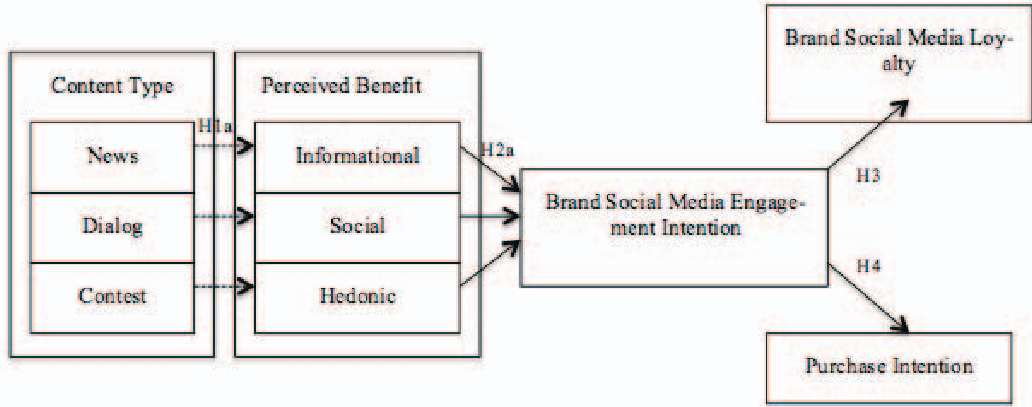 Figure 1: The theoretical roadmap connecting content types to consumer actions.
Key Insights from the Data
The results provide a reality check for digital marketers:
- The "News" Paradox: While News successfully delivers Informational benefits (H1a supported), Informational benefits do not lead to engagement intention. Consumers find the info "useful," but it doesn't make them want to interact with the brand further.
- The Power of Play: Contests were the strongest drivers of Hedonic benefits (H1c supported), which in turn were highly significant predictors of engagement.
- The Dialog Disconnect: Interestingly, "Dialog" posts didn't uniquely boost Social benefits. The authors suggest this is because Facebook is inherently social—users feel a sense of belonging through the comment section regardless of whether the post was framed as a "dialog."
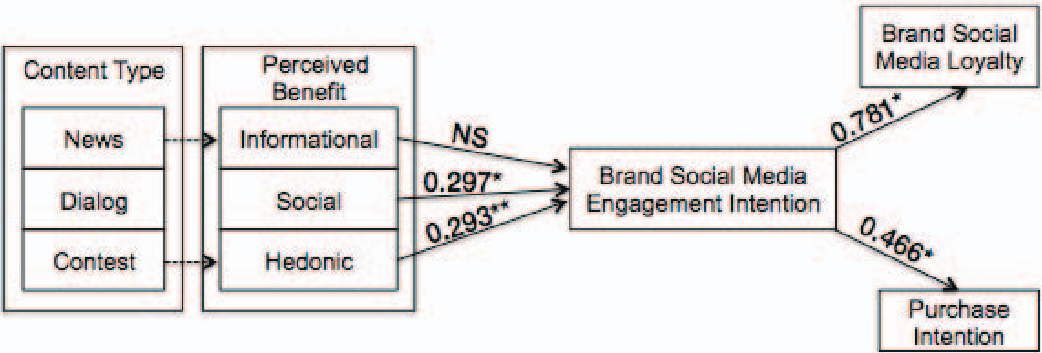 Figure 2: The final validated model showing significant paths ().
Critical Analysis & Professional Takeaways
The most striking finding is the cross-brand consistency. Whether a brand is selling a 10 mass-market cream, the consumer's psychological path from engagement to purchase remains the same.
Strategic Recommendations:
- Shift from ROI to ROE: Focus on Return on Engagement. Since engagement intention is a significant predictor of purchase intention (H4), the focus must be on content that triggers "fun" (Hedonic) and "connection" (Social).
- Audit Your Content Mix: If your feed is 90% "Product News," you are likely failing to build the e-loyalty required to sustain long-term sales.
- Platform Fit: Marketers must align their content with the hedonic nature of the platform. Facebook is a place for social interaction, not just a digital catalog.
Limitations
The study focused on female respondents in the French cosmetics market. While the results are robust for this demographic, the "Social" benefit dynamics might differ in B2B sectors or more utilitarian industries (like insurance or hardware).
Conclusion
This research provides the empirical "missing link" between a Facebook "Like" and a final sale. By disentangling the drivers of brand benefits, Coursaris and Van Osch demonstrate that in the digital age, the brand that entertains and connects is the brand that sells.