
HealthSocialNet: Bridging the Rural Health Divide via Mobile P2P and Social Networks
Distributed Data Managing in Health Care Social Network Based on Mobile P2P
This paper introduces HealthSocialNet (HSN), a distributed health care information system tailored for rural areas in developing countries. By leveraging Mobile P2P (Alljoyn), open-source social networking (Elgg), and distributed storage (HBase/Hadoop), it establishes a low-cost communication bridge between city hospitals and remote villages without relying on expensive or unstable cellular infrastructure.
TL;DR
In many rural parts of the developing world, the "last mile" of health care isn't just about medicine—it's about data. HealthSocialNet (HSN) is a distributed system that bypasses the need for expensive cellular networks by using Mobile P2P ad-hoc networking and distributed HBase storage. It turns health workers and residents into data carriers, ensuring life-saving immunization and antenatal information reaches remote mountain villages.
Problem & Motivation: The Digital Desert
In regions like Liuba County, China, health workers often travel to remote posts with no internet or even stable electricity. While mobile phones are becoming ubiquitous, the cost of 3G/4G data remains a barrier for the poor, and coverage is spotty at best.
Existing telemedicine projects often fail because they assume a persistent connection to a central cloud. When the network or the power fails, the system collapses. The authors identified a critical need for a fault-tolerant, proximity-based architecture that coordinates with the physical movements of health workers.
Methodology: P2P Social Syncing
The core innovation of HealthSocialNet lies in its hybrid communication and storage layers.
1. The P2P Ad-Hoc Bridge
Instead of uploading data to a tower, health workers download records at the town hospital and sync them locally with village residents using the Alljoyn framework.
- Mechanism: Devices form a Mobile Ad-hoc Network (MANET) via Wi-Fi hotspots or Bluetooth.
- Social Graph: The system uses the Elgg engine to create a directed social network where patients and workers are nodes. Data flows through "social edges" (neighbors sharing info with neighbors).
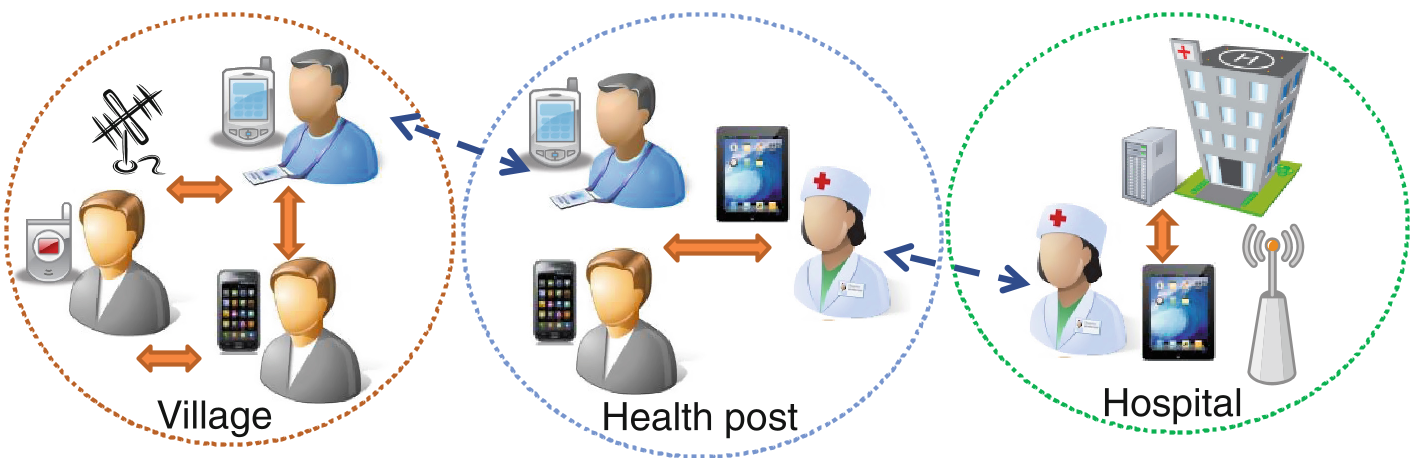 Figure 1: The bridge between city hospitals and remote villages via community health workers.
2. Distributed Cloud Storage (HSNStore)
To manage the complexity of Electronic Health Records (EHR), which are often large XML files (HL7 standards), HSN uses a hybrid backend:
- MySQL: For basic user metadata and quick relational queries.
- HBase (running on Hadoop): Formatted as a column-oriented store to handle sparse, attribute-heavy EHR data.
- Fault Tolerance: Using HDFS replication, the system ensures that if one hospital server goes down due to electricity issues, the data remains accessible via other nodes.
 Figure 2: The hybrid SQL/NoSQL architecture of HSNStore.
Experiments & Results
The implementation focused on multi-platform compatibility, supporting iOS, Android, and Windows. This is crucial because technology in developing areas is often a heterogeneous mix of donated or second-hand hardware.
- Performance: HBase allowed for automatic "HRegion splitting," meaning as the database grows, the load is automatically balanced without manual intervention.
- Reliability: By implementing Zookeeper clusters, the system maintains coordination even when individual peer nodes join or leave the network frequently (churn).
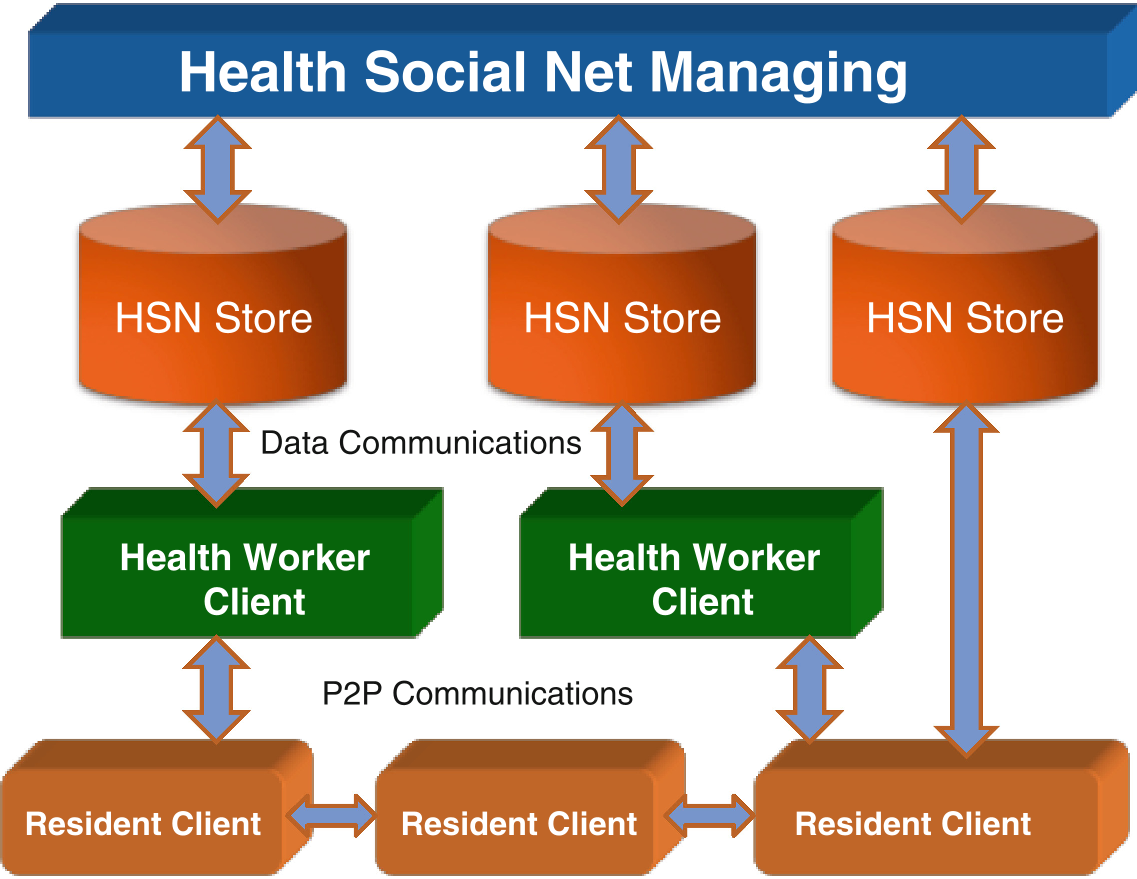 Figure 3: The four major components of the HSN prototype client.
Critical Insight: Data as a Social Cargo
The brilliance of HealthSocialNet is that it doesn't fight the lack of infrastructure; it works around it. By treating health data as "social cargo" carried by individuals, the system essentially turns the community's physical social structure into a message-passing network.
Limitations: While ingenious, the system relies heavily on the "community health worker" as a primary node. If the physical link (the person) doesn't travel, the data doesn't sync. Additionally, maintaining security and privacy across a P2P network of personal mobile devices remains a secondary challenge that requires robust encryption.
Conclusion
HealthSocialNet provides a powerful example of appropriate technology. By combining sophisticated distributed systems (HBase/Hadoop) with a low-tech "pavement-pounding" approach to data delivery, it offers a sustainable model for improving maternal and child health in the world's most isolated regions.