
Advancing Patient-Centric Care: A Distributed Data Mining Framework for u-Healthcare
A Distributed Data Mining System for a Novel Ubiquitous Healthcare Framework
This paper introduces a South Korean government-initiated prototype for a Ubiquitous Healthcare (u-Healthcare) system integrated with a Distributed Data Mining (DDM) framework. It leverages ZigBee and CDMA technologies for real-time biomedical signal collection and utilizes a DDM architecture based on SNOB clustering and C4.5 classification to support clinical decision-making.
TL;DR
As the global population ages, the shift from hospital-centric to u-Healthcare (Ubiquitous Healthcare) is becoming a necessity. This paper presents a prototype framework that utilizes wearable sensors, mobile technology, and Distributed Data Mining (DDM) to provide continuous monitoring and Clinical Decision Support (CDSS). By parallelizing data analysis across clusters, the system achieves over 90% accuracy compared to centralized methods, enabling real-time emergency response and long-term wellness management.
Background & Motivation: Moving Beyond the Hospital Walls
The primary bottleneck in modern healthcare is its reactive nature—patients are usually treated only after arriving at a clinic. u-Healthcare aims to change this by providing "anywhere/anytime" services. However, this creates a massive data engineering challenge:
- Data Volume: Constant streams of pulse, blood pressure, and movement data from thousands of users.
- Infrastructure Limits: Wireless sources often lack the bandwidth to transmit raw, high-frequency data to a central server.
- Complexity: Analyzing distributed medical records requires high-performance computing that respects technical and organizational boundaries.
The authors' central insight is that data mining shouldn't just happen at the end of the pipeline; it must be distributed to remain scalable and responsive.
Methodology: The Distributed Intelligence Architecture
The proposed framework is divided into three functional layers: the User/Sensor layer, the Healthcare Center, and the Decision Support System.
1. Biomedical Signal Collection
Wearable sensors use ZigBee for low-power, short-range communication within the home (connected via Access Points) and CDMA via mobile phones when the user is outdoors. This ensure continuous data flow regardless of the patient's location.
2. The DDM Pipeline (The Core Engine)
Instead of a monolithic database, the system employs a sophisticated distributed workflow:
- Partitioning: Using SNOB, a mixture modeling tool, the biomedical data is partitioned into distinct clusters.
- Parallel Processing: Using MPI (Message Passing Interface), these clusters are processed by multiple hosts simultaneously.
- Local Modeling: Each host applies the C4.5 algorithm to generate local classification rules.
- Aggregation: A global model is synthesized by selecting the top-performing rules from each cluster through a voting scheme.
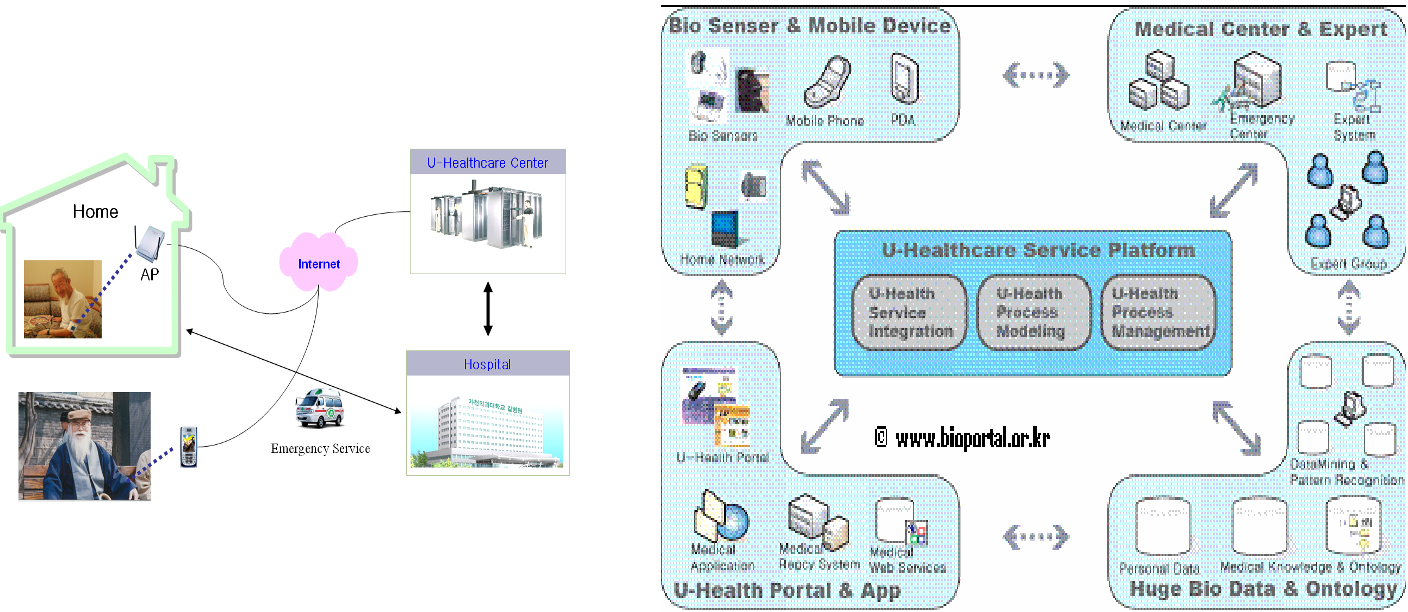 Figure 1: Overview of the u-Healthcare service framework.
Experiments and Results
The system was validated using real-world medical datasets, most notably the Pima-Indians-Diabetes dataset.
- Predictive Accuracy: The researchers compared the "Global Model" (derived from distributed rules) against a "Centralized Model" (mined from a single database).
- Performance Benchmark: The system met the "90% accuracy" threshold, proving that partitioning the data does not significantly degrade the quality of the classification rules.
- Visual Evidence: Comparison charts showed that error rate averages remained within acceptable bounds (under 10% discrepancy compared to original datasets).
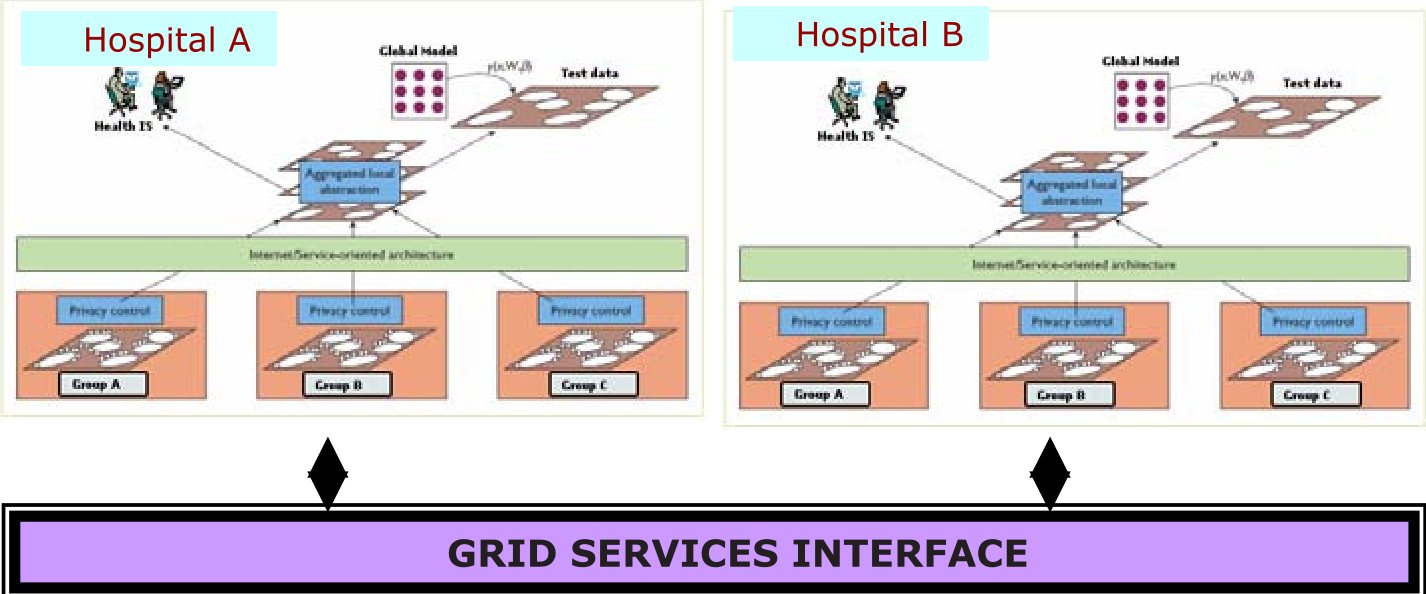 Figure 2: The logic of moving from local sensors to global mining models.
Critical Insight: The Value of Distributed CDSS
The real-world value of this research lies in its Clinical Decision Support System (CDSS). By integrating DDM results, the CDSS can:
- Detect Abnormalities: Identify falls or cardiac irregularities via real-time stream mining.
- Dynamic Profiling: Create a risk-ranking system for administrators to prioritize patients with higher severity scores.
- Future-Proofing: The use of MPI and modular classification allows the system to scale as the number of users grows, without requiring a single, exponentially more powerful supercomputer.
Conclusion & Limitations
This paper serves as a foundational blueprint for national-scale u-Healthcare systems. However, it is important to note that while the efficiency of DDM is proven, the security and privacy aspects—specifically how to perform these distributed computations without exposing sensitive patient data—remain a significant challenge for future research. As we move toward 2026, the integration of Federated Learning and Edge Computing will likely be the next logical evolution of the framework described here.
Takeaway: The transition to discovery-based health analysis using distributed mining isn't just a technical upgrade; it is the infrastructure necessary for the next generation of preventive medicine.