
DVIM: Scaling Robotic Swarms for Environmental Monitoring via Distributed Finite Elements
Distributed Environmental Monitoring With Finite Element Robots
This paper introduces the Distributed Variational Inverse Method (DVIM), a decentralized algorithm for environmental monitoring using mobile robot swarms. By combining the Finite Element Method (FEM) with the Alternating Direction Method of Multipliers (ADMM), the system allows robots to partition a global estimation task into local subdomains, achieving a SOTA balance between estimation accuracy and resource efficiency.
TL;DR
Researchers at Northwestern University have developed the Distributed Variational Inverse Method (DVIM). It allows a swarm of robots to map environmental variables (like temperature or salinity) by breaking the world into a "mesh." Instead of every robot trying to know everything, each robot solves a small piece of a global jigsaw puzzle using Distributed ADMM, resulting in massive savings in memory and bandwidth.
Background: The Scalability Wall
When we think of a hundred robots monitoring the ocean, the standard approach is for them to gather data and send it back to a central hub (Centralized) or talk to each other to agree on a single map (Consensus-based).
- The Centralized Failure: Bandwidth limits and single points of failure.
- The Consensus Failure: If the map has 1,000,000 pixels, every single robot needs 1,000,000 memory slots. This doesn't scale.
The authors suggest a different Inductive Bias: The environment is spatially correlated. If a robot is in a specific region, it mainly needs to care about its neighbors.
Methodology: The Three-Pillar Approach
1. Smart Deployment (Voronoi + Edge Expansion)
The robots first partition the environment into Voronoi cells. However, standard Voronoi partitions often have "short edges," which create numerical instability in math solvers. The authors introduced a Distributed Edge Expansion algorithm to "push" the robots into a configuration that ensures the resulting Finite Element Mesh is well-conditioned.
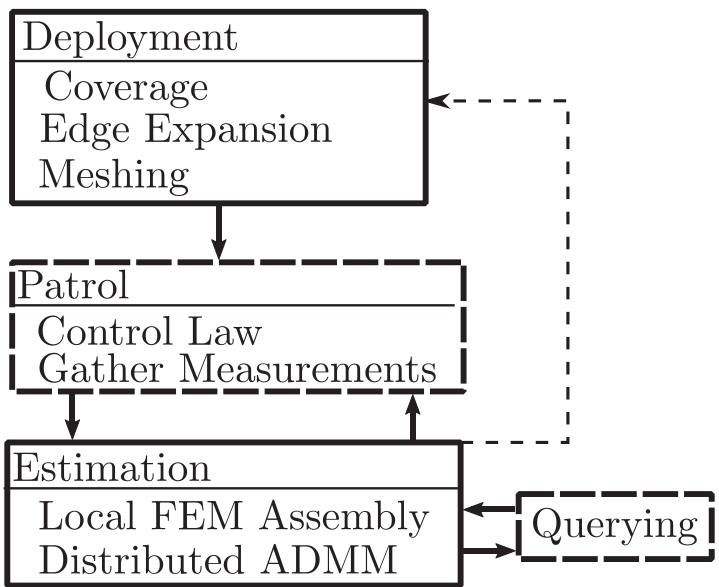 Fig 1: The pipeline from deployment to distributed estimation.
2. The Variational Inverse Method (VIM)
VIM treats field estimation as a smoothness-seeking optimization. It penalizes two things:
- Inconsistency: How far the estimate is from the sensors.
- Nonsmoothness: How "jittery" the field is. By using the Finite Element Method (FEM), this continuous physics problem is turned into a discrete matrix equation: .
3. Distributed ADMM (The Solver)
To solve without a central computer, the robots use ADMM (Alternating Direction Method of Multipliers). Robots only exchange "dual variables" with their immediate Voronoi neighbors. Mathematically, it’s guaranteed to converge to the same result as a supercomputer seeing all the data at once.
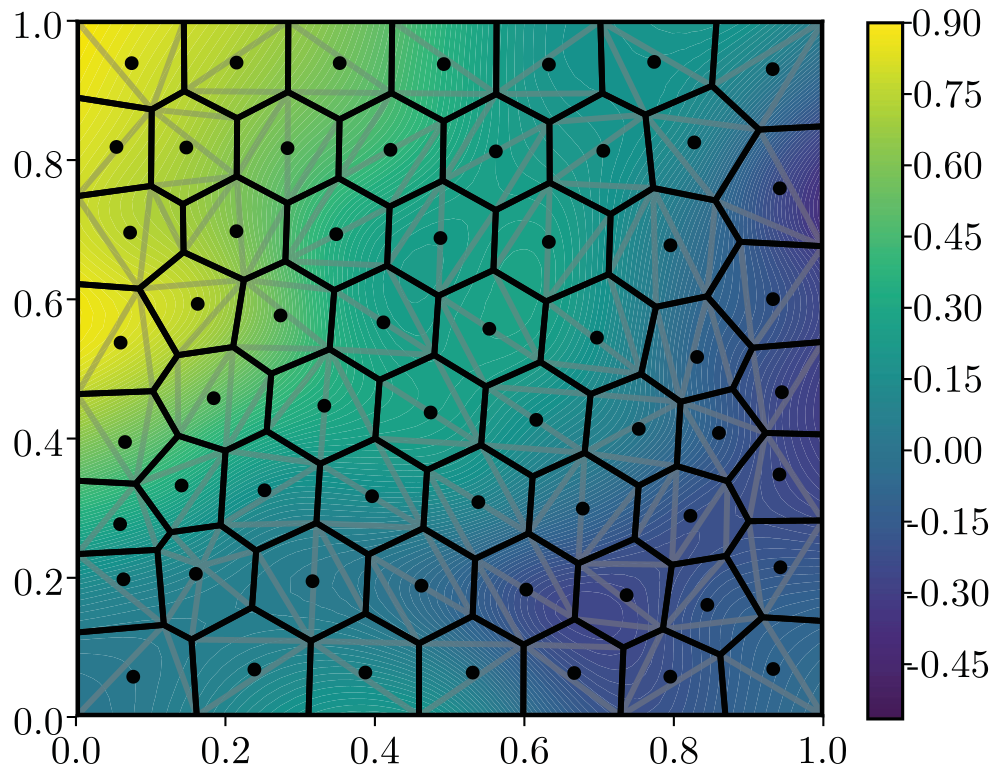 Fig 2: Visualization of the local estimates matching across the boundary.
Experimental Insights: Efficiency Gains
The most striking result is the scaling property. In most systems, adding more robots makes the network "noisier" or slower. In DVIM, adding more robots:
- Decreases Memory Per Robot: Because each robot is responsible for a smaller "element" of the world.
- Stabilizes Communication: The communication radius actually shrinks as the swarm gets denser.
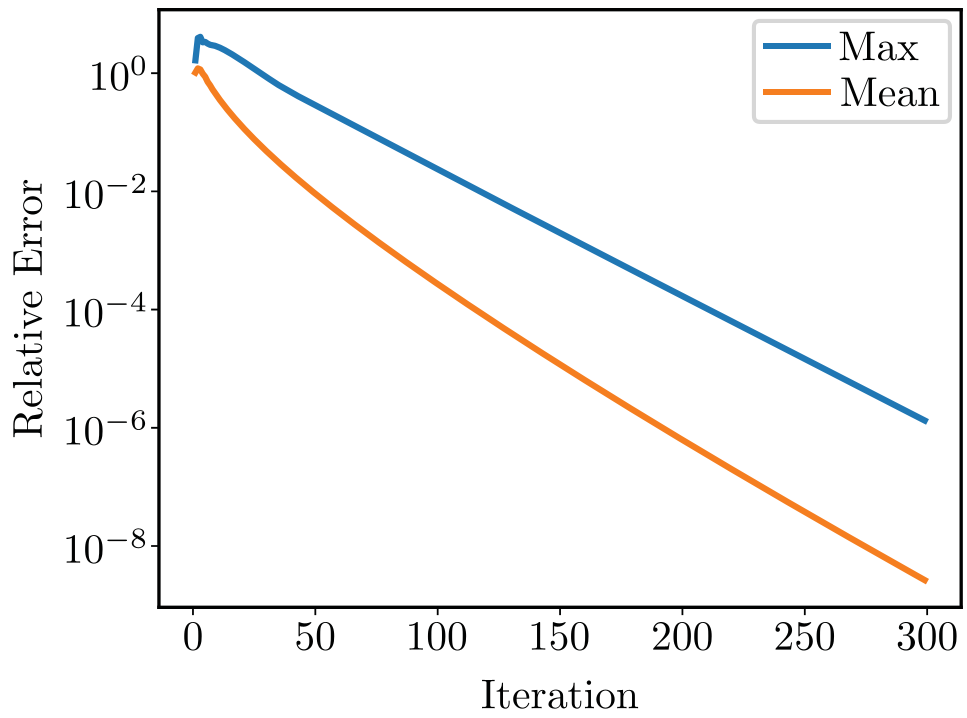 Fig 3: Mean relative error drops exponentially across 300 ADMM iterations.
Critical Analysis & Conclusion
DVIM is a masterclass in applying classical numerical methods (FEM) to modern robotics (Swarm Intelligence).
Takeaways:
- This method decouples the robot’s hardware limits from the environment's complexity.
- It handles spatial statistics implicitly, meaning you can use the same code for a "smooth" temperature field or a "sharp" chemical plume.
Limitations:
- The Voronoi meshing process is currently restricted to convex domains or requires complex workarounds for non-convex spaces.
- It assumes a static or slowly varying field during the ADMM convergence cycle.
For the future of environmental robotics, DVIM provides a blueprint for how swarms can act as a single, distributed super-sensor.