
Efficiency Meets Intelligence: Distributed Event-Triggered Economic Dispatch in Smart Grids
Distributed Event-Triggered Scheme for Economic Dispatch in Smart Grids
This paper proposes a distributed event-triggered communication scheme for economic dispatch in smart grids, utilizing a θ-logarithmic barrier method and a Minimum Connected Dominating Set (CDS) for task allocation. The approach successfully reduces communication overhead by 93.46% compared to periodic methods while maintaining global optimality.
Executive Summary
TL;DR: This paper introduces a robust distributed framework for Economic Dispatch (ED) that replaces bandwidth-heavy periodic communication with a "trigger-only" asynchronous scheme. By combining θ-logarithmic barriers for constraint management and the Minimum Connected Dominating Set (CDS) for initial task balancing, the authors slash communication redundancy by over 90% while achieving faster convergence through a fast-gradient momentum term.
Academic Positioning: Positioned at the intersection of Networked Control Systems and Power Engineering, this work transitions distributed optimization from "theoretical consensus" to "resource-efficient implementation," specifically targeting the communication bottlenecks of modern IT-enabled smart grids.
Motivation: The Hidden Cost of Consensus
Distributed Economic Dispatch is often touted for its scalability, but it harbors a "dirty secret": most consensus-based algorithms require nodes to talk to their neighbors at every single time step. In a real-world smart grid with thousands of nodes, this creates a communication storm that can lead to packet loss and system instability.
The authors identify a critical gap: How can we minimize information exchange while ensuring that the grid’s total supply perfectly matches the demand at all times?
Methodology: The Three Pillars of Efficiency
1. The θ-Logarithmic Barrier (Interior Point Intuition)
Rather than using hard projections to keep generators within their capacity ( and ), the authors use a θ-logarithmic barrier function.
- Insight: This transforms the constrained problem into an unconstrained one where the cost function "blows up" as it approaches the boundaries. This ensures that the iterates always stay within feasible limits (the "interior"), which is crucial for the safety of physical hardware in a grid.
2. Distributed Task Allocation via CDS
Before optimization begins, the grid must ensure . The authors use the Minimum Connected Dominating Set (CDS) to solve this.
- How it works: They divide the network into hierarchical levels. A "backbone" of nodes (the CDS) calculates the mismatch between demand and supply at the top level and propagates the "task" down to lower levels. This ensures the equality constraint is met before the fine-tuning optimization even starts.
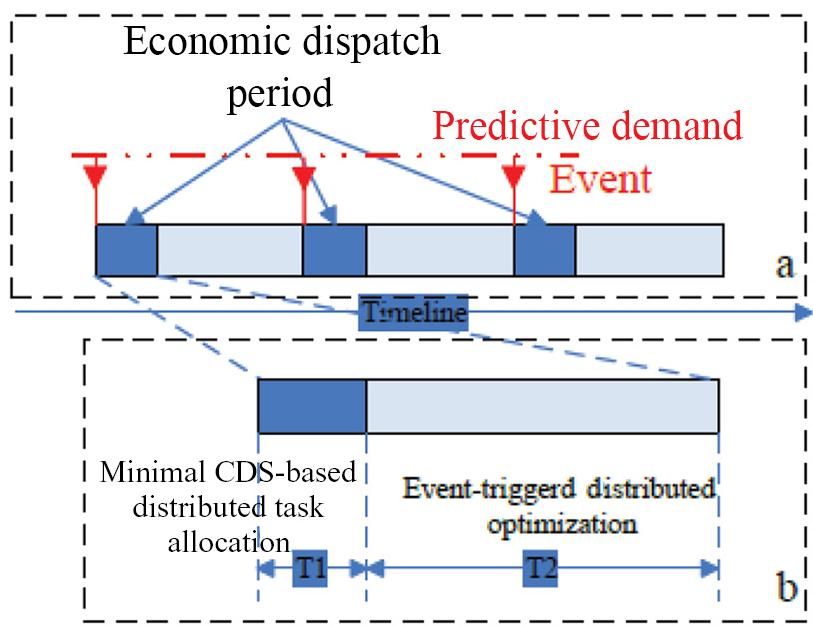 Figure 1: Hierarchical CDS structure for efficient task distribution.
3. Event-Triggered Asynchronous Optimization
Instead of broadcasting states every 0.0003 seconds, nodes monitor an event-triggering condition.
- The Logic: A node only broadcasts its cost data to neighbors if its current local state deviates significantly from its last-transmitted state.
- Momentum Booster: To prevent the "intermittency" of events from slowing down the system, they implement a Fast Gradient Method (Nesterov-style), using a momentum term to push the system toward consensus faster.
Experimental Validation: IEEE 57-Bus System
The proposed algorithm was tested on the IEEE 57-bus test case. The results provide a striking comparison between traditional periodic communication and the new event-triggered approach.
Key Comparisons:
- Communication Volume: The event-triggered method used 7,625 messages compared to 116,670 for the periodic method—a 93% reduction.
- Convergence Speed: With the accelerated gradient, the system reached consensus in 0.7 seconds, whereas the standard version took over 2 seconds.
- Plug-and-Play: The system successfully re-optimized generation within seconds when a generator was suddenly added or removed, maintaining the supply-demand balance throughout.
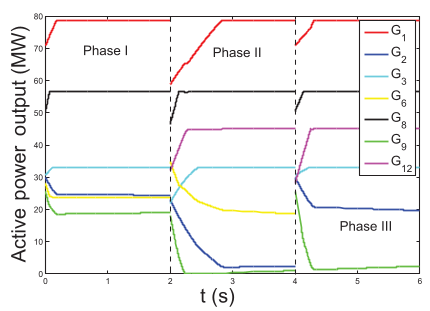 Figure 2: Trajectories of active power and incremental cost, demonstrating rapid consensus.
Critical Insight & Conclusion
The significance of this work lies in the Accuracy-Communication Trade-off. The authors demonstrate that while event-triggered schemes are vastly more efficient for standard engineering accuracy (e.g., ), they become less superior if extreme precision (beyond ) is required, as the trigger thresholds become too sensitive.
Takeaway: For modern smart grids where bandwidth is a finite resource and generators are dynamic ("Plug and Play"), this event-triggered, fast-gradient approach is a superior paradigm. It shifts the focus from "convergence at any cost" to "consensus with minimal chatter."
Future Directions
The authors suggest that the next frontier is extending this logic to non-convex cost functions (e.g., those including valve-point effects) and accounting for transmission losses, which would further bridge the gap between theoretical optimization and the physical reality of power grids.